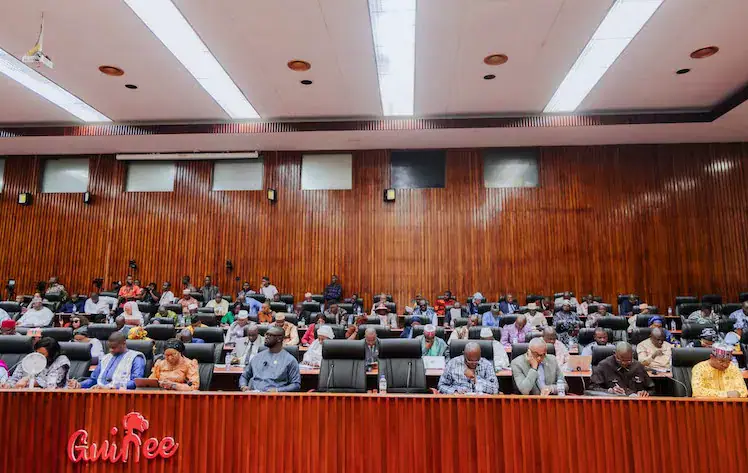
The Guinea National Assembly has called on the government to provide explanations on the recovery of confiscated assets, following revelations that no funds have been recorded in the public treasury despite court decisions in favor of the state. According to the Assembly's Finance Commission, a report presented on October 31, 2026, revealed that no deposits had been made into the treasury accounts as of October 15, 2026. This has raised concerns about the monitoring and execution of court decisions related to asset confiscation.
The Finance Commission's report highlighted that despite several court decisions in favor of the state, no funds had been recorded in the treasury accounts. The report's findings have sparked questions about the effectiveness of the government's efforts to recover and repatriate confiscated assets. In response, the National Assembly has requested that the government provide detailed information on the nature, amount, and status of the assets in question.
The National Assembly has also asked the government to clarify the steps taken to ensure the execution of court decisions and the transfer of funds to the public treasury. The Assembly's concerns center on the lack of transparency and accountability in the management of confiscated assets. The government has yet to respond to the Assembly's requests, but the parliament has indicated that it will take further action to investigate the matter.
The National Assembly has decided to initiate a parliamentary information mission to investigate the mechanisms of asset confiscation, seizure, and transfer to the public treasury. This mission aims to identify potential obstacles that prevent the effective mobilization of these resources for the state's budget. The Assembly's Finance Commission will lead the investigation, which is expected to shed more light on the issue.
The issue of confiscated assets has significant implications for Guinea's public finances. The country's treasury has not recorded any deposits from confiscated assets, despite court decisions in favor of the state. This has raised concerns about the government's ability to manage and recover assets, and the effectiveness of the justice system in enforcing court decisions.
The parliamentary investigation will focus on identifying the bottlenecks in the process of asset confiscation, seizure, and transfer to the public treasury. The investigation will also examine the role of various government agencies and institutions in the management of confiscated assets. The findings of the investigation are expected to inform policy changes and improvements in the management of public finances.
The Guinea National Assembly's move to investigate the recovery of confiscated assets reflects its commitment to ensuring transparency and accountability in public finance management. The Assembly's actions are aimed at promoting good governance and improving the country's revenue collection. The outcome of the investigation is expected to have significant implications for Guinea's public finance management and the country's ability to mobilize resources for development.
Key points
- The Guinea National Assembly has requested that the government provide detailed information on the nature, amount, and status of confiscated assets.
- The Assembly has initiated a parliamentary information mission to investigate the mechanisms of asset confiscation, seizure, and transfer to the public treasury.
- The investigation aims to identify potential obstacles that prevent the effective mobilization of confiscated assets for the state's budget.