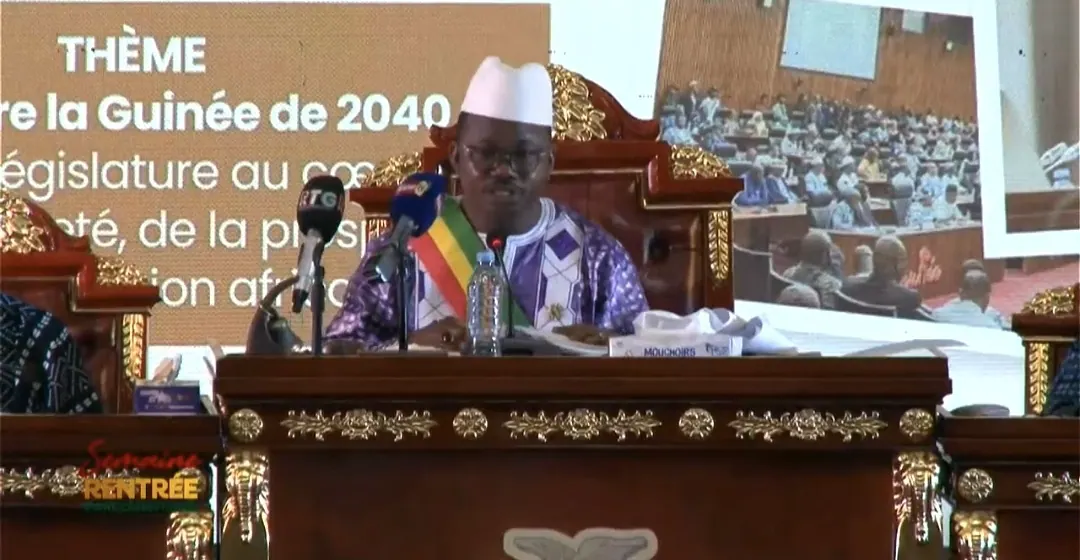
The National Assembly of Guinea has introduced significant reforms to the exercise of parliamentary mandate in its 10th legislature. The new internal regulations make parliamentary recesses a mandatory "time of mandate" for lawmakers to return to their constituencies. This change aims to bridge the gap between national representation and local realities. The reforms target the 147 lawmakers of the Fifth Republic.
The Assembly's presidency outlined four key commitments for lawmakers: assiduity, thorough work, responsibility, and exemplary conduct. Lawmakers are expected to attend plenary sessions and committee meetings regularly, with empty seats considered "lost voices for the nation." They must also thoroughly study bills, prepare amendments, and analyze technical files before voting.
During recesses, lawmakers will travel to their constituencies to explain newly passed laws, gather public concerns, and observe local public services. They must record their findings in a common "vacation notebook," which will inform future Assembly work, budget debates, and government interpellations. This tool aims to enhance accountability and responsiveness to citizens' needs.
The opening of the 10th legislature's first ordinary session had a strong international dimension, with delegations from several African countries in attendance. Representatives from Mali, Côte d'Ivoire, Senegal, Sierra Leone, Liberia, Togo, Gabon, Guinea-Bissau, and the ECOWAS Parliament participated in the solemn ceremony in Conakry. This reflects the Assembly's commitment to pan-Africanism and regional integration.
The Assembly's president, Dr. Dansa Kourouma, emphasized Guinea's long-standing commitment to pan-Africanism, citing the country's role in creating the Organization of African Unity and the ECOWAS. He stressed that pan-Africanism is not a nostalgic concept but a guiding principle for Guinea. The president highlighted the importance of friendship and cooperation among nations.
The day following the solemn opening will be dedicated to exchanges and debates between Guinean lawmakers and their sub-regional counterparts. Discussions will focus on sharing experiences in legislative oversight, the role of parliamentary institutions in peace consolidation, and strengthening inter-parliamentary cooperation. The Assembly confirmed its active participation in various international parliamentary organizations.
The reforms and international engagements aim to enhance the Assembly's effectiveness and responsiveness to citizens' needs. The "vacation notebook" and strengthened ties with local populations are expected to improve lawmakers' understanding of grassroots concerns. By reaffirming its pan-African commitment, Guinea's National Assembly seeks to play a more active role in regional and international affairs.
Key points
- The reforms introduce a mandatory "time of mandate" for lawmakers during parliamentary recesses.
- The Assembly outlines four key commitments for lawmakers: assiduity, thorough work, responsibility, and exemplary conduct.
- The "vacation notebook" will record lawmakers' findings and inform future Assembly work.