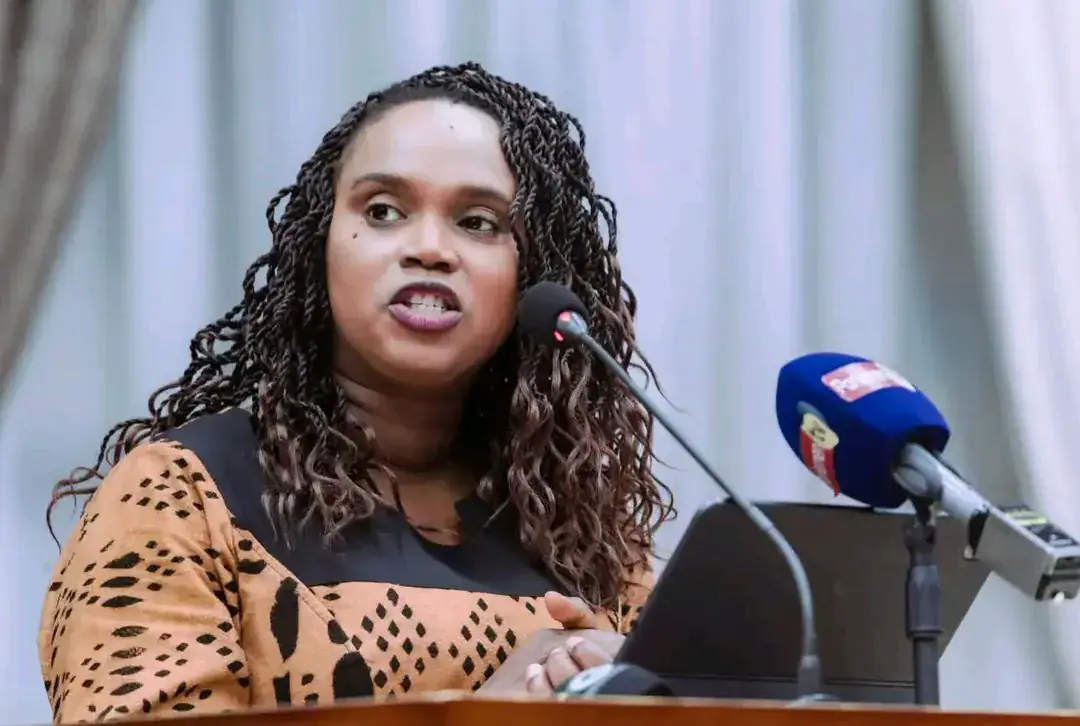
Guinea's Minister of Economy, Finance, and Budget, Mariama Ciré Sylla, has justified the 9.3% decrease in public investment within the 2026 revised finance bill. The reduction is attributed to several constraints, including delays in budget execution, insufficient project maturation, administrative inefficiencies, and limited execution capacities. These factors were highlighted during a plenary session at the National Assembly, where the minister addressed concerns from lawmakers.
According to Minister Sylla, this year's budget execution faced significant challenges due to a delayed start. Typically, the government has 12 months to execute investment spending, but in 2026, they only had 9 months. The first three months of the year were spent without a regular state budget, making investment expenditures impossible during that period. This initial delay significantly impacted the overall execution timeline, especially considering that the first quarter is usually dedicated to launching contracts and preparing for project implementation.
The minister also pointed out that many projects introduced in the budget under the new development program lacked sufficient preparation. Despite good intentions to address citizens' needs promptly, an examination of these projects revealed that some were missing essential studies. Without these studies, executing projects would be futile and akin to wasting money. Furthermore, some projects lacked necessary financing, particularly for externally funded components.
Structural difficulties have long plagued Guinea's ability to absorb investment credits. Minister Sylla mentioned lengthy validation circuits, redundant administrative formalities, and inadequate or disconnected information systems as contributing factors to delays. To address these issues, the government has initiated several reforms, including the Télémo system, financial control enhancements, and a price mercurial. These tools aim to reduce control delays and streamline administrative procedures.
Additional challenges affecting project execution include the need to relocate existing infrastructure, such as electricity and fiber-optic networks, which were not considered during initial planning. Compensation for individuals affected by projects also causes delays. The government plans to establish Delivery Units to accelerate project monitoring and execution. These units, along with team training and technical support, are expected to enhance the execution of development programs.
Specifically for the Simandou 2040 initiative, Minister Sylla announced measures to prevent a recurrence of this year's difficulties. These measures include strengthening project maturation and ensuring that no investment is included in the budget without adequate technical, financial, and environmental preparation. The revised budget sets state expenditures at 67,925.87 billion GNF, with a 5.83% increase from the initial law. Recalculated revenues stand at 60,064.47 billion GNF, up 7.53%.
The 2026 revised budget allocates 5,489.7 billion GNF to maintain fuel prices at 12,000 GNF per liter. It also forecasts a decrease in debt financial charges by 19.48%, to 3,836.58 billion GNF, and sets investment spending at 23,562.27 billion GNF. Projects deemed insufficiently mature will be reprogrammed for 2027, aiming for better preparation and more effective execution of public investments.
Key points
- Insufficient project maturation and lack of studies hindered the execution of several investment projects.
- The government has initiated reforms to streamline administrative procedures and enhance project execution.
- Guinea's 2026 revised budget focuses on maintaining fuel subsidies and managing debt financial charges.