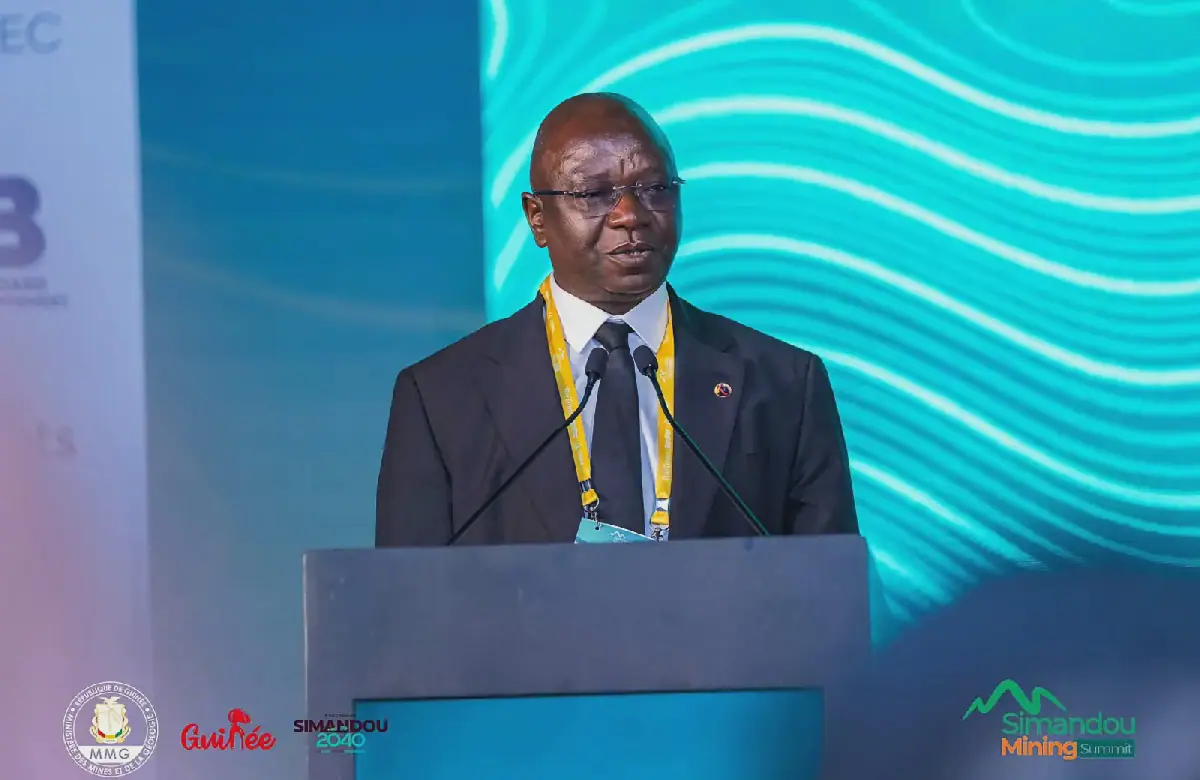
Guinea, often referred to as a "geological scandal" due to its vast mineral wealth, is facing alarming environmental degradation caused by mining activities. The impacts on the climate and ecosystems are evident across the country. With growing concerns among the population and environmental defenders, the Guinean government's stance on this issue has come under scrutiny. Minister of Mines and Geology, Bouna Sylla, has addressed these concerns, emphasizing the country's commitment to its international agreements while prioritizing economic development.
Bouna Sylla has firmly rejected an ideological approach to ecology, which he believes is disconnected from local realities. He argues that the push for energy transition should not hinder Guineans' access to electricity and industrialization. According to the minister, the government's energy policy focuses on a mix of hydro, solar, and thermal energy, including HFO and coal-fired power plants. This approach aims to provide abundant and affordable energy to transform local mineral resources and drive industrialization.
The minister criticized what he sees as a double standard among global powers, citing that many countries, including Germany, the United States, and France, rely heavily on coal for electricity generation. He emphasized that Guinea's priority is to develop its economy and provide opportunities for its youth, thereby reducing clandestine emigration. Bouna Sylla quoted Vladimir Lenin, stating that "the revolution is electricity, energy, and the Soviets," highlighting the foundational role of energy in development.
Bouna Sylla also invoked a phrase often used by Donald Trump, "Guinea First," to underscore the government's focus on national interest. He stressed that while respecting international environmental commitments, the country's development needs take precedence. The minister sees no reason why Guinea should not utilize its natural resources to drive economic growth and reduce unemployment.
The minister highlighted Guinea's unique geostrategic advantages, including its coastal location on the Atlantic Ocean, which he believes positions the country for economic success. He expressed confidence in Guinea's potential, calling it "the best country in the world." By leveraging its natural resources, the government aims to create a robust economy and reduce the incentive for risky emigration.
Bouna Sylla's stance has sparked debate over the balance between economic development and environmental protection in Guinea. While some may view his approach as pragmatic and necessary for growth, others may see it as a threat to the country's ecological integrity. As Guinea moves forward with its development plans, the interplay between economic and environmental concerns will likely remain a contentious issue.
The Guinean government's approach to energy and development has implications for the country's future. With a focus on industrialization and economic growth, the government aims to transform Guinea's vast mineral wealth into sustainable development. However, concerns about environmental degradation and the impact of mining activities on local ecosystems and communities will need to be addressed.
Key points
- The Guinean government prioritizes economic development and industrialization over environmental concerns.
- Minister Bouna Sylla advocates for a mix of energy sources, including coal, to drive industrialization.
- The government's approach has sparked debate over the balance between economic growth and environmental protection in Guinea.