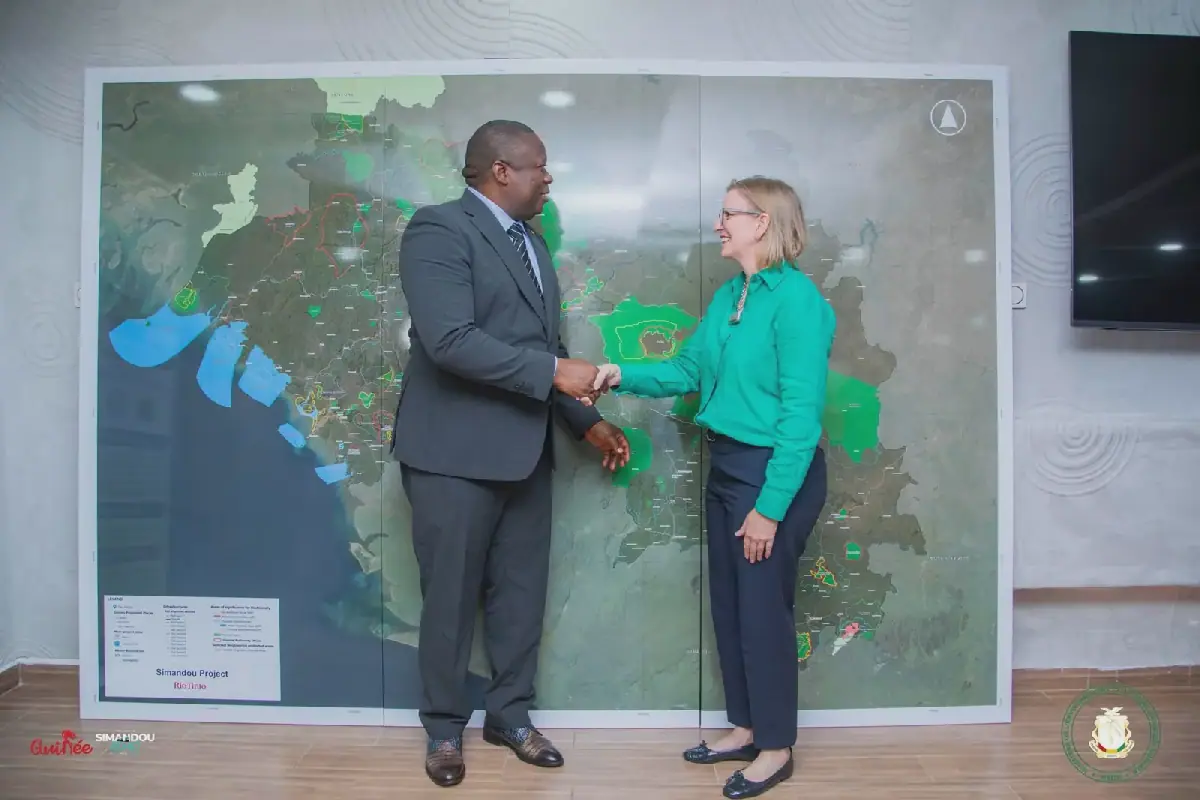
On November 2, 2026, Guinea's Minister of Environment and Sustainable Development, Fassou Théa, received a geospatial map of the country's protected areas, developed with the support of mining company Rio Tinto. This map is a significant tool for identifying, managing, and preserving Guinea's natural spaces. Rio Tinto, which is responsible for exploiting blocks 3 and 4 of the Simandou project, is contributing to environmental protection efforts in Guinea beyond its mining activities.
The Minister of Environment expressed his satisfaction with the map, highlighting its importance for understanding, planning, and preserving Guinea's natural heritage. The map will enable the identification of priority conservation areas and enhance actions in favor of biodiversity. Fassou Théa praised Rio Tinto's contribution and the quality of the partnership between the Ministry and environmental stakeholders.
Rio Tinto's support for the mapping of protected areas reflects the company's commitment to environmental protection beyond its mining activities. The Minister emphasized the importance of promoting economic development while preserving the country's natural resources for present and future generations. This partnership between public authorities and the private sector demonstrates the role that can be played in protecting Guinea's natural heritage.
The geospatial map is a strategic tool that will allow the Ministry to better manage and conserve Guinea's natural spaces. Fassou Théa recalled that protecting biodiversity is an investment in the nation's future. The Minister's ambition is to accompany Guinea's development while sustainably preserving its natural riches.
The partnership between the Ministry of Environment and Rio Tinto sets a positive precedent for collaboration between public authorities and the private sector in environmental protection. This initiative demonstrates that economic development and environmental protection are not mutually exclusive, but rather complementary.
The mapping of protected areas is a crucial step in preserving Guinea's natural heritage, which is rich in biodiversity. The country's protected areas are essential for maintaining ecological balance and supporting sustainable development. The Minister's efforts to protect these areas are essential for the well-being of present and future generations.
The contribution of Rio Tinto to the elaboration of the geospatial map is a testament to the company's commitment to responsible mining practices and environmental stewardship. The Minister's praise for Rio Tinto's support highlights the importance of partnerships in achieving environmental protection goals.
Key points
- Rio Tinto's support for mapping Guinea's protected areas demonstrates the company's commitment to environmental protection beyond its mining activities.
- The geospatial map is a strategic tool for identifying priority conservation areas and enhancing actions in favor of biodiversity.
- The partnership between public authorities and the private sector sets a positive precedent for collaboration in environmental protection.