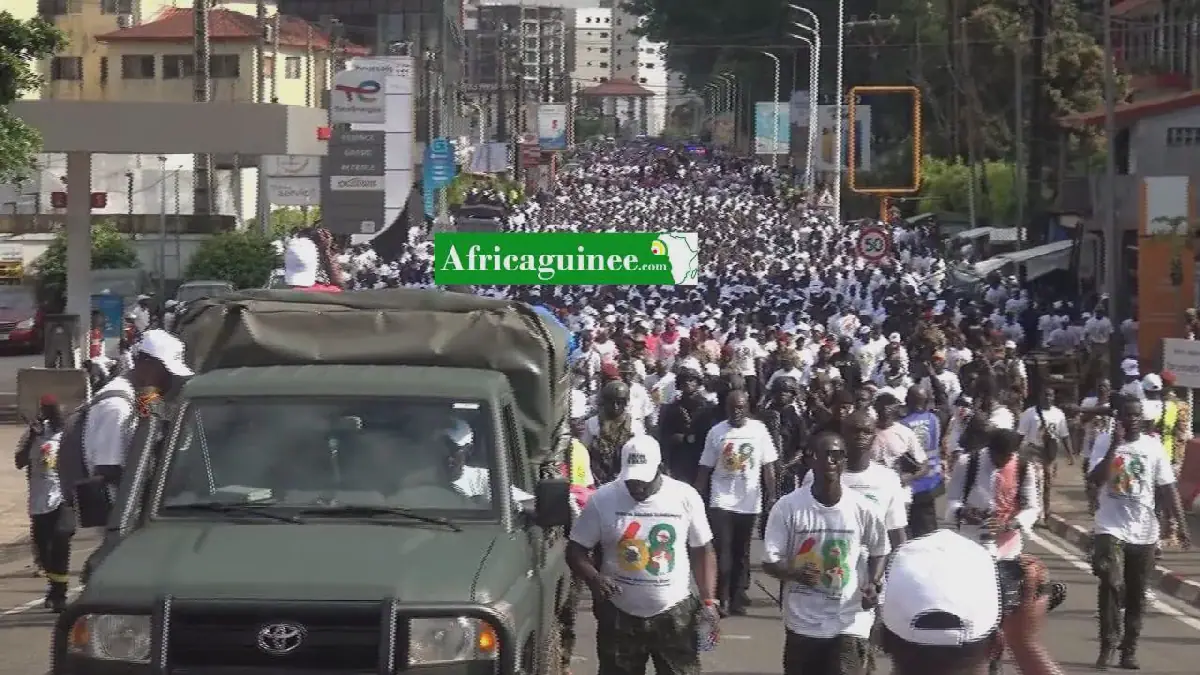
On October 31, 2026, the Guinean military participated in a civil-military march in Conakry to raise awareness about breast and cervical cancer. The event was part of the "Octobre Rose" campaign and the celebration of the 68th anniversary of the creation of the Guinean Armed Forces. The march brought together representatives from various defense and security forces, along with numerous civilians. It started at the esplanade of the 28-September Stadium and ended at the Conakry Urban Park.
The march was an initiative of the Guinean military to show solidarity with the population and promote health and well-being. General Ibrahima Sory Bangoura, Chief of Staff of the Armed Forces, stated that the event demonstrated the close relationship between the military and the population. He emphasized that the march was in line with the objectives of the Head of State, who aims to promote cohesion between the military and the population.
The event was part of the "Semaine du soldat" (Week of the Soldier), a series of activities organized to celebrate the creation of the Guinean Armed Forces. Ansoumane Toumany Camara, Director of Information and Public Relations of the Armed Forces, highlighted the various activities organized during the week, including medical consultations, cleaning operations, and awareness-raising sessions on breast cancer.
The Minister of Health and Public Hygiene, Kaïté Sall, attended the march and praised the initiative, which brought together the military and civilians. He emphasized that the event sent a strong message about the importance of unity in promoting health and well-being. The minister also announced two key initiatives to combat female cancers in Guinea, including the introduction of the human papillomavirus (HPV) vaccine in 2027 and the construction of a cancer center in Conakry.
The World Health Organization (WHO) representative in Guinea, Dr. Jean-Marie Kipela, highlighted the gravity of breast and cervical cancer. He stated that the end of the "Octobre Rose" campaign should not lead to a decrease in efforts to prevent and treat these diseases. According to the WHO, approximately 2.4 million women were diagnosed with breast cancer worldwide in 2024, resulting in 694,000 deaths.
Dr. Kipela also emphasized the need for early detection, diagnosis, and treatment of cancer. He recommended vaccination against HPV for young girls aged 9-14, as well as screening and treatment of precancerous lesions. The WHO is working with Guinea to implement its strategic plan to combat cancer, including the integration of prevention and treatment interventions into primary healthcare.
The civil-military march in Conakry concluded with a concert at the Samory camp, attended by civilians, military personnel, and paramilitary forces. The event marked the end of the "Semaine du soldat" and the celebration of the 68th anniversary of the creation of the Guinean Armed Forces. The Guinean military's initiative to raise awareness about breast and cervical cancer has been praised by the population and health authorities.
Key points
- The Guinean military's participation in the "Octobre Rose" campaign aims to promote health and well-being among the population.
- The event demonstrated the close relationship between the military and the population, promoting cohesion and solidarity.
- The WHO recommends early detection, diagnosis, and treatment of cancer, as well as vaccination against HPV to prevent cervical cancer.