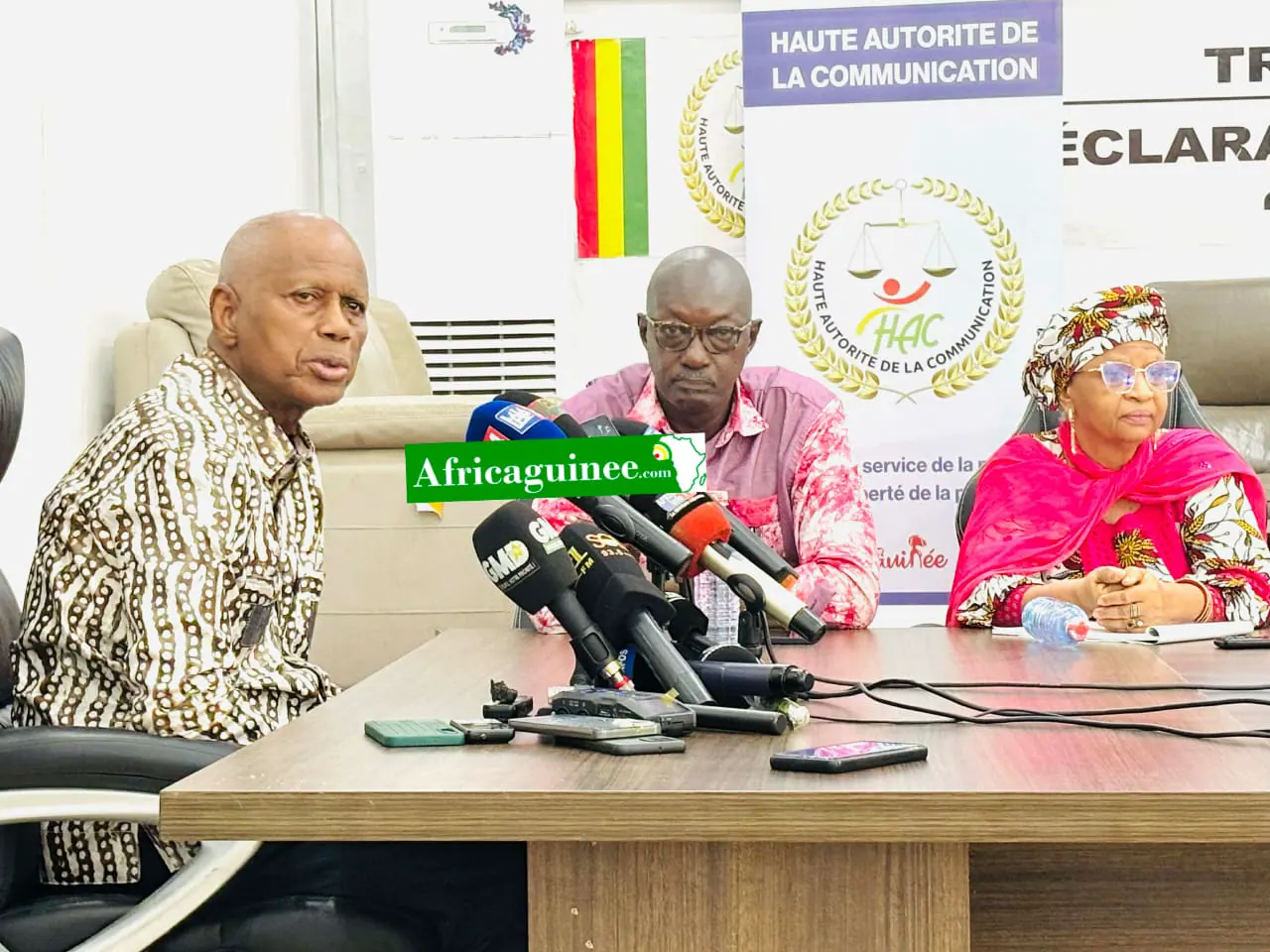
Guinea's High Authority of Communication (HAC) has ordered the immediate ban of 10 web TVs and 2 news sites across the country and online platforms. The banned media outlets include Yimbaya Médias TV, Dabola TV, Anelvision Web Media, and others. The HAC also targeted two news portals, www.dabolainfo.com and www.guinee24plus.com, accusing them of operating as web TVs without proper authorization. This move aims to regulate the media landscape and enforce existing laws.
According to the HAC, these media outlets were exercising audiovisual production and diffusion activities on the internet without prior approval or legal authorization from competent authorities. The regulator, led by Boubacar Yacine Diallo, stated that these operations harmed established and law-abiding radios, TVs, news sites, and other media. The HAC also raised concerns about the profiles of some promoters and animators of these channels, citing that they did not meet the required criteria and lacked official press cards.
The HAC had previously issued multiple warnings, reminders, and formal notices to the concerned promoters, urging them to regularize their administrative situation and cease clandestine diffusion. However, the regulator described their refusal to comply as "manifest, deliberate, and characterized." As a result, the HAC decided to impose a strict ban on these platforms, prohibiting their promoters, animators, and collaborators from engaging in journalistic or audiovisual activities under these structures.
The HAC's decision, made public on September 21, 2026, instructs administrative and communal authorities, as well as HAC focal points and supervisors, to ensure immediate implementation. The ban takes effect immediately, and those who defy it risk judicial prosecution for exercising their profession illegally. This move is part of the HAC's efforts to maintain order and professionalism in Guinea's media sector.
The HAC's monitoring reports played a crucial role in identifying these errant media outlets. The regulator emphasized that it would continue to oversee the media landscape to prevent such unauthorized operations. By enforcing existing laws and regulations, the HAC aims to promote a fair and competitive media environment in Guinea.
The banned media outlets operate from various locations, including Conakry, Dabola, Siguiri, Kérouané, Kankan, Coyah, and Guéckédou. The HAC's decision affects a significant number of online media platforms, which will no longer be able to operate or broadcast content. This development has significant implications for the media industry in Guinea.
The HAC's action has sparked concerns about press freedom and regulation in Guinea. While the regulator aims to promote professionalism and fairness, some may argue that the ban could limit access to information and stifle online expression. The situation will likely be closely monitored by media stakeholders, human rights groups, and the international community.
Key points
- The HAC banned 10 web TVs and 2 news sites for operating without licenses.
- The regulator cited concerns about the profiles of some promoters and animators.
- The ban takes effect immediately, with risks of judicial prosecution for non-compliance.