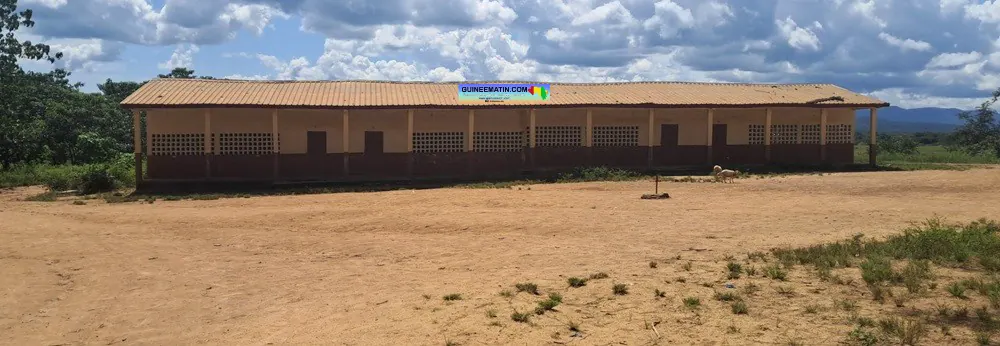
The college in Konsankoro, a rural community in Guinea's Kérouané prefecture, is grappling with dilapidated infrastructure, affecting students' learning experience. The school's building, comprising four classrooms and an administrative block, is in a state of disrepair. According to local authorities, the college's condition is discouraging students from pursuing their education in the area. Many students opt to continue their studies elsewhere due to the poor state of the facilities.
The college's principal and nine other teachers are working to provide education despite the challenges. However, the lack of basic amenities, such as a water point, forces students to travel long distances to access water. The community's leaders are concerned about the impact of the infrastructure on students' motivation to learn. Bangaly Cissé, the mayor of Konsankoro rural commune, expressed worry about the situation, citing the consequences of the college's poor condition on students' academic prospects.
One of the significant challenges faced by the college is the absence of a perimeter fence, allowing animals to roam freely within the school premises. This has resulted in students spending a considerable amount of time cleaning up animal waste, which can be as long as an hour. The situation is not only unpleasant but also affects the students' ability to focus on their studies. The mayor emphasized the need for a fence to create a conducive learning environment.
The poor state of the college's infrastructure has led to a decline in enrollment, as students prefer to pursue their education in better-equipped schools. The mayor attributed this trend to the college's condition, stating that if the building were in good shape, students would be more inclined to stay and study in their local community. He appealed to authorities and well-meaning individuals to assist in rebuilding and fencing the college.
The local community is calling for urgent intervention to address the college's infrastructure challenges. The reconstruction of the building, erection of a perimeter fence, and provision of access to clean water are critical to improving the learning environment and encouraging students to remain in the area. The mayor's appeal highlights the need for collaborative efforts to address the college's challenges and provide quality education to students in Konsankoro.
The situation at Konsankoro College is a reflection of the broader challenges faced by educational institutions in rural Guinea. The lack of resources and infrastructure hinders the provision of quality education, affecting students' academic prospects and the community's development. Efforts to address these challenges are essential to ensuring that students in rural areas have access to quality education.
The plight of Konsankoro College serves as a reminder of the need for investment in education infrastructure in rural Guinea. By addressing the college's challenges, the community can provide a conducive learning environment, encouraging students to stay and pursue their education in their local community. This, in turn, can contribute to the community's development and improve students' academic prospects.
Key points
- The college's poor infrastructure, including a dilapidated building and lack of a perimeter fence, affects students' learning experience.
- The absence of basic amenities, such as a water point, forces students to travel long distances to access water.
- The local community is calling for urgent intervention to address the college's infrastructure challenges and provide quality education to students.