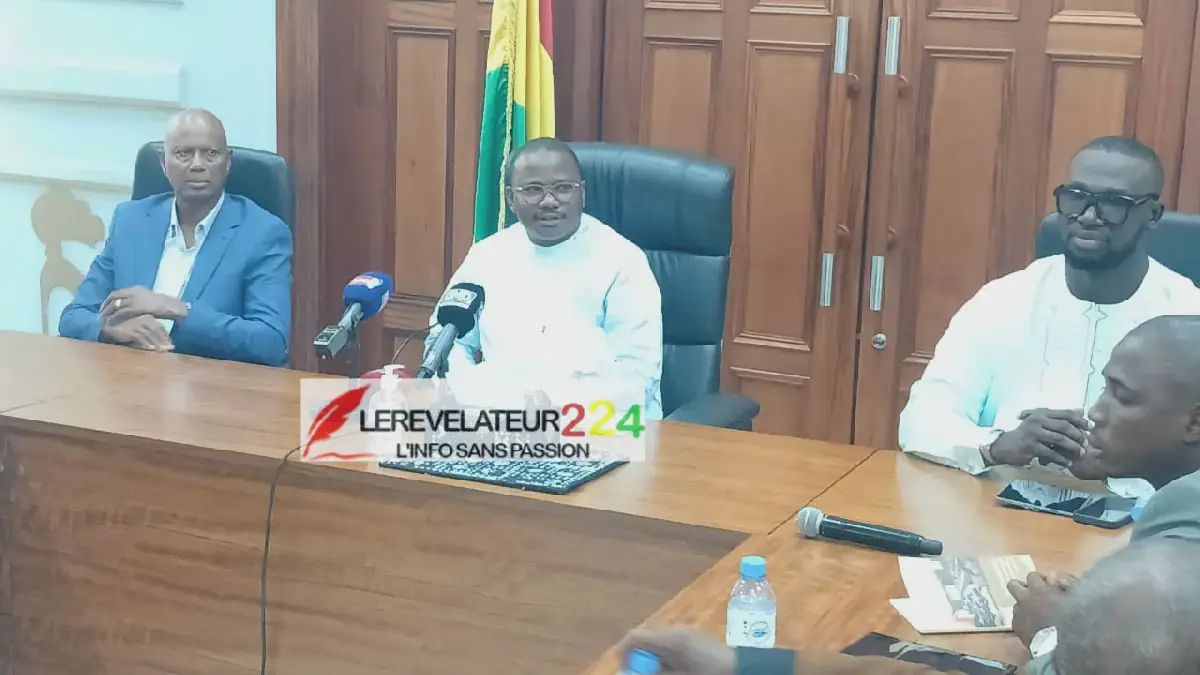
The High Authority of Communication (HAC) in Guinea recently appeared before the National Assembly's Communication and New Technologies Commission to defend its 2026 budget. The HAC, led by President Boubacar Yacine Diallo, presented its financial profile, highlighting that it relies solely on state subsidies and does not generate revenue. The commission's hearing, which lasted over three hours, aimed to discuss the HAC's budget and future plans.
President Boubacar Yacine Diallo emphasized that the HAC's budget consists only of expenses, with no revenue generated from activities such as press card sales, which were previously a source of income. The HAC now receives a quarterly state subsidy. Diallo stated that the HAC does not require additional funding for the 2026 budget and instead focused on its plans for 2027.
The HAC's president outlined several key projects for 2027, including modernizing its monitoring system, regularizing the employment status of its temporary contract workers, and providing training for journalists on new technologies. These initiatives are necessary to adapt to the new constitutional requirements, which have expanded the HAC's regulatory role to include digital, cinema, and advertising.
The president of the National Assembly's Communication and New Technologies Commission, Ousmane Dady Camara, expressed satisfaction with the HAC's presentation and reaffirmed the commission's role in supporting and overseeing the institution. Camara highlighted the need to adjust the HAC's resources to meet the new constitutional demands, particularly in regulating digital media.
The commission plans to address the HAC's concerns regarding the precarious employment status of its agents and the need for modern technical equipment. These issues will be brought before the Parliament's decision-making bodies to ensure that the HAC can effectively carry out its regulatory functions.
The HAC's hearing before the National Assembly's commission demonstrates the institution's commitment to transparency and accountability in its financial management. The HAC's leadership has shown a willingness to engage with lawmakers and address the challenges facing the institution as it adapts to the changing media landscape in Guinea.
The National Assembly's commission has pledged to support the HAC's efforts to modernize its operations and improve the working conditions of its employees. By working together, the HAC and the National Assembly aim to ensure that the institution can effectively regulate Guinea's media and digital sectors.
Key points
- The HAC relies solely on state subsidies and does not generate revenue from activities.
- The institution plans to modernize its monitoring system and regularize the employment status of its temporary contract workers in 2027.
- The HAC's regulatory role has been expanded to include digital, cinema, and advertising under the new constitution.