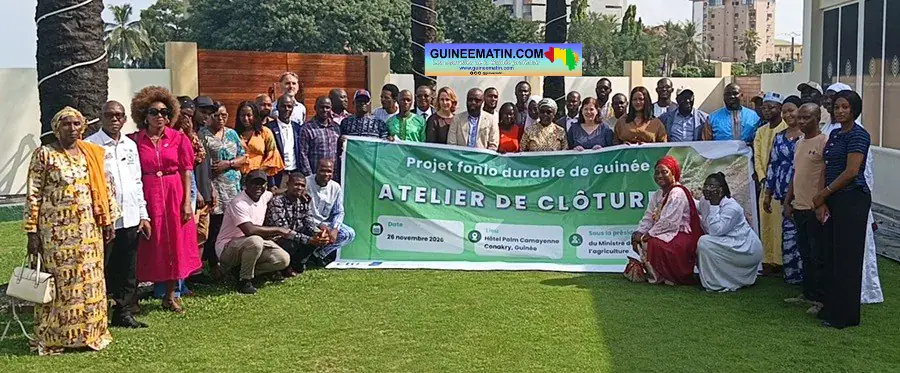
The Fonio Sustainable Guinea project, supported by the Dutch government through the Centre for the Promotion of Imports (CBI), is set to conclude in December 2026. The project's closure ceremony took place on November 26 in Conakry, attended by authorities, partners, and stakeholders. An exchange workshop was held, presenting the project's achievements and results. Implemented since 2023, the project has assisted six small and medium-sized enterprises (SMEs) and several national institutions in capacity building and improving production and transformation practices.
The project's primary objective was to make Guinean fonio a competitive product meeting national and international market standards. According to Femke Dekker, project manager, the initiative focused on four priorities: market demand, sustainable and inclusive business models, collaboration within the value chain, and access to support services. Six SMEs and concerned institutions received support, including the development of good agricultural and transformation practice manuals, a standard for precooked fonio, and HACCP action plans and social responsibility.
The project also provided training on food safety, organic certification, and packaging, and connected the enterprises with investors and international markets. Dekker emphasized that the achievements must be sustained through the commitment of all value chain actors. Sira Bayo, president of the Guinean Fonio Interprofession, welcomed the support provided to enterprises, producers, and transformers, particularly in standardization and improved production practices. However, she stressed the need for equipment reinforcement to increase transformation capacities.
Bayo highlighted that the project's support enabled the popularization of standards and sensitization of producers to good production practices. She noted that Guinea now has its own fonio standards, thanks to partner support. Nevertheless, she called for state accompaniment, particularly in equipment for harvesting, threshing, winnowing, and transformation, to reduce actor burdens and enhance Guinean fonio competitiveness. Dondon Stephen, director general of Agricultural Transformation and Innovation, emphasized the need for continued collaboration between ministerial departments and partners to equip the value chain with a genuine national development strategy.
Stephen pointed out that fonio development goes beyond the field, encompassing transformation, quality, market access, and exportation. He stressed the importance of collaboration between the Ministries of Agriculture and Industry and Trade. A draft national strategy for the fonio value chain is being developed, with a provisional diagnostic report elaborated in September 2026. Missions are planned to gather necessary data, and two national workshops are scheduled for January and March 2027 to validate the strategy.
The closure of the Fonio Sustainable Guinea project marks a new stage for actors in this agricultural value chain. Beyond the results achieved, the challenge is now to consolidate gains, reinforce production and transformation capacities, and mobilize necessary investments to increase fonio exports. The future national strategy should be an essential instrument to accompany this ambition. The project's achievements and challenges will likely influence the development of the Guinean fonio industry in the years to come.
As the project concludes, stakeholders are expected to build on the progress made, addressing the remaining challenges and capitalizing on opportunities. The project's impact on the Guinean economy and the fonio industry's growth will depend on the effective implementation of the national strategy and the continued commitment of all actors involved. The project's legacy will be measured by its lasting effects on the industry and the country's agricultural sector.
Key points
- The project provided support to six SMEs and national institutions, enabling them to improve their production and transformation practices and meet national and international market standards.