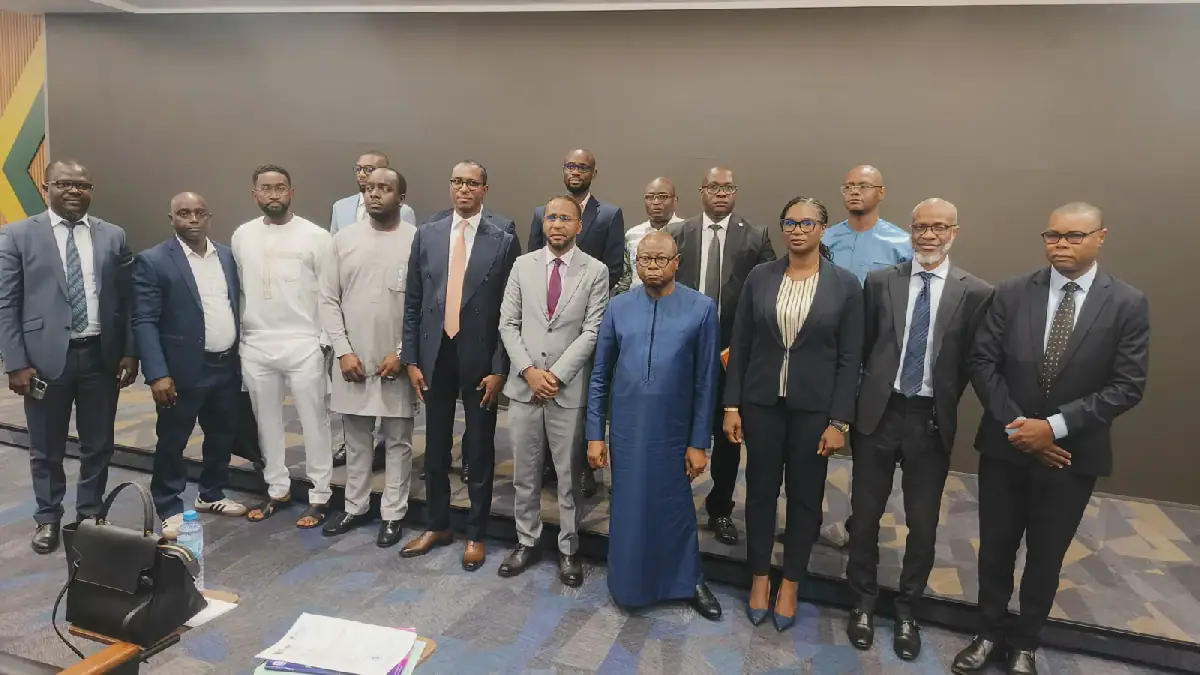
The Guinéenne de Monétique (GuiM) held its annual general meeting on November 25, 2026, in Conakry, under the chairmanship of Elhadj Mohamed Lamine Conté, first vice governor of the Central Bank of the Republic of Guinea (BCRG) and president of GuiM's board of directors. The meeting took place amid the country's economic recovery from a liquidity crisis. Shareholders reviewed the company's 2025 financial report, approved the financial statements, and set strategic priorities to support Guinea's economic growth, particularly through the Simandou 2040 program.
The 2025 financial year marked a significant milestone for GuiM's national payment switch, with seven banks now using the system, up from five the previous year, and six more in the process of integration. The switch processed 139,934 transactions in 2025, valued at around 60 billion Guinean francs, a fivefold increase from 29,419 transactions in 2024. While these numbers are encouraging, they still fall short of the system's potential, with stakeholders calling for increased adoption of electronic payments.
The introduction of NimbaPay, a new instant payment system, has been a major success, processing over 100 billion Guinean francs in transactions within its first four months of operation. Launched on July 22, 2026, NimbaPay was developed in just 127 days with seven financial institutions and two use cases. The system has earned recognition, including the Ecosystem Impact Award at the Guinea Fintech Week. GuiM's leadership attributes NimbaPay's success to its open-source technology and the support of major financial institutions.
To further drive financial inclusion, GuiM's shareholders have identified five key priorities: integrating new participants into the payment switch and NimbaPay, improving service quality, expanding merchant acceptance of card and QR code payments, obtaining PCI DSS certification, and establishing a sustainable business model. The Central Bank's representative, Elhadj Mohamed Lamine Conté, emphasized the importance of banks supporting their clients in adopting digital payment tools.
According to Aly Badara Bérété, GuiM's director general, the company's investment in modernization and integration of new banks has laid the groundwork for future growth. With the Simandou 2040 program expected to generate significant economic activity, Bérété believes that NimbaPay and other digital payment systems will play a crucial role in facilitating transactions and promoting financial inclusion.
The Simandou 2040 program aims to increase Guinea's financial inclusion rate from 30% to 60%. With NimbaPay and other initiatives, GuiM is working to create a more inclusive financial ecosystem. The company's leadership is optimistic about the prospects for growth and development, citing the success of NimbaPay and the potential for further expansion.
As Guinea's financial sector continues to evolve, GuiM and its partners are committed to driving innovation and financial inclusion. With a renewed focus on strategy and growth, the company is poised to play a key role in shaping the country's financial future.
Key points
- NimbaPay has processed over 100 billion Guinean francs in transactions within its first four months of operation.