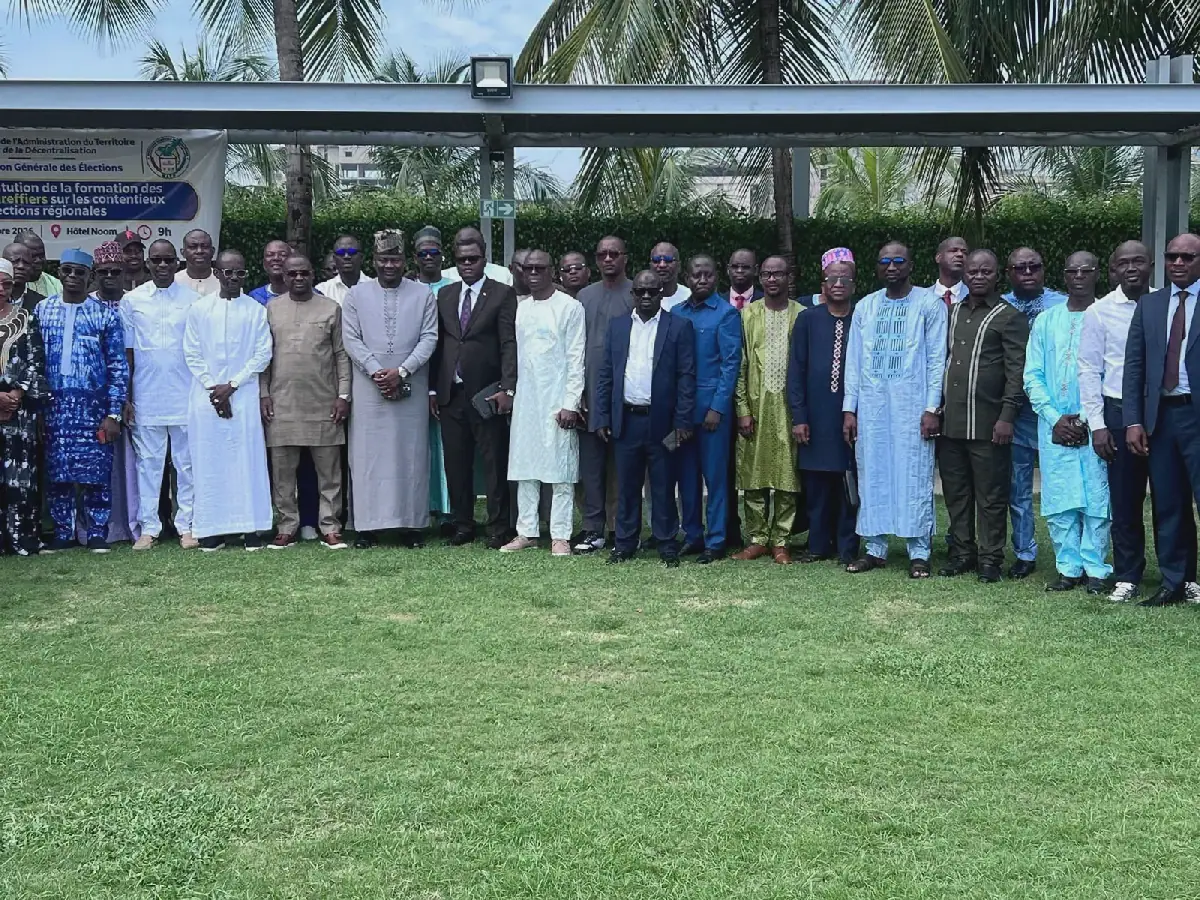
The Direction générale des élections (DGE) in Guinea has organized a meeting with judges and court clerks in Conakry to discuss the treatment of regional election disputes. The meeting, which started on November 20 and will conclude on November 21, aims to harmonize the approach to handling potential disputes that may arise during the upcoming regional elections scheduled for November 29. The DGE, under the auspices of the Ministry of Territorial Administration and Decentralization, is working to ensure that the electoral process is credible and transparent.
The meeting brings together judges and court clerks from relevant jurisdictions to discuss the rules applicable to regional elections and potential disputes that may arise. DGE Director General Mohamed Aly Condé emphasized the crucial role of the judiciary in ensuring the credibility of the electoral process. He noted that the electoral dispute resolution mechanism is essential in guaranteeing the regularity and sincerity of the electoral process. Condé stressed that the judge's role is not limited to resolving disputes between parties but also contributes to preserving social peace and reinforcing trust in public institutions.
Condé highlighted the importance of judges and court clerks mastering procedures, appeal deadlines, conditions for admissibility, and rules related to evidence. He also emphasized the need for a diligent, coherent, and legally secure treatment of potential disputes. The meeting is a follow-up to a workshop held in Coyah, which focused on training magistrates and court clerks. The objective is to consolidate acquired knowledge, share experiences, and clarify difficulties related to interpreting electoral texts.
Ousmane Diaby, speaking on behalf of the facilitators, placed the meeting in the context of the Coyah training. He emphasized that regional elections involve communal councilors who will be called upon to vote and make candidacy acts, and that potential disputes will be brought before competent jurisdictions. Diaby noted that the role of the electoral judge goes beyond simply resolving disputes between candidates, stating that the outcome of an election is in the hands of the electoral judge.
M. Sanoh, another facilitator, recalled that the mission of the electoral judge consists of assessing the impact of irregularities on the sincerity of the ballot. He emphasized that the judge's role is not to annul elections but to ensure that the electoral process is fair and transparent. Sanoh noted that annulment should only occur when irregularities are severe enough to compromise the sincerity of the ballot.
Ibrahima Sory I Tounkara, representing the First President of the Guinean Supreme Court, transmitted encouragement from the court's president to participants and organizers. He presented electoral disputes as an essential mechanism for guaranteeing the sincerity of the ballot, protecting the rights of candidates and voters, and preserving social peace. Tounkara emphasized the stakes related to decentralization and local governance in the context of regional elections.
The meeting's outcome is expected to enhance the capacity of judges and court clerks to handle electoral disputes effectively. The DGE's efforts aim to ensure that the regional elections are conducted in a fair, transparent, and credible manner. The Guinean government and electoral body are working to strengthen the electoral process and build trust in the country's democratic institutions.
Key points
- The Direction générale des élections in Guinea is holding a meeting with judges and court clerks to harmonize the treatment of regional election disputes ahead of the November 29 elections.