As the new school year approaches in Guinea, the country's education sector is facing uncertainty due to a controversy surrounding the recruitment of contractual teachers. The usually fragmented teacher unions have surprisingly shown unity, with leaders Michel Pépé Balamou and Aboubacar Soumah joining forces. However, their collective stance against the government's recruitment plans has raised concerns among the public. The unions are demanding the direct integration of contractual teachers without competitive exams, citing unfulfilled agreements with the government.
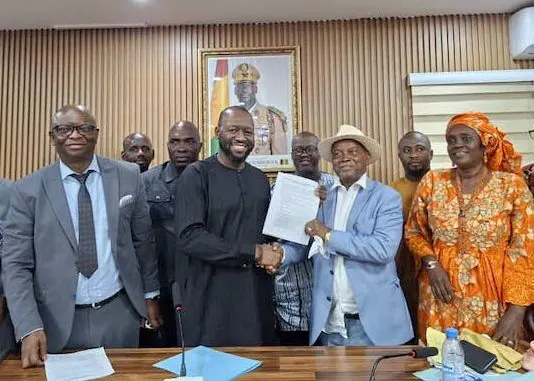
The government's plan to recruit more teachers has been met with resistance from the Intersyndicale de l'Éducation, which represents the teacher unions. They claim that the government is violating agreements signed with them. However, a thorough analysis of the January 3, 2026 tripartite protocol reveals that the union's claims may be unfounded. Article 7 of the protocol states that contractual teachers who participated in practical evaluations will be considered a priority during the next recruitment process.
The protocol does not mention exempting contractual teachers from competitive exams or guaranteeing them automatic integration into the public service. Instead, it provides for preferential treatment in the registration process for future exams. The union's interpretation of the protocol has been questioned, with some viewing their stance as an attempt to block reforms aimed at modernizing the education sector.
The Guinean government has reaffirmed its commitment to dialogue and fulfilling its obligations to teachers. It has implemented measures such as increasing bonuses, revising transport and housing allowances, and providing medical coverage for public servants. However, the government remains firm on its decision to hold competitive exams for teacher recruitment, citing the need for equity, meritocracy, and transparency.
A government source close to the matter has confirmed that the competitive exams will go ahead as planned. The government claims to have respected all points of the protocols signed with the unions and is committed to completing ongoing projects. The current crisis has been described as artificial and an attempt at corporate blackmail.
The uncertainty surrounding teacher recruitment has raised concerns about the start of the new school year. While the government is keen to move forward with its plans, the unions remain resolute in their demands. The situation has sparked debate about the role of teacher unions and the need for education reforms in Guinea.
The controversy has highlighted the complexities of education reform in Guinea and the challenges of balancing the needs of different stakeholders. As the situation unfolds, it remains to be seen how the government and teacher unions will resolve their differences and ensure a smooth start to the new school year.
Key points
- The Guinean government and teacher unions are at odds over the recruitment of contractual teachers.
- The teacher unions are demanding the direct integration of contractual teachers without competitive exams.
- The government remains firm on its decision to hold competitive exams for teacher recruitment.