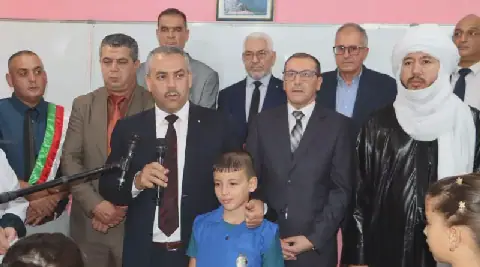
The Intersyndicale de l'éducation, a coalition of Guinea's education sector unions, held a press conference on September 21 in Dixinn. The meeting addressed the government's announcement of teacher recruitment and the protocol agreement signed on January 3, 2026. The union emphasized the need for the government to fulfill its commitments before proceeding with the recruitment process. Michel Pépé Balamou, Secretary-General of the Syndicat national de l'éducation, clarified the union's stance on the recruitment process.
The Intersyndicale de l'éducation is not opposed to the organization of a competitive exam for teacher recruitment. However, they stress that the process must be fair and transparent. In 2024, 14,500 contract teachers were identified, assessed, and evaluated. Of these, 10,000 were retained, while 4,500 were rejected. Balamou noted that most of the rejected candidates had obtained an average score. The union demands that these candidates be given priority in the recruitment process.
According to Balamou, the protocol agreement signed with the government provides for the prioritization of the 4,500 rejected candidates. The agreement states that candidates with an average score should be engaged without having to take a competitive exam. The union also demands that contract teachers in Conakry's special zone be evaluated in a practical classroom setting. The Intersyndicale de l'éducation recognizes that some financial provisions of the protocol have been implemented.
The government has made some progress in implementing the protocol agreement. By the end of September, an additional 1,200,000 GNF will be added to the documentation allowance, and 200,000 GNF will be allocated for housing and transportation allowances. However, the union deplores the delay in implementing several technical provisions. The protocol provided for the establishment of several technical commissions in February, but they were only installed in April.
The Intersyndicale de l'éducation has set several conditions that must be met before any recruitment can take place. These include the engagement of the 4,500 contract teachers who obtained an average score, the engagement of nearly 2,000 contract teachers in Conakry, and the payment of nine months' salary arrears to 10,000 teachers. The union also demands the regularization of administrative situations, including promotions, and the improvement of working conditions in schools.
The union emphasizes that the government's failure to meet these conditions will hinder the smooth opening of schools. The Intersyndicale de l'éducation remains firm in its stance, stating that there will be no possibility of a peaceful school year if the agreed-upon points are not satisfied. The union's demands focus on improving the working conditions and welfare of teachers, as well as addressing the infrastructure challenges in schools.
The situation highlights the challenges facing Guinea's education sector. The government's efforts to recruit new teachers must be balanced with the need to address the concerns of existing teachers and improve the overall quality of education. The Intersyndicale de l'éducation's conditions aim to ensure that the recruitment process is fair, transparent, and prioritizes the welfare of teachers and students.
Key points
- The Intersyndicale de l'éducation sets conditions for teacher recruitment in Guinea.
- The union demands the engagement of 4,500 contract teachers who obtained an average score.
- The government must address infrastructure challenges and improve working conditions in schools.