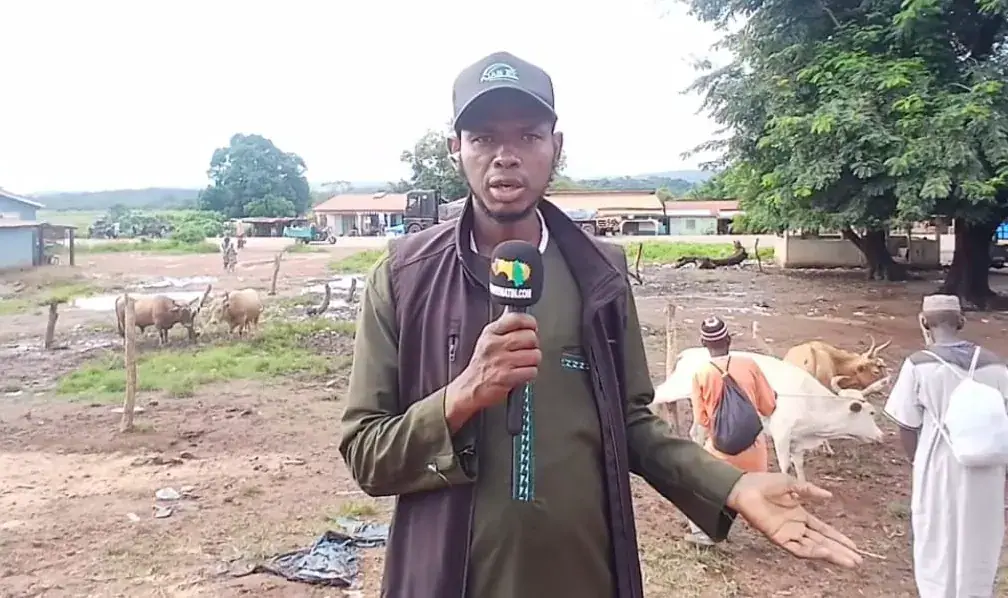
The weekly cattle market in Dounet, a rural commune in Guinea's Mamou region, is a major commercial hub that attracts vendors and buyers from across the country. Located about 30 kilometers from Mamou, the market takes place every Tuesday and is renowned for its livestock trade. However, the market's open-air setting and lack of infrastructure pose significant challenges, including security concerns and difficulties in tracking and controlling the movement of animals.
According to Thierno Oumar Barry, the third vice-mayor of Dounet, the current cattle park is inadequate and lacks proper organization, making it easy for stolen animals to be sold without detection. The park is an open space with no fencing or specific infrastructure, allowing animals to enter and exit without proper control. This situation hampers the local authorities' efforts to maintain security and prevent animal theft.
The market's attractiveness draws vendors and buyers from numerous prefectures in Guinea, making it essential to implement an adapted control system to manage the influx of people and animals. However, due to limited resources, the commune is unable to construct a proper cattle park or implement effective controls. As a result, it is challenging to determine the exact number of localities that regularly supply the market with animals.
The commune of Dounet is seeking assistance from the government, development partners, and non-governmental organizations to construct a cattle park that meets the needs of breeders and traders. The proposed park would have a dedicated entrance, exit, and separate gate for large transporters that move livestock to major cities. This would enable better control and tracking of animal movement, reducing the risk of theft and improving overall market management.
The lack of infrastructure and resources has significant economic and social implications for the local community. The market is an essential source of income for many residents, and its success relies on the ability to trade livestock efficiently and securely. However, the current situation undermines this potential, and the commune's authorities are calling for support to address these challenges.
Thierno Oumar Barry emphasized that the commune's limited resources hinder its ability to address the market's infrastructure needs. The construction of a proper cattle park would require significant investment, which the commune cannot provide on its own. Therefore, external support is crucial to improving the market's conditions and ensuring the well-being of the local community.
The situation at Dounet's cattle market highlights the need for investment in rural infrastructure to support local economic development. The market's growth and success rely on the implementation of effective controls and the construction of adequate facilities. With the support of the government and development partners, the commune of Dounet aims to improve the market's conditions and provide a secure and efficient platform for livestock trade.
Key points
- The market's lack of infrastructure and resources hinders its ability to control animal movement and prevent theft.