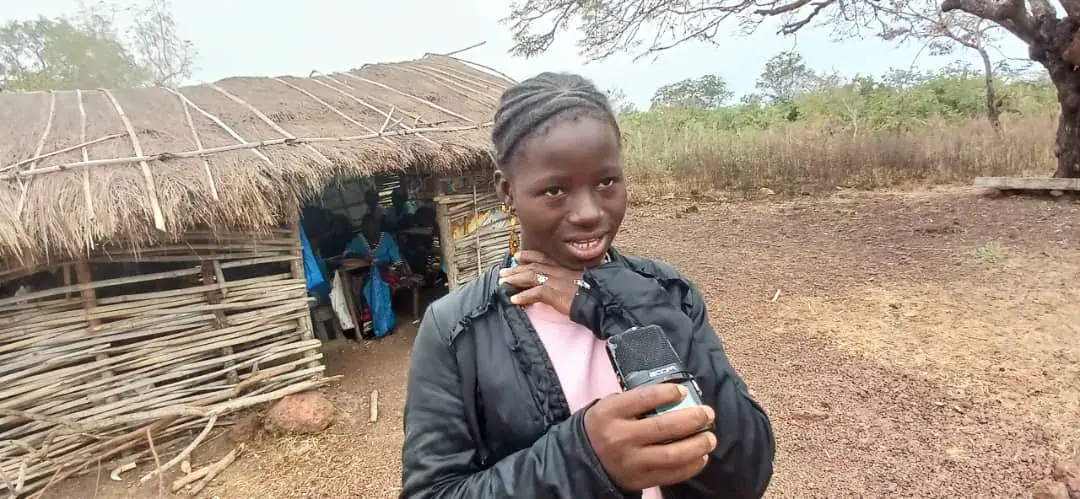
The village of Douga-Makan, located in the rural commune of Kouratongo, Guinea, is facing a pressing educational crisis. Despite having a school, it operates under a simple thatched roof structure, lacking basic infrastructure. The school, which was established ten years ago through community initiative, currently has about thirty students but faces significant challenges, including a shortage of qualified teachers and inadequate resources. As a result, no group has ever completed their primary education cycle.
The school's sole teacher, Mamadou Saliou Diallo, expressed his concerns about the current state of the school. He highlighted the difficulties in providing quality education due to the lack of essential facilities such as tables, benches, and a proper blackboard. The situation is further complicated by the varied ages of his students, ranging from young children to teenagers like 14-year-old Souadou Barry, who is still in her first year. Diallo emphasized the urgent need for a proper school building to ensure that children in Douga-Makan receive a decent education.
Souadou Barry, a 14-year-old student, shared her frustration about her delayed education. Due to the absence of a proper school in the village, she is currently in the first year, despite being significantly older than her peers. She, along with other residents, is calling for intervention from authorities to construct a modern school that would enable all children in the village to access quality education. This would not only help her catch up with her studies but also provide opportunities for other children who are currently out of school.
Mody Saliou Diallo, president of the Association of Parents and Friends of the School (APEAE), highlighted the broader implications of the educational challenges faced by Douga-Makan. He pointed out that the lack of educational infrastructure has resulted in a significant delay in the village's development. The community relies heavily on agriculture, and without access to proper education, the cycle of limited opportunities is likely to continue. Diallo appealed for assistance from the government or development projects to help improve the educational situation in the village.
Mamadou Lamine Diallo, a resident of Douga-Makan, shared the history of the makeshift school. The community came together to build the thatched roof structure after realizing that their children were being left behind due to the lack of a school. Despite efforts to maintain the school, including recruiting different teachers over the years, no group has managed to complete the primary education cycle. The community remains determined to provide their children with educational opportunities, even if it means relying on informal arrangements.
Fatoumata Djely Diallo, a mother from Douga-Makan, expressed her concerns about the future of her children. She emphasized the importance of education in breaking the cycle of poverty and ensuring a better future for the next generation. Without access to a proper school, she fears that her children will be limited to a life of farming and manual labor, similar to their parents. She has joined the call for help from the government, specifically appealing to President Mamadi Doumbouya to intervene and provide the necessary support for a decent school.
The situation in Douga-Makan underscores the broader challenges faced by rural communities in Guinea. The lack of basic infrastructure, including schools, healthcare facilities, and access to clean water, hampers the development and opportunities available to residents. The community's plea for assistance serves as a reminder of the need for targeted interventions to address these gaps and ensure that all Guineans have access to quality education and essential services.
Key points
- The village of Douga-Makan lacks a proper school building, with children currently learning in a makeshift thatched roof structure.