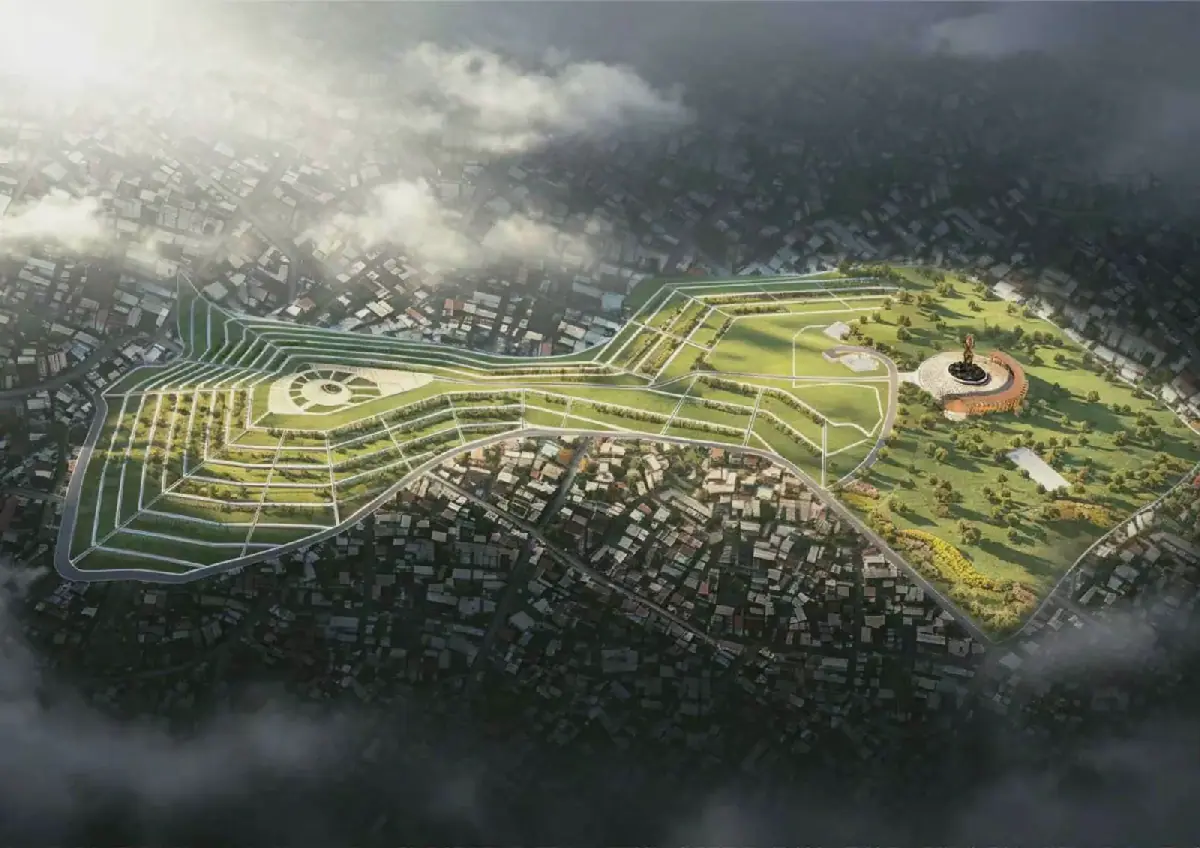
The Dar-Es-Salam landfill, which has been receiving waste from Guinea's capital city for 30 years, is set to be relocated and transformed into an urban park. The launch ceremony for the project took place on November 2, presided over by Prime Minister Amadou Oury Bah. The project is being led by the Ministry of Sanitation, Hydraulics, and Hydrocarbons, in partnership with the Chinese company Winning International Group.
The landfill, which spans over 28 hectares, has received approximately 7.2 million tons of waste, releasing 250,000 tons of methane into the atmosphere, equivalent to 6 million tons of CO2. The site has also contaminated the groundwater and coastal areas. According to Minister of Sanitation Aboubacar Camara, around 150,000 to 250,000 people have lived within 2 kilometers of the landfill, with nearly 2 million people affected over 25 years.
The environmental and health impacts of the landfill have been severe, with thousands of cases of bronchitis and chronic asthma reported, as well as premature births and health problems for waste collectors. Minister Camara described the landfill as a "national shame" and emphasized that its closure is a significant step towards reducing pollution and improving public health.
The project aims to create a green urban space with playgrounds, recreational areas, and other amenities. According to Minister Camara, the site will be transformed into a "healthy and safe" environment for local residents. The project is expected to be completed within a year, with the government emphasizing the need for careful planning and execution to ensure the site's stability and safety.
Prime Minister Amadou Oury Bah emphasized that the project is part of a broader effort to improve living conditions and protect the environment. He noted that the government's vision, as outlined in the Simandou 2040 program, aims to modernize Guinea and promote sustainable development. The project is seen as a key step towards achieving these goals.
The government has emphasized the need for a sustainable financing mechanism to manage waste collection and disposal in the long term. Minister Camara noted that the cost of waste management is ongoing and cannot be borne by the national budget alone. The project is expected to set a precedent for future waste management initiatives in Guinea.
The transformation of the Dar-Es-Salam landfill into an urban park is seen as a significant achievement for the government, which has prioritized environmental protection and public health. The project is expected to improve living conditions for local residents and contribute to Guinea's sustainable development goals.
Key points
- The Dar-Es-Salam landfill will be transformed into a 28-hectare urban park with playgrounds and recreational areas.
- The project aims to reduce environmental pollution and improve public health in Guinea's capital city.
- The government has emphasized the need for a sustainable financing mechanism to manage waste collection and disposal in the long term.