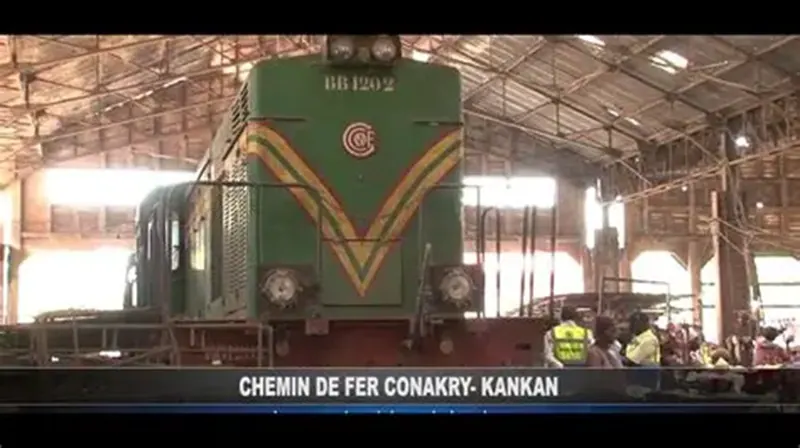
The Conakry-Niger railway, a vital transportation link between Conakry and several interior cities, has been a significant part of Guinea's history, particularly during the country's struggle for independence in 1958. Built before Guinea gained independence, the railway was considered a symbol of modernity and played a crucial role in transporting people and goods. The railway's impact on Guinea's economic and social development cannot be overstated, as it connected the capital city to other regions, facilitating the exchange of goods and services.
According to Fodé Bangoura, a former train depot chief and member of the Conakry Express train's management, the railway workers, or "cheminots," played a significant role in mobilizing the population for independence. The first generation of locomotives, known as "voitures," offered a certain level of comfort and transported the first presidents of several sub-region countries. The cheminots were well-organized and enjoyed certain benefits related to their profession, which enabled them to contribute to the country's independence movement.
The idea of constructing the railway line is linked to the routes of French explorer René Caillié. The foundation stone of the line was laid on May 7, 1900, in Conakry, as part of a project that initially aimed to connect the capital to the port of Benty in the current Forécariah prefecture. The project was later extended to Sikasso and Bobo-Dioulasso in what is now Burkina Faso, but was interrupted by World War I in 1914. The project resumed in 1945, and at independence, the railway network was placed under the responsibility of the Office national des chemins de fer (ONCF).
After independence, the railway structure became the Société nationale des chemins de fer de Guinée (SNCFG), with an essentially Guinean workforce. According to Djibril Sylla, a former train conductor from 1972 to 2002 and trainer at the École nationale des chemins de fer de Guinée, the railway contributed significantly to improving living conditions and supporting economic activity. The railway's disappearance led to the decline of several villages, highlighting its importance in the country's economic and social development.
Several former railway workers believe that the first Guinean president, Ahmed Sékou Touré, prioritized maintaining railway activity after the departure of colonial workers. They claim that resources were mobilized to enable the company to continue operating. N'sira Camara, from the SNCFG's communication service, emphasizes that the railway remains an essential tool for economic development, particularly in a country with significant natural resources. Without adequate means to connect different regions, it will be challenging to discuss economic development.
Many former railway workers believe that after Sékou Touré's era, the railway patrimony was gradually neglected. Some buildings and equipment inherited from the SNCFG were dismantled or abandoned, and the railway sector was no longer a priority for successive regimes. However, the revival of the sector in 2010 with the arrival of a Chinese train and technical team sparked hope among many Guineans who had experienced the railway before and after independence.
The current director-general of the SNCFG, Rose Kasso Tenguiano, believes that the Simandou 2040 corridor could give a new impetus to the national railway network. The Conakry-Kankan-Malian border line, commonly known as the Conakry-Niger line, is among the infrastructures that could benefit from this dynamic. Tenguiano emphasizes that railway infrastructures are crucial for economic development, particularly in the context of the Simandou 2040 megaproject, which aims to exploit the country's natural resources.
Key points
- The Conakry-Niger railway played a significant role in Guinea's independence movement and economic development.
- The railway's decline was caused by neglect and lack of prioritization by successive regimes.
- The Simandou 2040 corridor could give a new impetus to the national railway network.