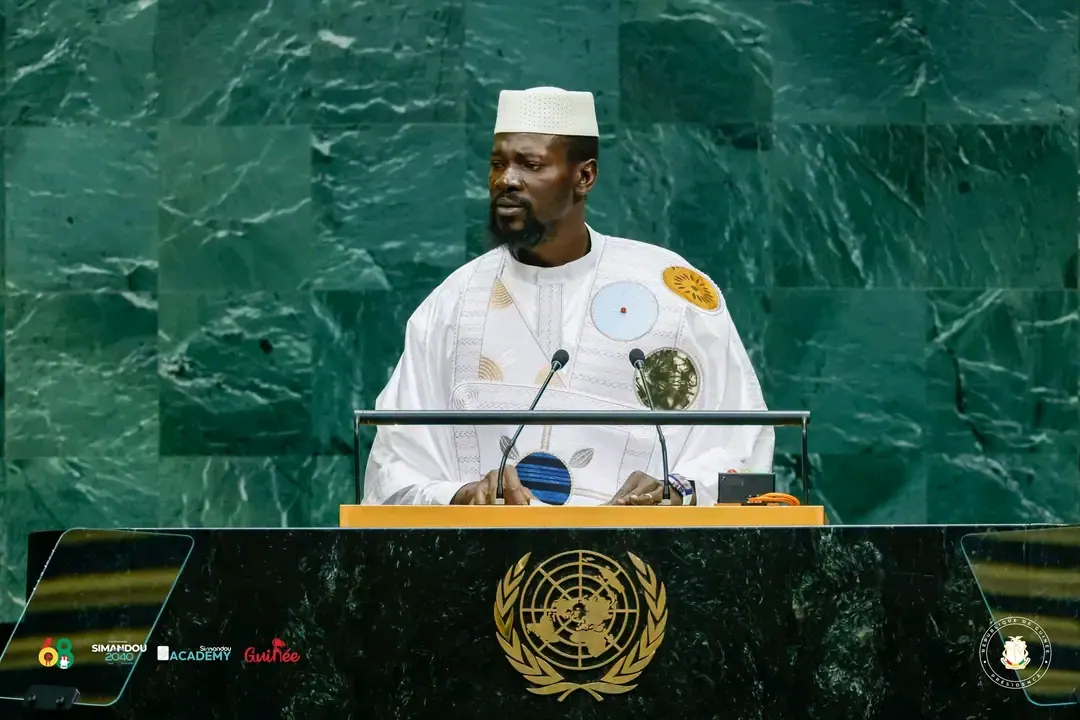
The 81st session of the United Nations General Assembly in New York recently brought together world leaders, including Guinea's President Mamadi Doumbouya, who spoke on behalf of his nation. Meanwhile, Guineans in Manhattan took to the streets to express their dissent against his governance, while others showed their support for the head of state. This juxtaposition of events in New York highlighted the complexities of Guinea's current political landscape.
The Guinean president's address at the UN focused on sovereignty, economic development, natural resource valuation, infrastructure, institutional processes, and the Simandou 2040 program. His administration presents this diplomatic engagement as an effort to defend national interests, strengthen sovereignty, and incorporate resources into an economic transformation strategy. However, the president's words were met with skepticism by some Guineans abroad.
In New York, Guinean citizens exercised their right to free speech, protesting and expressing a starkly different view of the country's political situation. These demonstrations added a new dimension to Guinea's international presence, underscoring that diplomatic representation does not necessarily equate to unanimous domestic support. The diaspora's role in modern politics was on full display, as they utilized social media and public gatherings to voice their opinions.
Historically, diaspora communities were seen primarily as economic contributors, sending remittances back home. Today, they are recognized as influential political actors, observing, commenting, mobilizing, and holding international organizations accountable. The Guinean diaspora in the US exemplified this shift, as their protests against the Conakry government showcased the transnational nature of Guinea's political debates.
The internationalization of Guinea's politics carries significant responsibilities, as actions and messages conveyed abroad can have far-reaching consequences. When Guineans protest overseas, they not only address their compatriots but also engage with a global audience. The medium and tone of their message can either enhance or detract from their cause, with peaceful and organized demonstrations being particularly effective in conveying legitimacy.
A robust republic must be able to accommodate both government rhetoric and citizen criticism, provided that both are expressed within the bounds of the law. The challenge for Guinea lies not in projecting a uniform image but in fostering a strong national reality where diverse perspectives can coexist without escalating into conflict. This entails navigating the complexities of free speech, public debate, and international diplomacy.
As Guinea continues to navigate its development and governance, the interplay between domestic politics and international image will remain crucial. The country's progress will depend on its ability to balance internal debates with a cohesive national identity, ensuring that diverse voices are heard without undermining the nation's global standing.
Key points
- The Guinean diaspora is increasingly playing a significant role in the country's politics, using social media and public gatherings to express their opinions and hold the government accountable.
- The protests in New York highlighted the complexities of Guinea's current political landscape, where citizens are exercising their right to free speech and expressing dissent against the government.
- A robust republic must be able to accommodate both government rhetoric and citizen criticism, provided that both are expressed within the bounds of the law.