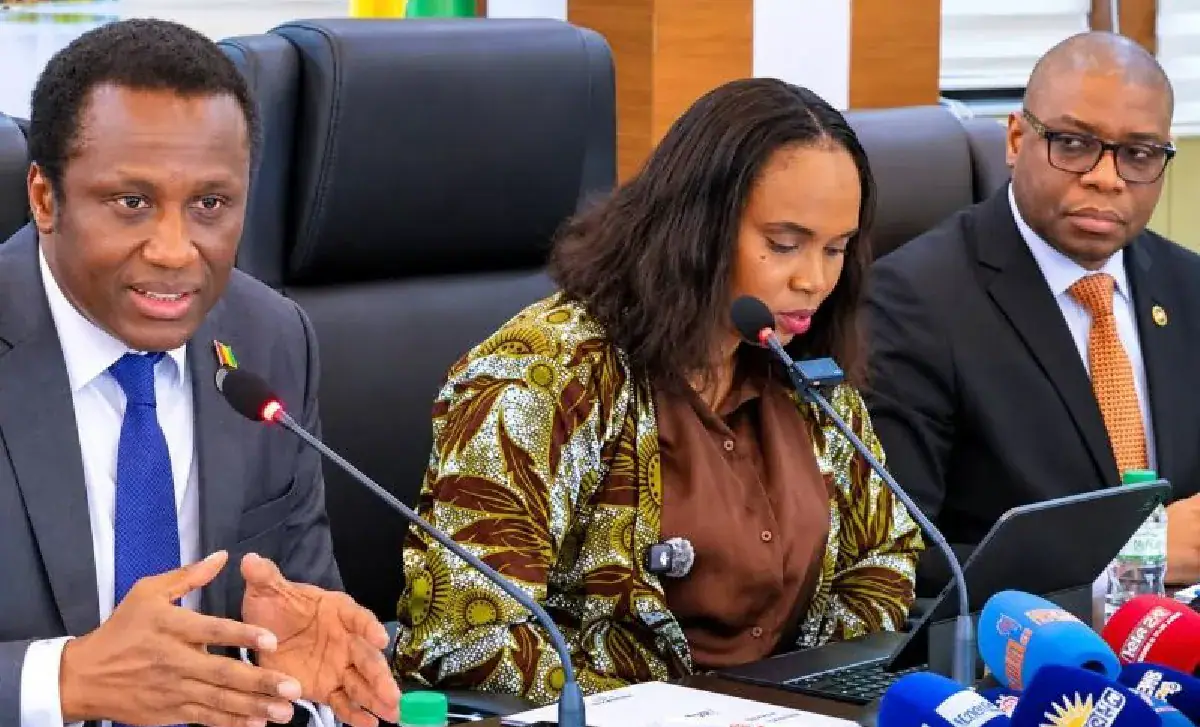
Guinea's Central Bank Governor, Karamo Kaba, has clarified the role of the International Monetary Fund (IMF) in the country's new economic and financial program. The program, approved by the IMF's Board of Directors on November 23, 2026, provides Guinea with financial support of 310.59 million special drawing rights (SDRs), equivalent to approximately $425 million. This funding will help the country achieve sustainable and inclusive growth by leveraging its natural resources.
The economic and financial program, which covers the period 2026-2029, aims to support Guinea's efforts to mobilize public revenue for priority spending, consolidate fiscal and monetary policies, and strengthen governance and transparency. According to Governor Kaba, the IMF will play a technical and financial support role, but will not dictate Guinea's monetary policy. The country's authorities will maintain control over monetary policy decisions.
Governor Kaba explained that the negotiations with the IMF were complex, but ultimately led to a mutually beneficial agreement. He emphasized that Guinea's teams, including the Central Bank, will continue to define and implement the country's monetary policy. The IMF's role will be limited to providing technical and financial support, as well as monitoring the program's implementation.
The program is designed to help Guinea tap into its natural resources to drive sustainable growth. The country's authorities aim to use the funding to support priority spending, including investments in infrastructure and social services. By strengthening governance and transparency, Guinea hopes to improve its business climate and attract more investment.
Governor Kaba's clarification on the IMF's role comes amid concerns about the potential impact of IMF conditions on Guinea's economic sovereignty. However, the Governor emphasized that the agreement will allow Guinea to maintain control over its monetary policy, while benefiting from the IMF's technical expertise and financial support.
The economic and financial program is a significant development for Guinea, which has faced challenges in recent years, including high inflation and limited access to international financing. The program is expected to help the country stabilize its economy and create a more favorable business environment.
The agreement with the IMF is a positive step for Guinea, which is seeking to harness its natural resources to drive economic growth and development. With the support of the IMF and other international partners, Guinea aims to achieve sustainable and inclusive growth, and improve the living standards of its citizens.
Key points
- IMF will provide technical and financial support to Guinea's economic program, but will not dictate monetary policy.