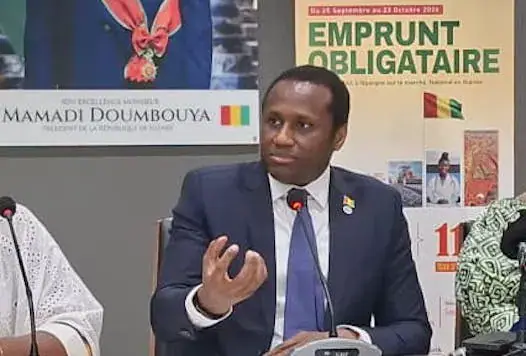
The Governor of Guinea's Central Bank, Dr. Karamo Kaba, has sought to allay fears of a potential cash shortage in the country's banking system following a recent state bond issuance. The Guinean government raised 4,579 billion GNF (approximately $520 million USD) through a one-month bond issuance with an 11% interest rate and a five-year maturity. This move has sparked concerns among the public about the potential impact on the banking system.
Dr. Karamo Kaba emphasized that the bond issuance, although significant, represents only a small fraction of the country's overall financial resources. He noted that the total resources of Guinea's banking sector stand at around 93,000 billion GNF, with the informal sector adding a similar amount. As such, the 4,579 billion GNF raised through the bond issuance amounts to only about 2-3% of the total resources, which Dr. Kaba described as "minime."
The Central Bank Governor also sought to distinguish between a "crisis of liquidity" and a "cash shortage," which he believes have been conflated in public discourse. He explained that Guinea has experienced a cash shortage in the past, caused by delays in the delivery of banknotes from suppliers. However, this is distinct from a liquidity crisis, which Dr. Kaba insisted has not occurred in the country.
Dr. Karamo Kaba further clarified that the cash shortage issue is not related to the recent bond issuance. He noted that the lead time between ordering and receiving banknotes is around 7-8 months, which can cause temporary tensions in the cash supply. However, he emphasized that alternative payment channels, such as digital payments, checks, and electronic transfers, have continued to function normally.
The Central Bank Governor expressed confidence that the recent bond issuance will not trigger a liquidity crisis. He pointed out that the state has raised only about 2.5% of the total existing resources, which he believes is not sufficient to cause a crisis. Dr. Kaba's comments aim to reassure the public and alleviate concerns about the potential impact of the bond issuance on Guinea's banking system.
The bond issuance has been seen as a sign of the vitality of Guinea's financial market. However, it has also raised questions about the potential risks and implications for the country's economy. Dr. Karamo Kaba's statements aim to provide clarity and transparency on these issues, emphasizing that the Central Bank is actively monitoring the situation.
Overall, Dr. Karamo Kaba's address seeks to provide reassurance and guidance on the recent bond issuance and its potential implications for Guinea's economy. By providing context and clarification on the issues at hand, the Central Bank Governor aims to promote stability and confidence in the country's financial system.
Key points
- The Guinean government raised 4,579 billion GNF through a recent bond issuance.
- The Central Bank Governor, Dr. Karamo Kaba, believes the bond issuance represents only 2-3% of the country's total financial resources.
- Dr. Kaba distinguishes between a "crisis of liquidity" and a "cash shortage," emphasizing that Guinea has experienced the latter but not the former.