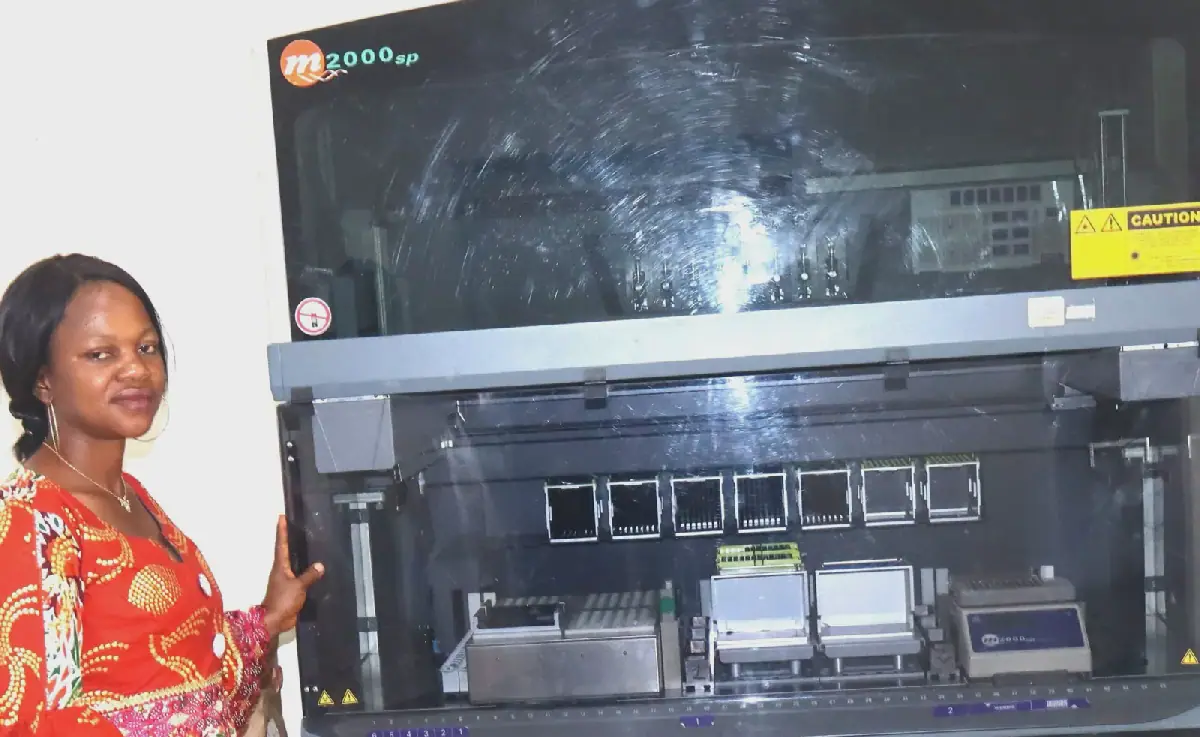
The Regional Hospital of Boké in Guinea has been equipped with a molecular biology laboratory featuring an Abbott m2000 platform. This new facility was inaugurated on November 25, 2026, in the presence of administrative authorities, healthcare professionals, and technical and financial partners. The laboratory is intended to strengthen local capacities for diagnosing and biologically monitoring patients.
The equipment was provided by the Unit for Support and Coordination of Programmes (UAGCP) with technical assistance from LABMART. This initiative is part of efforts to enhance the technical capabilities of healthcare structures in Guinea. Dr. Sékou Naba Camara, representing the hospital's management, praised the initiative, highlighting its potential to improve the quality of healthcare services, particularly in measuring viral loads for individuals living with HIV/AIDS.
Dr. Gbilimou Noëlle Jeannette, technical assistant to the Prefectural Health Directorate (DPS) of Boké, noted that the new infrastructure will alleviate difficulties in caring for people living with HIV/AIDS in the region. She emphasized that measuring viral load is a crucial indicator for evaluating treatment effectiveness and ensuring better therapeutic monitoring of patients.
Amadou Diogo Bah, a biomedical engineer at LABMART, explained that his company's intervention included installing the Abbott m2000 platform and training users in biological monitoring and viral load detection techniques. LABMART, in partnership with Abbott, also renovated the laboratory, provided necessary complementary equipment, and covered customs, transit, and shipping costs for the materials.
The Abbott m2000 equipment, provided by Abbott through UAGCP, was installed by Abbott, which also provides training for healthcare personnel and maintenance of the device. This new platform will enhance diagnostic and therapeutic monitoring capabilities in several areas, including HIV/AIDS, hepatitis B and C, human papillomavirus (HPV), tuberculosis, and certain sexually transmitted infections (STIs).
For the populations of Boké's administrative region, this addition represents a significant advancement in improving access to specialized biological examinations and enhancing local patient care. The initiative has been made possible through the engagement of the President of the Republic, Mamadi Doumbouya, the government, the Ministry of Health and Public Hygiene, and technical and financial partners.
The implementation of this molecular biology laboratory is expected to have a positive impact on the quality of healthcare services in the region. With the Abbott m2000 platform, healthcare professionals will be able to conduct advanced diagnostic tests and monitor patients more effectively, ultimately contributing to improved health outcomes for the local population.
Key points
- The laboratory's equipment with an Abbott m2000 platform aims to enhance local diagnostic and biological monitoring capabilities for patients.
- The initiative is part of efforts to strengthen the technical capabilities of healthcare structures in Guinea.
- The new platform will enhance diagnostic and therapeutic monitoring capabilities in several areas, including HIV/AIDS, hepatitis B and C, HPV, tuberculosis, and certain STIs.