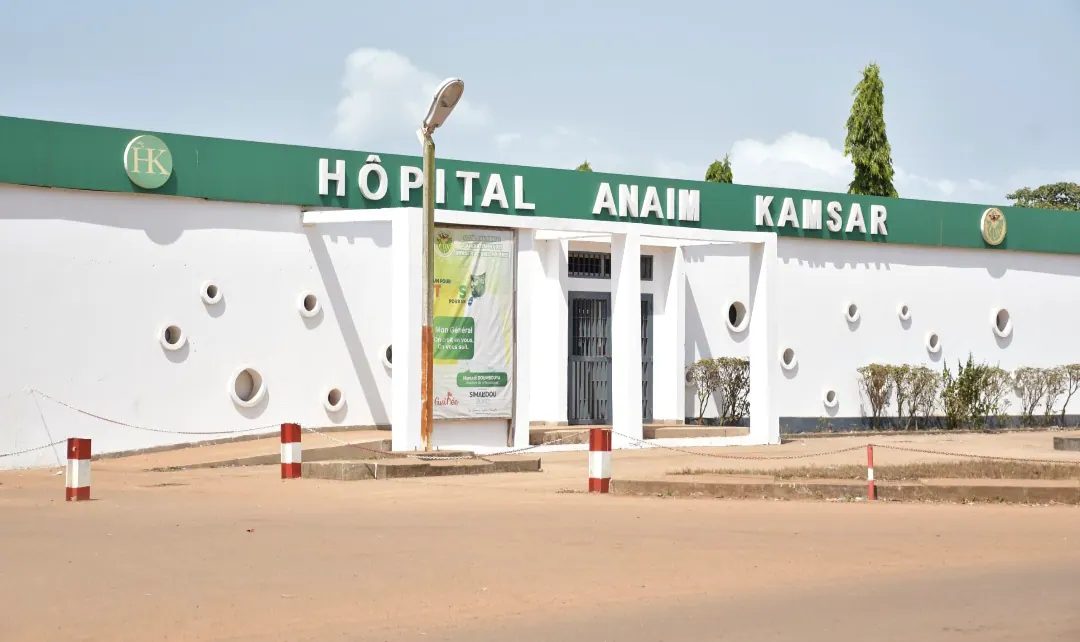
As Guinea celebrates 68 years of independence, the Agence Nationale d'Aménagement des Infrastructures Minières (ANAIM) organized a media tour at the ANAIM Hospital in Kamsar. The tour allowed journalists to explore the hospital's facilities, technical platform, medical services, and patient care conditions. The delegation also examined hygiene, safety, maintenance, cleanliness, and environmental respect within the hospital. Discussions took place with various department heads and doctors.
The ANAIM Hospital in Kamsar was established in 1973 to provide healthcare to workers of the Compagnie des Bauxites de Guinée (CBG) and ANAIM, as well as surrounding communities. Initially with 63 beds, the hospital has expanded its capacity to 176 beds. It plays a vital role in treating patients from various localities in the Boké region. The hospital features services such as medicine, surgery, pediatrics, emergency care, maternity, intensive care, medical imaging, laboratory, pharmacy, urology, physiotherapy, endocrinology, diabetology, nutrition, and odontology.
The hospital has made significant advancements, including the revival of coeliochirurgie, a minimally invasive surgical technique that had been interrupted for several years. With the recruitment of a foreign surgeon, this practice has resumed, enabling several interventions that were previously performed by laparotomy. The hospital has also introduced painless delivery by epidural anesthesia to improve patient comfort. Additionally, certain interventions are performed by coelioscopy at the maternity ward.
The pediatric sector has seen notable improvements, with the hospital now featuring a neonatology service that accepts newborns from different localities in the Boké region. Staff have received training in neonatal resuscitation as part of cooperation with a Swiss NGO. Almost 50 healthcare agents from the region have been trained. The hospital has also enhanced its care for neonatal jaundice using phototherapy lamps and rapid bilirubin measurement.
The modernization of care has been accompanied by investments in technical platforms, including resuscitation ventilators, anesthesia ventilators, monitoring devices, and an autoclave. The laboratory's capacities have been strengthened with automated systems for biochemistry, hematology, and bacteriology analyses. New equipment enables on-site examinations, such as mammography, radiopanoramique, and echo-Doppler, which were previously performed externally.
Administrator M. Kaba Mandiaye stated that these transformations aim to continuously improve service quality. Several investments have been made, including renovations of building roofs and pavilions, wall refurbishment, and improvements to water conservation and supply. These efforts focus on enhancing hospital hygiene and facilitating cleaning and decontamination operations to reduce nosocomial infection risks.
The hospital's administration emphasizes staff training, with several professionals sent for specialization training in Senegal and Côte d'Ivoire. Some have returned, enabling the development of new specialties. The hospital has also been selected for two consecutive years to host practical tests for health technician final exams. This approach prioritizes risk management, continuous evaluation of professional practices, technological innovation, and operational excellence.
Key points
- The ANAIM Hospital in Kamsar has significantly upgraded its facilities and medical services, with a focus on staff training and improved patient care.