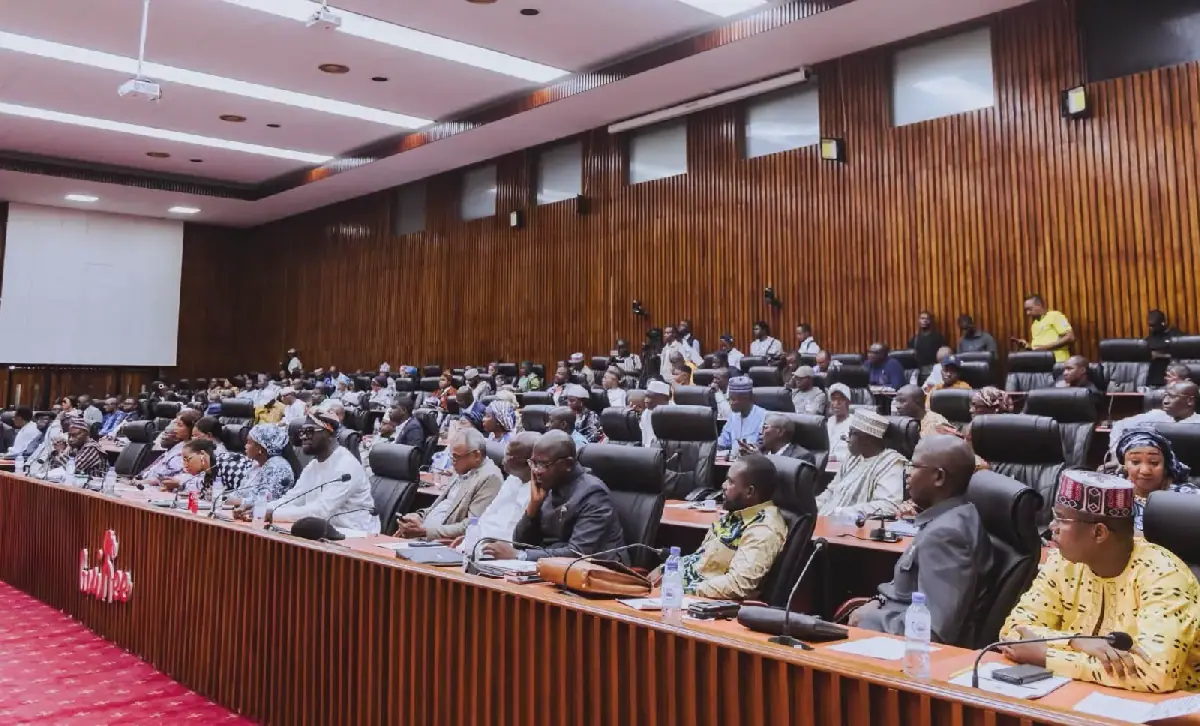
The Guinean parliament is reviewing the 2026 revised finance bill, which includes a significant increase in public expenditure. The revised budget estimates expenditures at 67,925.87 billion Guinean francs (GNF), a 5.83% increase from the initial forecast of 64,181.37 billion GNF. This adjustment is attributed to changes in the macroeconomic environment and budget execution constraints. The increase is 3,744.50 billion GNF.
The government's adjustments aim to reflect the current economic situation and budget execution challenges. The revised expenditure includes a 6.09% increase in the general budget, rising to 65,516.67 billion GNF from 61,755.13 billion GNF in the initial budget. This increase is primarily due to higher current expenditures and investment spending. The breakdown shows that current expenditures have risen by 18.06%, while investment expenditures have decreased by 10.13%.
Current expenditures have increased significantly, mainly due to higher personnel costs and transfers. Personnel costs rose by 1.02% to 12,629.84 billion GNF, while transfers surged by 66.84% to 15,828.31 billion GNF. This increase in transfers is largely due to the state's efforts to maintain fuel prices at 12,000 GNF per liter and to support various sectors such as agriculture and commerce.
The increase in current expenditures also includes higher costs for goods and services, which rose by 876.26 billion GNF to 9,659.67 billion GNF. This is largely due to expenses related to the organization of legislative and communal elections. In contrast, financial charges for debt decreased by 19.48% to 3,836.58 billion GNF, mainly due to updated interest payments on domestic and external debt.
Investment expenditures, however, have decreased by 10.13% to 23,562.27 billion GNF. This decline is primarily due to the postponement of some projects to 2027, taking into account their level of maturity. The investment expenditures are divided into project investments, which account for 84.95% of the total, and non-project investments.
The revised budget also shows a slight decrease in special allocation budgets. These budgets are estimated at 2,409.20 billion GNF, a 0.70% decrease from the initial budget. The decrease is mainly due to lower allocations for the National Local Development Fund (FNDL) and the Mining Investment Fund (FIM).
The review of the revised finance bill by the Guinean parliament aims to ensure that the increased expenditure aligns with the country's current economic situation and budget execution challenges. The adjustments made to the budget reflect the government's efforts to manage the economy effectively and prioritize spending on key sectors.
Key points
- The 2026 revised budget for Guinea estimates expenditures at 67,925.87 billion GNF, a 5.83% increase from the initial forecast.
- Current expenditures have increased by 18.06%, primarily due to higher personnel costs and transfers.
- Investment expenditures have decreased by 10.13% due to the postponement of some projects to 2027.