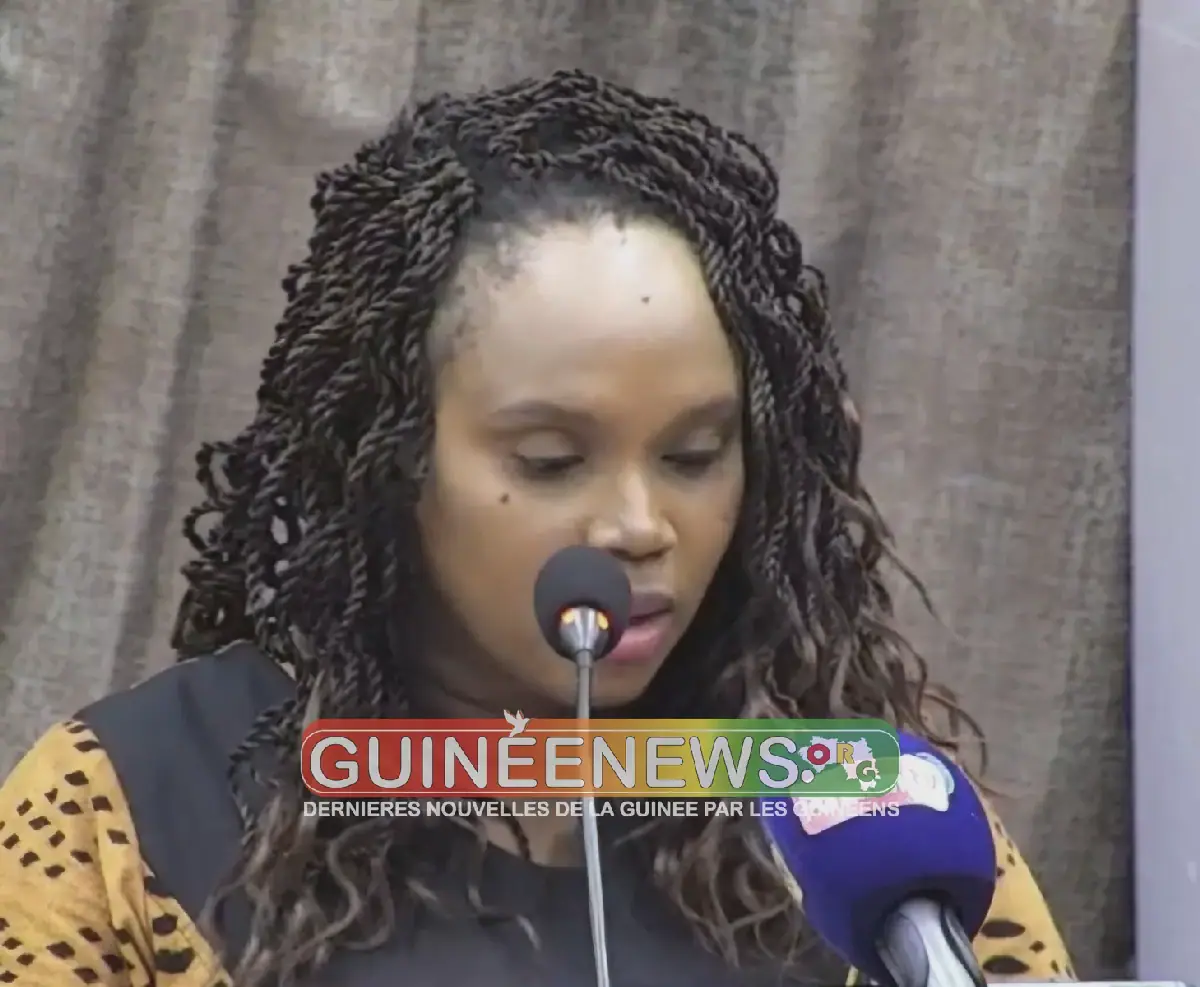
On November 7, 2026, Guinea's Minister of Economy, Finance and Budget, Mariama Ciré Sylla, addressed the country's parliament to discuss the 2026 budget. She emphasized that the proposed budget is not just a simple accounting adjustment but a strategic reorientation aimed at transforming the country's wealth into tangible progress for its citizens. The minister highlighted the significance of the Simandou mining project and the need to secure and expand the state's resources to ensure autonomy in decision-making.
The proposed budget outlines a 7.5% increase in overall revenue, reaching 64,000 billion Guinean francs. This growth is largely driven by a 30% increase in mining sector tax revenue, thanks to the creation of a dedicated department within the General Directorate of Taxes and intensified controls. Minister Sylla also addressed concerns about tax exemptions, public debt recovery and absorption of external funds. She revealed that efforts to recover outstanding debts, estimated at 335 billion Guinean francs, have already collected 45 billion Guinean francs from debtor companies.
The minister outlined a firm and structured action plan to address parliamentarians' concerns. On the expenditure side, which has been revised to 67,925 billion Guinean francs, representing a 5.8% increase, Sylla defended a "credible budget that is executed." She justified the downward revision of certain investment credits due to project maturity and the need to avoid involvement in unfinished projects. The minister also addressed concerns about execution rates displayed at 0% in some restructured ministries, attributing them to administrative reorganizations rather than a lack of real investments.
Minister Sylla emphasized that the government's priorities remain focused on human development and essential infrastructure. She cited investments in recruiting 4,500 teachers, supporting the operation of over 450 health centers and 2,500 health posts nationwide, and assisting patients with severe pathologies through the National Social Security Fund. The minister also highlighted efforts to connect rural areas and accelerate key road projects, such as the Kintinian-Baranama axis.
The minister underlined the government's commitment to territorial equity, reflected in a nearly 50% increase in operating credits for sub-prefectures and a 100% increase in transfers to communes. To support this ambition without jeopardizing financial balances, Sylla highlighted a range of modernization reforms currently underway, including the digitalization of tax departments and customs, as well as the deployment of financial control and management tools.
Minister Sylla also addressed concerns about purchasing power, sanitation and payment of arrears to local suppliers, for which nearly 6,500 billion Guinean francs have already been injected this year. She demonstrated a thorough understanding of the country's macroeconomic challenges and presented a clear and well-structured strategy for addressing them.
The 2026 budget reflects the government's efforts to promote economic growth, improve living standards and ensure financial sustainability. The proposed budget and reforms aim to transform Guinea's wealth into tangible progress for its citizens, with a focus on human development, infrastructure and territorial equity. Key initiatives include increased revenue, strategic reforms and investments in essential public services.
Key points
- The 2026 budget outlines a 7.5% increase in overall revenue, reaching 64,000 billion Guinean francs.
- The government has invested in recruiting 4,500 teachers and supporting the operation of over 450 health centers and 2,500 health posts nationwide.
- The minister highlighted a range of modernization reforms currently underway, including the digitalization of tax departments and customs.