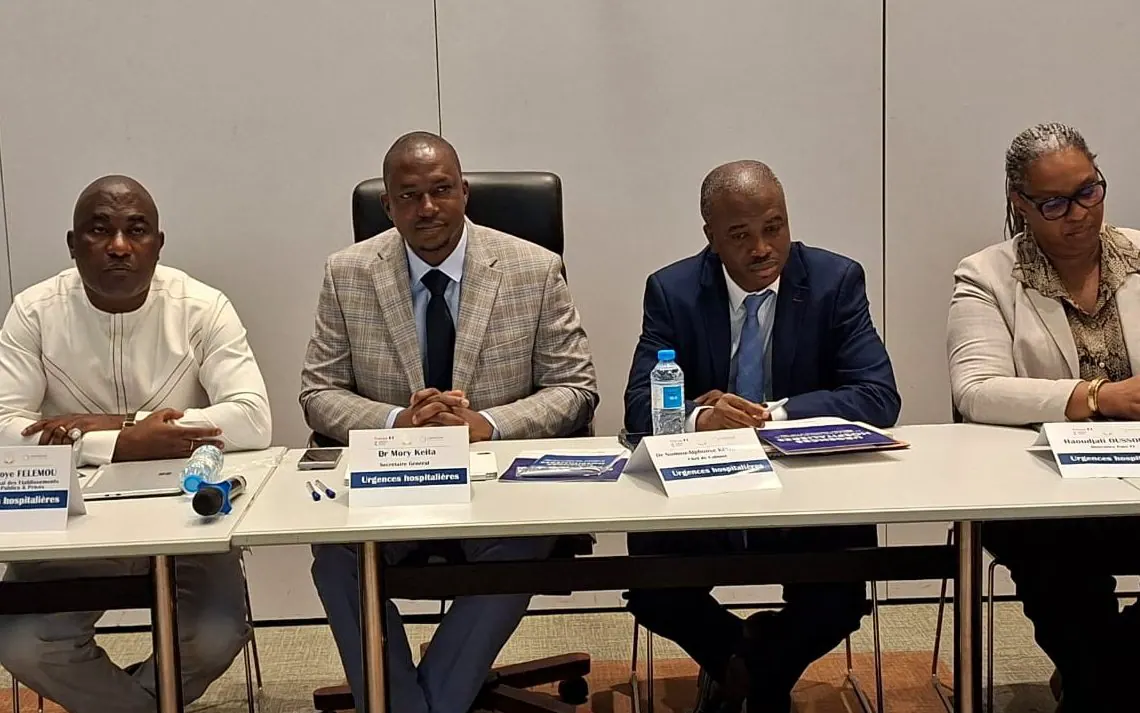
The Guinean government, in partnership with L'Initiative and Expertise France, has launched a project aimed at reorganizing hospital emergency services across the country. The project, valued at over €5 million, will run from 2024 to 2027 and focus on improving emergency care, particularly for patients with malaria, tuberculosis, and HIV. The project will be implemented in Conakry's Ignace Deen national hospital, eight regional hospitals, and Siguiri's prefectural hospital.
According to Dr. Magali Bozon, French Ambassador's regional advisor for global health, significant progress has been made in training healthcare professionals. Over 550 healthcare workers have received training in emergency care protocols, and 30 mentoring missions have been conducted in hospital teams. Additionally, 199 professionals have received specific training in caring for patients with the three targeted diseases. The project has also led to the development and validation of curricula for two university diplomas in emergency medicine and nursing.
The project's second phase aims to improve patient care pathways before and after emergency services. Data from 2022 shows that out of over 42,500 patients admitted to emergency services in ten hospitals, less than 5% had received prior medical referral. The mortality rate in these services was 1.4%. To address these challenges, the project plans to strengthen patient orientation from the community to adapted structures and follow-up after emergency services.
A research component, conducted with the Centre de recherche et de formation en infectiologie de Guinée (CERFIG), will provide data to inform decisions and adapt interventions. Dr. Gnakoye Félémou, director of national public and private hospital establishments, emphasized the importance of emergency services in the healthcare pathway, stating that they are the "gateway to the hospital" and a critical factor in saving lives.
The project's sustainability was also discussed during the steering committee meeting. Secretary General of the Ministry of Health and Public Hygiene, Mory Keita, expressed his expectations for the committee to consolidate the project's institutional anchorage, ensuring that each achievement is integrated into the national strategic plan for hospital emergencies.
The committee also emphasized the importance of integrating research results into decision-making processes and ensuring that the dignity of patients, confidentiality, and gender equity are prioritized. The project's next steps will focus on consolidating team competencies, completing planned works, and integrating improvements into daily hospital operations.
The reorganization of hospital emergency services in Guinea aims to reduce avoidable deaths and improve patient care. With over €5 million in funding, the project will contribute to enhancing the quality of emergency services, particularly for patients with malaria, tuberculosis, and HIV. The project's progress will be monitored, and its achievements integrated into the national healthcare system.
Key points
- The project aims to improve emergency care for patients with malaria, tuberculosis, and HIV.
- Over 550 healthcare workers have received training in emergency care protocols.
- The project will run from 2024 to 2027 and is valued at over €5 million.