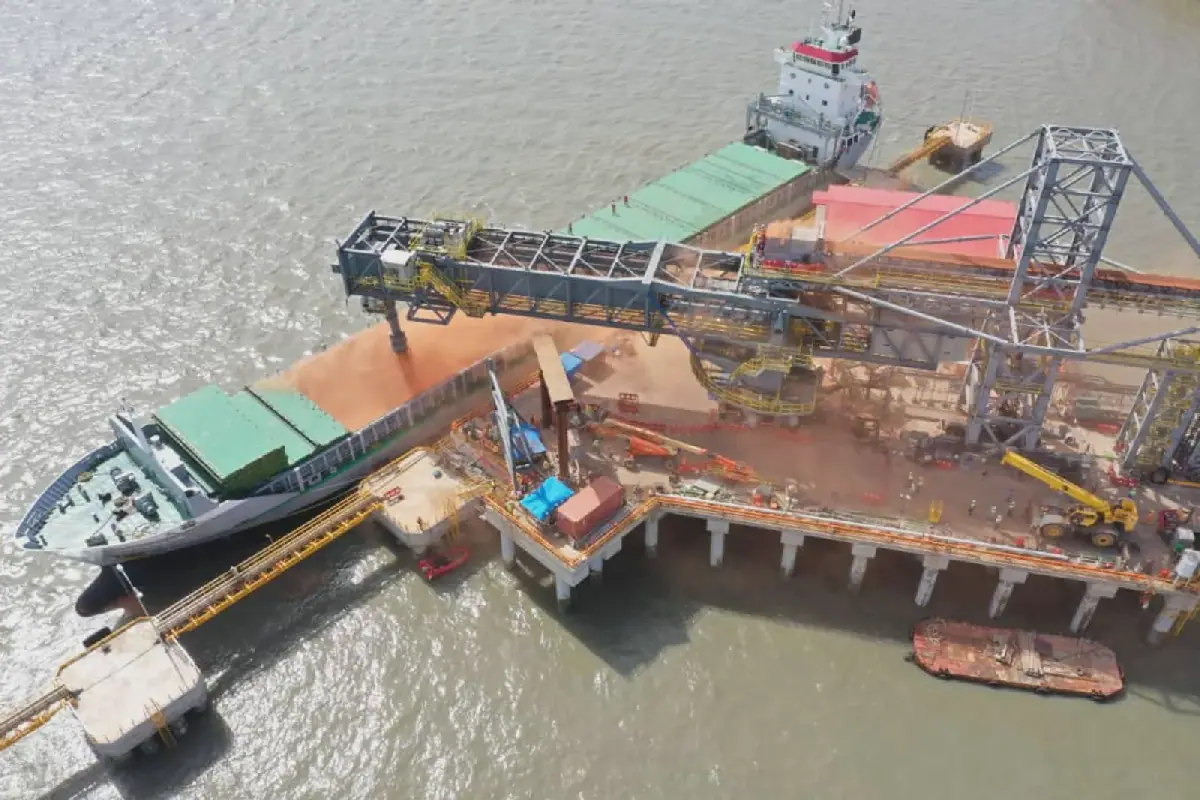
Guinea is moving forward with a proposed $1.9 billion deep-water port project designed to support mining, container traffic and industrial activity. The plan represents a significant shift from infrastructure developed primarily for individual mining operations towards a shared facility that could support broader economic activity. According to Mines and Geology Minister Bouna Sylla, feasibility studies have been completed and the government is engaging potential financiers.
The proposed port, planned for a 20-metre draft, would be capable of accommodating Capesize vessels carrying up to 200,000 metric tonnes. Its multi-user design is intended to serve mining companies, container operators and industrial businesses. This distinguishes it from the dedicated port infrastructure developed for the Simandou iron ore project, which was primarily designed to transport output from its mining concessions.
Guinea is a major mineral producer, exporting 182.8 million tonnes of bauxite in 2025, a 25 per cent increase, with approximately 74 per cent of shipments going to China. However, much of its mining logistics infrastructure has historically been developed around individual companies and their production requirements. A shared port could broaden access to deep-water shipping, particularly for smaller operators and businesses outside the mining sector.
The proposed site also presents an important development question: how will surrounding communities benefit? African Development Bank documentation for the north-west Guinea deep-sea port project identifies infrastructure and social-service challenges in the project area, including limited access to electricity, healthcare and education. The project’s environmental and social assessment and resettlement planning therefore need to be central to implementation.
The financing strategy is also significant, with Guinea engaging American, Chinese and multilateral institutions, including the US International Development Finance Corporation, Chinese investors, the World Bank, the African Development Bank, Africa Finance Corporation and the International Finance Corporation. However, no final investor commitments, selection timetable or construction start date have been announced.
The project’s economic rationale will ultimately depend on whether it can offer a competitive alternative to dedicated mining infrastructure. A port does not become a regional trade hub simply because it can accommodate large vessels. It requires reliable inland transport, efficient customs procedures, power, storage facilities and predictable operating costs.
For Guinea, the proposal fits a broader ambition to turn mineral wealth into a platform for trade and industrial development rather than relying predominantly on raw-material exports. However, port infrastructure alone cannot diversify an economy; the benefits will depend on investment in local suppliers, processing capacity, industrial power, technical skills and businesses capable of using the facility.
Key points
- The proposed port project aims to support broader economic activity and provide a competitive alternative to dedicated mining infrastructure.
- The project’s success depends on investment in local suppliers, processing capacity, industrial power, technical skills and businesses capable of using the facility.
- The government must ensure transparent access arrangements and charges, as well as meaningful community consultation to benefit surrounding communities.
Reporting sources
- Guinea’s Shared Port: A Step Towards Inclusive Economic Development · African Leadership Magazine