The Guinean government, under President Mamadi Doumbouya, has made agriculture and livestock a national priority. This strategic decision reflects a commitment to modernizing rural areas, directly supporting producers, and transforming the rural sector sustainably. With the support of the Food and Agriculture Organization (FAO), the government has mobilized $35 million to protect rural populations from food insecurity.
Historically, the agricultural budget represented around 5% of the national budget. However, the Guinean government now aims to reach the 10% recommended by the African Union, as per the commitments made in Maputo (2003) and Malabo (2014). This orientation is part of the Accelerated Program for Food Security, Nutrition, and Sustainable Agricultural Development (PASANDAD). The primary goal is to increase rice production to 5.5 million tons, an 83% increase in national production.
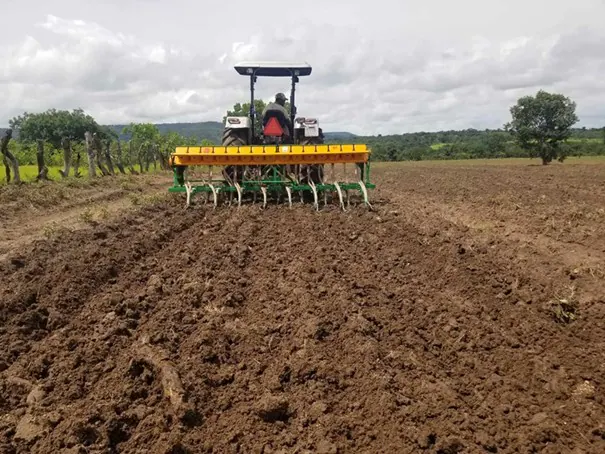
Efforts are being made to diversify crops and strengthen food sovereignty, focusing on maize and tubers. Hundreds of tractors and harvesters have been deployed in prefectures, and subsidized inputs are being distributed through the Chambers of Agriculture. According to the Regional Director of Agriculture in Labé, over 500 hectares of lowlands and plains have been developed by the Rural Engineering Technical Bureau (BTGR) of the Ministry of Agriculture.
The government has also intensified investments in the livestock sector, considered a pillar of food security and economic diversification. Initiatives include supporting family farming, improving slaughter infrastructure, and strengthening the cold chain. The Ministry of Livestock has conducted multiple vaccination campaigns to protect livestock, while projects for pastures and pastoral wells promote climate adaptability.
Strategic partnerships and training programs accompany the development of the poultry and pig sectors. With around 70% of its population engaged in agropastoral activities, Guinea aims to transition from a subsistence model to modern and productive agriculture and livestock, supported by significant funding and a clear political will.
The government places farmers at the center of its development strategy, making agriculture and livestock one of the pillars of the Simandou 2040 development program. This approach reflects a commitment to sustainable development and food sovereignty. By modernizing the agricultural sector, the government hopes to improve the livelihoods of rural populations and reduce food insecurity.
The modernization efforts are expected to have a positive impact on Guinea's economy and food security. The government's commitment to allocating a larger share of the budget to agriculture and livestock demonstrates its dedication to achieving food sovereignty and sustainable agricultural development. Key initiatives, such as the PASANDAD program, are crucial to achieving these goals and improving the lives of Guinean citizens.
Key points
- The Guinean government aims to increase rice production to 5.5 million tons, an 83% increase in national production.
- The government has mobilized $35 million to protect rural populations from food insecurity.
- Agriculture and livestock now represent a national priority, with a focus on modernizing rural areas and achieving food sovereignty.