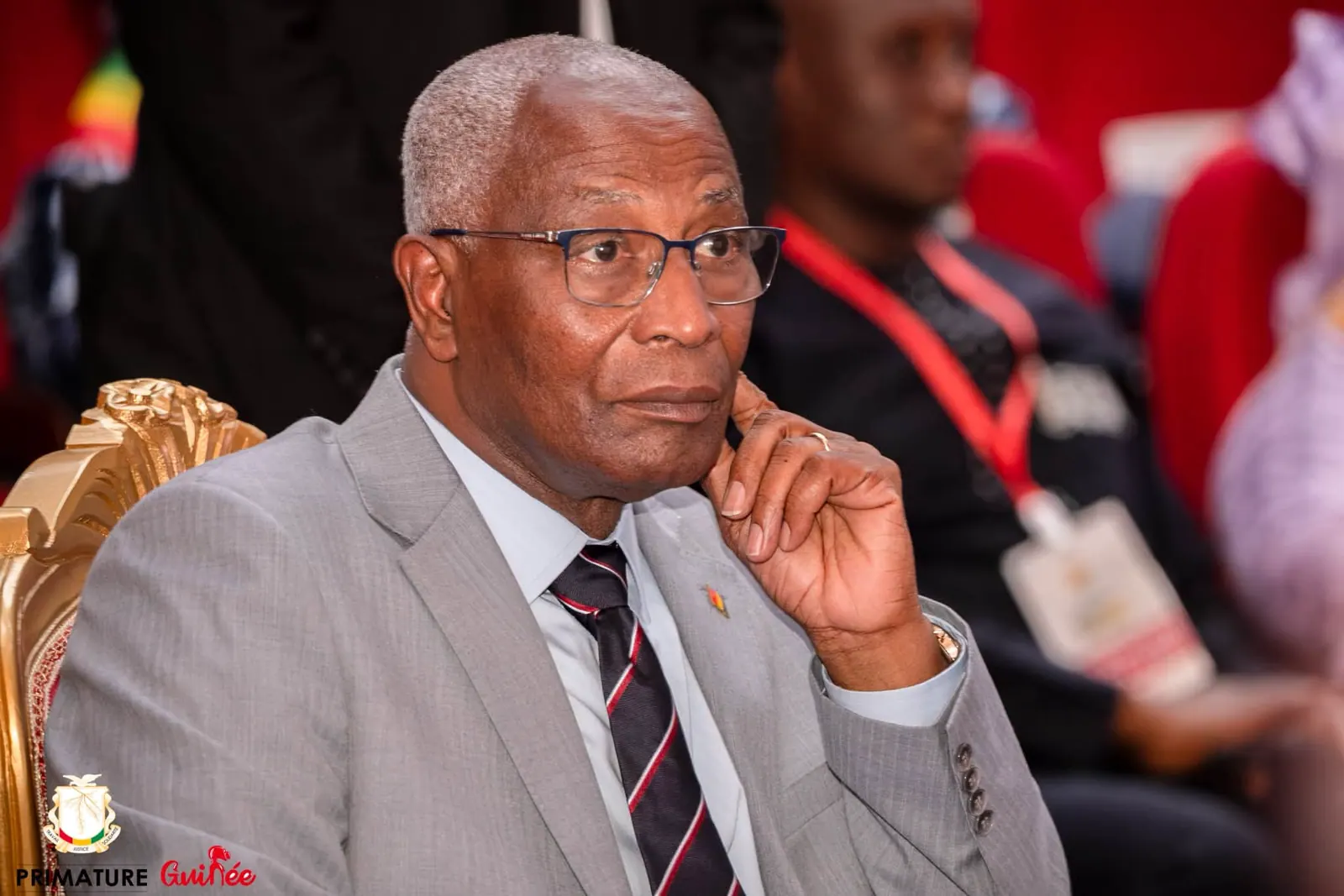
Guinea's Premier Minister Bah Oury recently met with Ousmane Diagana, Vice President of the World Bank for West and Central Africa, to discuss efforts to improve public market management and control infrastructure costs. The meeting focused on implementing a digital system for public markets, which is expected to be fully operational by the end of the year. This system aims to provide a robust and transparent pricing structure for goods and services.
The digital system, developed in cooperation with Rwanda, will integrate price data for goods and services related to the National Institute of Statistics and the General Administration of Public Works. This will enable the government to have a clear and transparent pricing structure for infrastructure projects, including buildings and roads. According to Premier Minister Bah Oury, this system will help to prevent overpricing and ensure that infrastructure projects are completed at a reasonable cost.
Premier Minister Bah Oury emphasized that Guinea's natural resources make it possible to construct infrastructure at a lower cost compared to other countries. He cited the abundance of water, laterite, and granite in Guinea, which are essential materials for construction. In contrast, countries in the Sahel region often have to import sand, making construction more expensive. Bah Oury stressed that a kilometer of road in Guinea should not be more expensive than a kilometer of road in Senegal.
To achieve this goal, the Premier Minister announced plans to utilize artificial intelligence in the pricing structure. This technology will help to analyze data and ensure that prices are in line with market rates. Bah Oury believes that integrating new technologies will improve the quality of human resources involved in using these instruments. He also emphasized the importance of reducing the influence of human factors, which can sometimes lead to errors or biases.
The Premier Minister's efforts aim to improve the management of public markets and control infrastructure costs. By implementing a digital system and utilizing artificial intelligence, the government hopes to increase transparency and efficiency in infrastructure projects. This, in turn, is expected to reduce costs and improve the overall quality of infrastructure in Guinea.
The implementation of the digital system and the use of artificial intelligence are part of a broader strategy to modernize Guinea's infrastructure development. The government aims to create a more efficient and transparent system for managing public markets and infrastructure projects. This will help to attract investment and improve the overall economy of the country.
Premier Minister Bah Oury's efforts to improve infrastructure cost management have been welcomed by development partners, including the World Bank. The implementation of the digital system and the use of artificial intelligence are expected to have a positive impact on Guinea's economy and infrastructure development.
Key points
- Premier Minister Bah Oury aims to make infrastructure construction in Guinea more affordable by implementing a digital system for public markets and utilizing artificial intelligence.
- The digital system will provide a transparent pricing structure for goods and services, helping to prevent overpricing.
- Guinea's natural resources make it possible to construct infrastructure at a lower cost compared to other countries.