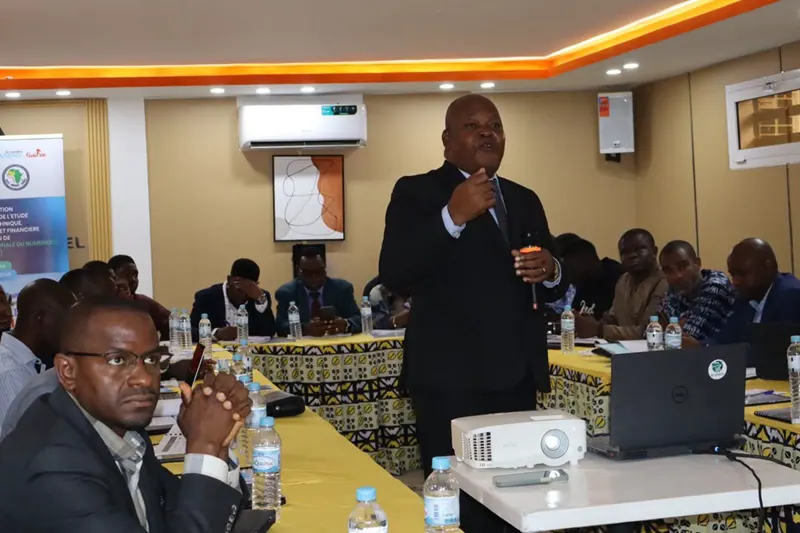
The Guinean government has taken a significant step towards establishing a National Digital Academy, a project aimed at enhancing the country's digital capabilities. An atelier de restitution et de validation de l’étude de faisabilité technique, institutionnelle et financière du projet was held at the Atlantic View Hotel, bringing together representatives from various government departments, universities, the private sector, and digital industry stakeholders. The meeting was presided over by Aminata Dine Touré, Director General of Innovation.
Aminata Dine Touré emphasized the importance of strengthening digital skills in the current context, highlighting that the National Digital Academy will complement the efforts already made by universities and technical schools. The academy aims to enhance skills and promote better alignment between training and professional needs. Touré also stressed the need to reduce the digital divide, particularly in rural communities that are still far from digital opportunities.
Mamadi Kaba, Director General of the National Agency for Digitalization of the State (ANDE), noted that modernizing the administration requires human resources capable of designing, operating, and securing digital tools. He mentioned the need for skills in areas such as artificial intelligence, cloud computing, cybersecurity, and information systems. According to Kaba, the academy is expected to become a national training and certification center for public officials, young graduates, and private sector professionals.
Mamadi Kaba further explained that ANDE attaches great importance to this initiative, particularly in view of the certification and skills reinforcement needs identified during the rehabilitation of Conakry's metropolitan network. He indicated that the proposals from the study must be confronted with the realities on the ground before launching the implementation phase.
Ibrahima Mouctar Diallo, a digital transformation expert with the WARDIP Guinea program, explained that the study was conducted following consultations with educational institutions, national departments, state agencies, the private sector, and digital entrepreneurs. He stated that the academy does not aim to replace the existing university system but to complement it with short, targeted training programs, particularly in areas such as information system development, artificial intelligence, and cybersecurity.
The WARDIP Guinea program, financed by the World Bank to the tune of $60 million, intervenes in various areas, including digital infrastructure, government digital systems, information system security, and capacity building. According to Diallo, the program is willing to support the operationalization phase of the academy once the study is finalized and the recommendations of the various stakeholders are integrated.
Following the discussions, the observations and recommendations formulated by the participants will be used to enrich the feasibility study before its finalization. The next step will focus on the operationalization of the National Digital Academy, including reflection on infrastructure, governance model, and the first training programs to be put in place. The project aims to address the country's digital skills gap and promote digital development.
Key points
- The Guinean government has held a workshop to validate the feasibility study for the creation of a National Digital Academy.
- The academy aims to enhance digital skills and complement the existing university system.
- The project is supported by the World Bank and the WARDIP Guinea program.