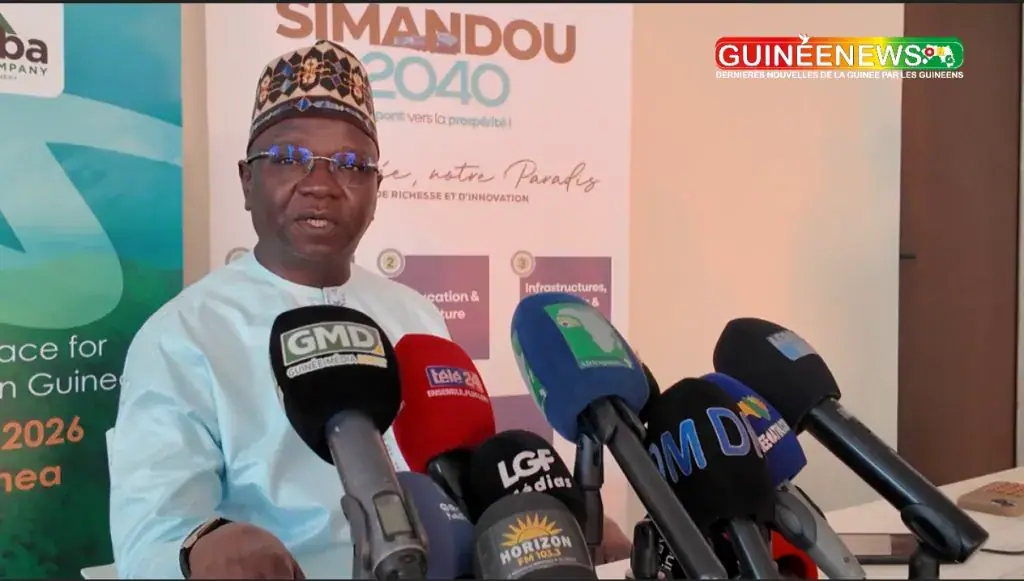
Guinea's Mines and Geology Minister, Bouna Sylla, has expressed concerns over the current state of social responsibility practices in the country's mining sector. He argues that investments in social responsibility should prioritize education and economic development over other projects. Sylla made these comments on the sidelines of the Simandou Mining Summit in Conakry, which took place from November 11 to 13. He emphasized that the needs of local communities must be addressed through sustainable development initiatives.
Minister Sylla cited the example of Télimélé, a prefecture affected by bauxite mining, where 0.5% of the revenue generated by mining companies is allocated to local communities. However, he noted that the use of these funds has not always aligned with local development objectives. Sylla lamented that the funds have often been used to build mosques or enrich individuals, rather than supporting essential infrastructure and economic activities. He stressed that social investments should focus on projects that have a direct and lasting impact on the lives of local populations.
Sylla used a personal anecdote to illustrate his point, saying, "I am Muslim. On peut prier chez soi, mais on ne peut pas étudier chez soi" ("We can pray at home, but we cannot study at home"). He emphasized that education requires dedicated infrastructure, unlike prayer, which can be performed anywhere. The minister's comments highlight the need for more effective management of mining revenue to support sustainable development in local communities.
The minister also discussed the Fonds de Développement Économique Local (FODEL), a fund established to support local development projects in communities affected by mining. He explained that the fund is intended to finance social infrastructure and support income-generating activities, with the goal of promoting local autonomy. Sylla acknowledged that the management of FODEL has faced challenges, but noted that efforts are underway to improve its management and oversight.
Sylla's department is working with the Ministry of Territorial Administration to strengthen the mechanisms for managing and monitoring resources allocated to mining communities. He expressed hope that the involvement of legitimate local executives will facilitate the management of these resources and enhance accountability. The minister emphasized the importance of transparent management of mining revenue to ensure that it benefits local communities.
The minister's call for reform is driven by concerns about the effectiveness of current social responsibility practices in the mining sector. He noted that the construction of mosques and other community projects has not always addressed the most pressing needs of local populations. Sylla's comments reflect a broader effort to ensure that mining activities contribute to sustainable development and improve the lives of local communities.
The Guinean government is taking steps to address the challenges facing the management of mining revenue. Sylla confirmed that efforts to reform the FODEL are underway and are nearing completion. The government's goal is to ensure that mining revenue is used effectively to support local development and promote sustainable economic growth.
Key points
- Guinea's Mines Minister Bouna Sylla is pushing for a shift in social responsibility practices in the mining sector, prioritizing education and economic development over other projects.