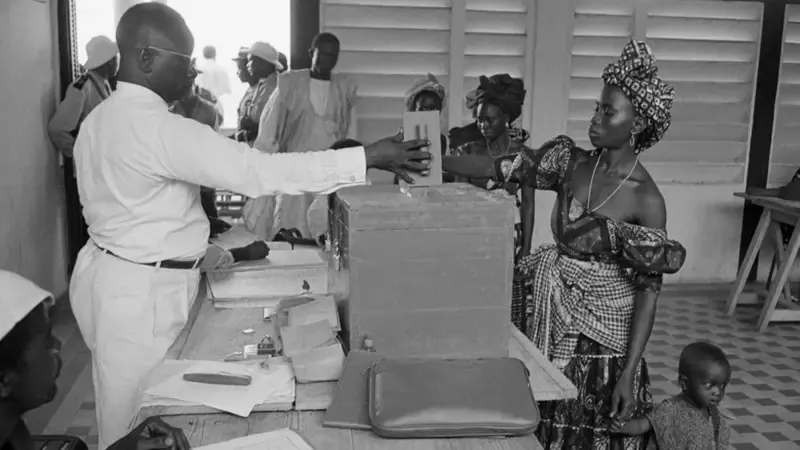
On September 28, 1958, Guinea made history by voting overwhelmingly against a proposed French-African community, led by General Charles de Gaulle. The vote, which was 95.2% against the community, paved the way for Guinea's independence, making it the first country in sub-Saharan Africa to break away from France. This bold move was led by Ahmed Sékou Touré, a 36-year-old union leader who would become Guinea's first president.
Prior to the vote, de Gaulle had embarked on a tour of African countries to promote his idea of a French-African community. During his visit to Conakry on August 25, 1958, he proposed that African countries would have autonomy in internal affairs but with the French government handling defense, foreign policy, and finance. However, Sékou Touré rejected this proposal, stating that Guinea would not renounce its right to independence. He famously said, "We prefer poverty in freedom to wealth in slavery."
De Gaulle's response to Sékou Touré's rejection was to assure him that if Guinea voted "no" to the community, France would not oppose its independence. However, he warned that this decision would have consequences. Despite this, Sékou Touré remained resolute in his stance, and the people of Guinea voted overwhelmingly against the community. This historic vote marked a significant turning point in Guinea's history, as the country would go on to declare its independence on October 2, 1958.
The consequences of Guinea's vote were immediate and severe. France withdrew its personnel, including technical experts and military forces, and ceased all aid to the country. This forced Guinea to seek support from other countries, including the Soviet Union and Ghana. Despite these challenges, Guinea's independence was recognized, and the country would go on to establish diplomatic relations with other nations.
Sékou Touré's leadership and vision played a crucial role in Guinea's independence. However, his legacy would be marred by his authoritarian rule, which lasted until his death in 1984. Despite this, the people of Guinea continue to celebrate their country's independence and the bravery of Sékou Touré, who led the country to freedom.
Today, Guinea's independence is seen as a symbol of dignity and sovereignty. The country's decision to vote against the French-African community was a bold move that paved the way for other African countries to seek independence. As Guinea continues to develop and grow, its people remain proud of their history and the leaders who fought for their freedom.
The significance of Guinea's independence cannot be overstated. It marked a turning point in African history, as countries began to demand independence and self-determination. Guinea's courageous decision to vote against the French-African community inspired other countries to follow suit, and it remains an important milestone in the continent's struggle for freedom and independence.
Key points
- Guinea voted 95.2% against the proposed French-African community on September 28, 1958
- Ahmed Sékou Touré led the country to independence, declaring it on October 2, 1958
- Sékou Touré's legacy is complex, marked by both his role in securing independence and his authoritarian rule.