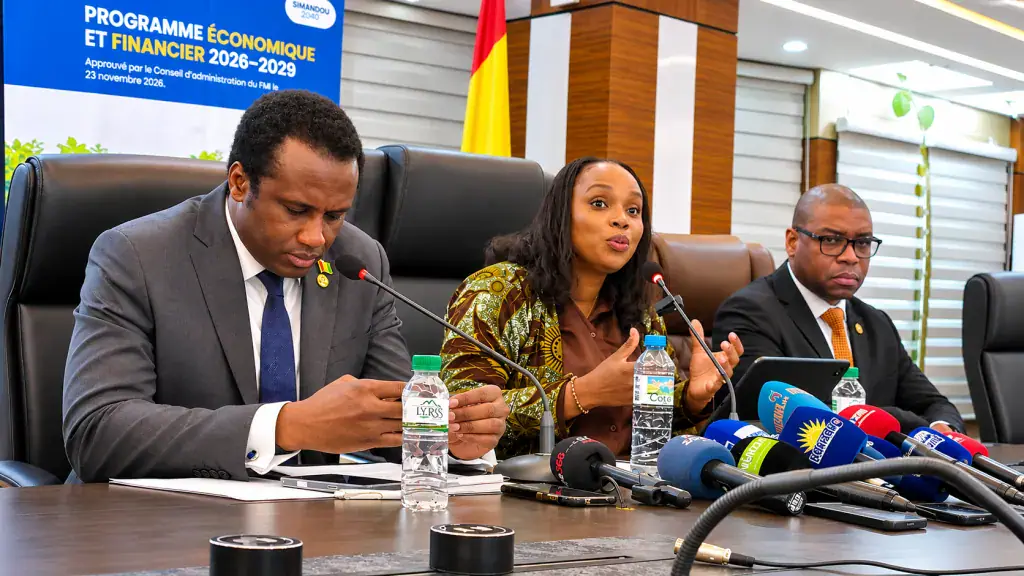
The Guinean government has decided to maintain the price of fuel at 12,000 francs per liter, despite the surge in global oil prices. This decision was announced by Dr. Karamo Kaba, Governor of the Central Bank of the Republic of Guinea (BCRG), and Mariama Ciré Sylla, Minister of Economy, Finance, and Budget, during a press conference on November 27, 2026. The move aims to preserve the purchasing power of the population.
According to Dr. Karamo Kaba, maintaining the fuel price at 12,000 francs per liter is a significant effort, considering the international market trends. He cited the example of the United States, the world's largest oil producer, where fuel prices have increased by nearly 50%. The Governor emphasized that the Guinean authorities have chosen to maintain the price for social reasons and to protect the purchasing power of citizens.
However, Dr. Karamo Kaba also expressed concerns about the negative consequences of this subsidy policy, particularly the smuggling of fuel to neighboring countries where prices are higher. He stated that some individuals, including artisanal miners, are making more money from smuggling fuel than from their primary activities. The Governor mentioned that fuel is being smuggled to Sierra Leone and Mali, where it is sold for over 20,000 francs per liter.
Minister Mariama Ciré Sylla attributed the decision to maintain the fuel price to President Mamadi Doumbouya, who has prioritized protecting the purchasing power of citizens. She acknowledged that the country's vulnerability to international oil price fluctuations makes it challenging to maintain the current price. The Minister also highlighted that Guinea does not have its own oil production, making it more susceptible to external market trends.
The Minister did not announce any plans to adjust the fuel price in 2027, stating that the authorities will review the situation based on global market developments. As part of a new economic and financial program with the International Monetary Fund (IMF), the government aims to rationalize subsidies to better target vulnerable populations and limit abuse.
The government is working with the IMF to learn from other countries' experiences in rationalizing subsidies and making them more effective. Minister Mariama Ciré Sylla emphasized that the goal is not to reduce state spending but to ensure that subsidies benefit those who need them most. The government is also implementing reforms in the energy sector, including the restructuring of Electricity of Guinea (EDG) and the construction of new fuel depots.
In the face of international uncertainties, including the crisis in the Middle East, Minister Mariama Ciré Sylla assured that protecting citizens' purchasing power will remain a top priority for the government. The government will work with the IMF to find a balance that prioritizes the interests of the population.
Key points
- The Guinean government maintains fuel price at 12,000 francs per liter to protect citizens' purchasing power despite rising global oil prices.