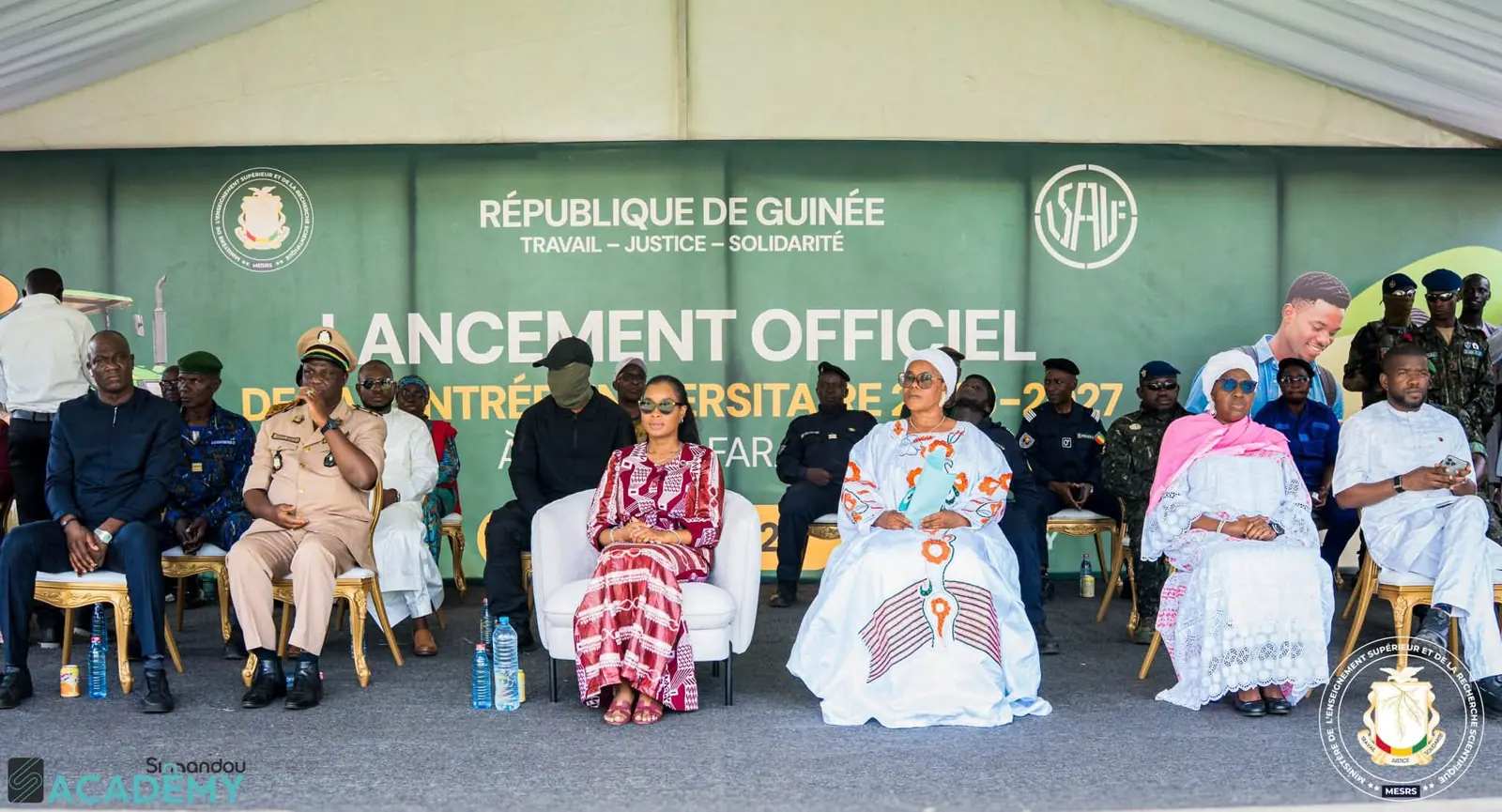
Guinea's Minister of Higher Education and Scientific Research, Djami Diallo, officially launched the 2026-2027 university year at the Institut supérieur agronomique et vétérinaire (ISAV) in Faranah on October 19, 2026. This new academic year is marked by reforms in training programs, aiming to align higher education with professional requirements and agricultural sector realities. The ISAV in Faranah is focusing on adapting training to meet field needs.
The current reforms involve revising teaching programs in higher education institutions, particularly those leading to Diplômes universitaires de technologie (DUT). This change aims to strengthen the connection between skills acquired during university studies and concrete needs in productive sectors. Minister Djami Diallo emphasized making practical experience a fundamental aspect of university training. This includes internships, practical work, and production activities to help students develop operational skills.
Djami Diallo highlighted that internships, practical work, and production activities should be essential components of students' academic paths, enabling them to acquire necessary skills for future professional integration. This approach seeks to consolidate the professionalizing dimension of higher education, especially in agricultural and veterinary fields. Here, theoretical knowledge must be accompanied by solid practical experience.
The Minister praised the efforts of ISAV's teachers and administration, urging them to maintain high standards in pedagogical supervision and knowledge transmission. This ensures a high-quality education that meets the challenges facing the country. As a leading institution in agronomy and veterinary sciences, ISAV in Faranah contributes to training national competencies in strategic sectors such as agriculture and rural economy.
ISAV plays a crucial role in Guinea's development by forming skilled professionals in areas like agriculture, livestock, rural engineering, and natural resources management. These sectors are vital for the country's economic transformation. The new university year offers an opportunity to strengthen the link between education, production, and development.
By focusing on education more closely tied to professional realities, authorities aim to provide qualified human resources capable of meeting agricultural sector needs and contributing to Guinea's food sovereignty. The 2026-2027 university year marks a step towards achieving this goal through enhanced training programs.
The launch of the university year in Faranah underscores the government's commitment to improving higher education and aligning it with national development needs. With these reforms, Guinea aims to produce graduates better equipped to contribute to the country's growth and stability.
Key points
- Djami Diallo launches 2026-2027 university year at ISAV in Faranah.
- Reforms focus on professionalizing education, especially in agricultural and veterinary fields.
- Practical experience to become a core component of university training.