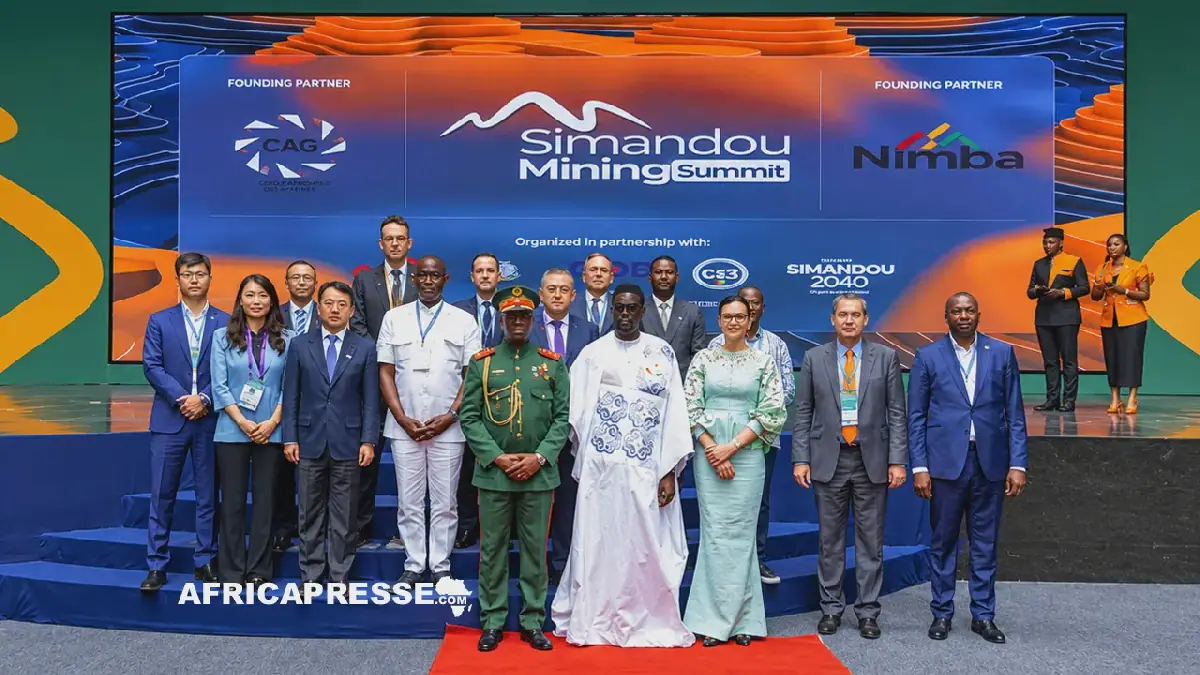
The government of Guinea, led by President Mamadi Doumbouya, has launched the inaugural Simandou Mining Summit on Kassa Island, off the coast of Conakry. The summit, which runs from November 11 to 14, aims to attract investors and mining operators to help transform the country's economy beyond its rich mineral resources. With over 3,000 business meetings expected, the summit seeks to drive sustainable growth and economic diversification.
The Simandou 2040 program, backed by the Guinean Development Agency, plans to attract over $200 billion in investments by 2040, with 40% expected from private capital. The program focuses on various sectors, including industry, energy, transportation, agriculture, healthcare, and education. Local mineral processing is a top priority, with several projects underway, including a 1.2 million-ton-per-year alumina refinery launched by Chinese group Chalco in June.
Guinea has made significant strides in mineral production, becoming the world's top exporter of bauxite in 2025, with nearly 183 million tons shipped. The country also aims to develop five to six local refining facilities by 2030. The Nimba Gold Refinery, inaugurated on November 1, is now refining gold for export. These developments are expected to boost economic growth and create jobs.
The mining sector has contributed to Guinea's economic growth, with the World Bank reporting a 7.3% growth rate in 2025. However, the bank also notes that job creation remains insufficient, and benefits are unevenly distributed. The Simandou iron ore project, which has been in development since 1997, is expected to drive growth and create opportunities for local businesses.
The Simandou project, operated by SimFer, a joint venture led by Rio Tinto, has made significant progress, with 3.7 million tons of ore produced in the first nine months of 2026. The project aims to export 120 million tons of iron ore per year at full capacity. The development of a railway and port infrastructure will be crucial in achieving this goal.
The success of the Simandou 2040 program depends on the government's ability to convert investment commitments into operational infrastructure, workforce development, and a national subcontracting network. The program's credibility will be tested by the growth of local mineral processing, the use of rail for agricultural production, and the multiplication of subcontracting contracts for Guinean companies.
The summit's objectives face significant structural challenges, including the need for reliable energy, competitive transportation costs, and access to land. The government's ability to address these challenges will be crucial in achieving sustainable economic growth and transforming Guinea's economy beyond its mining sector.
Key points
- The Guinean government aims to attract over $200 billion in investments by 2040 to drive economic diversification and sustainable growth.