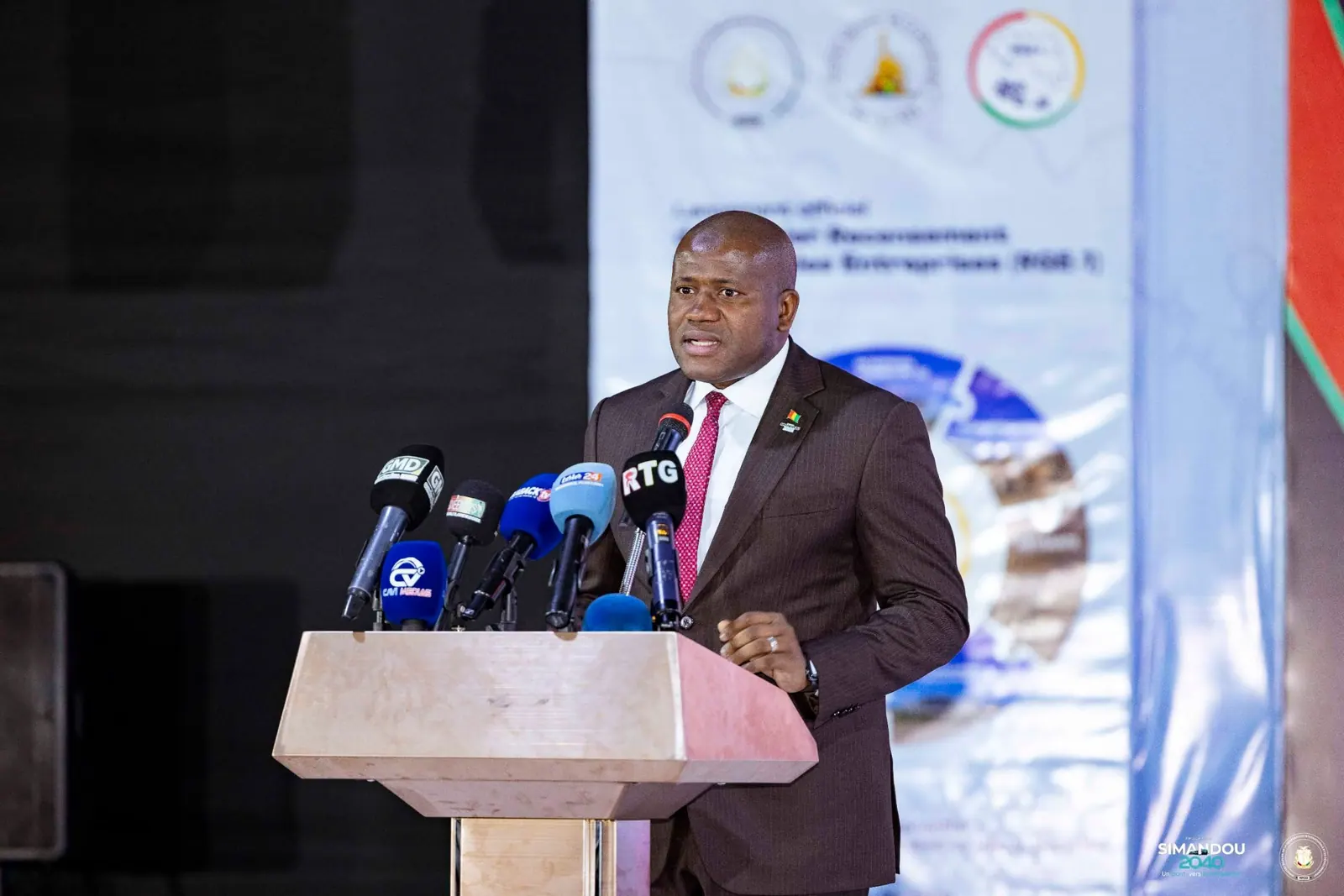
The Guinean government has embarked on a nationwide business census, dubbed Recensement général des entreprises (RGE1), to gain a deeper understanding of the country's economic fabric. According to Ismaël Nabé, Minister of Planning, International Cooperation, and Development, this operation aims to provide authorities with precise data to inform public policy and support economic actors. The census will cover various aspects, including the number of businesses, their locations, sectors, size, employment generation, and needs.
Minister Nabé emphasized that the RGE1 is not a control instrument, but rather a tool for knowledge and decision-making. He highlighted that, for a long time, Guinea's economy has been described through estimates, perceptions, and fragmented information. The minister stressed that this census will enable the country to have a precise understanding of its economic landscape, including the number of businesses, their distribution, and their characteristics.
The RGE1 is expected to be a game-changer for Guinea's economic development. According to Minister Nabé, the census will provide a comprehensive picture of the country's productive apparatus, which will inform public policies, identify high-potential sectors, and guide investments. The data collected will also help to better understand the country's territories, target financing, and transform the country's potential into production, value-added, and employment.
Over 1,000 agents have been mobilized to conduct the census, which will cover the entire national territory. Minister Nabé urged these agents to exercise rigor, integrity, respect, discretion, and professionalism in their work. He emphasized that each piece of data collected is crucial and that accurate information is essential for informed decision-making.
The minister also called on administrative authorities to support the census efforts. He encouraged them to facilitate the work of the agents, mobilize local actors, and make the operation a national cause. Minister Nabé assured entrepreneurs that the purpose of the RGE1 is not to sanction, but to understand and better support their activities.
The RGE1 is part of Guinea's broader ambition to transform its economy and achieve sustainable development. Under the leadership of President Mamadi Doumbouya, the country aims to implement the Simandou 2040 program, which seeks to diversify and industrialize the economy, create jobs, and harness the country's resources and potential.
The business census is expected to contribute to the development of a new culture of public action in Guinea, one that is grounded in data and integrated planning. Minister Nabé stressed that, in the 21st century, data has become a strategic asset, enabling countries to understand their present, measure progress, and anticipate the future.
Key points
- The Guinean government has launched a nationwide business census to gather accurate data on the country's economic landscape.
- The census aims to provide authorities with precise data to inform public policy and support economic actors.
- The operation is expected to contribute to Guinea's economic development and transformation.