The government of Guinea has initiated the "Clean School, Exemplary Neighborhood" program, aimed at promoting good hygiene and sanitation practices in schools and surrounding communities. The program, supported by UNICEF, was launched on November 16, 2026, at El Hadj Oumar 1 primary school in Hafia, Dixinn commune. It will run for six months and cover 100 schools, with 70 in Conakry and 30 in rural areas.
The program includes providing trash cans, installing handwashing points, and rehabilitating school toilets. Education Minister Bintou Keita emphasized the importance of hygiene and sanitation in schools, stating that a clean school is not a luxury but a necessity for learning. She noted that a child who is sick or uncomfortable due to poor hygiene will not be able to focus on their studies.
Minister Keita also stressed that the program goes beyond distributing equipment, aiming to change behaviors and habits within schools. She encouraged parents to support their children in practicing good hygiene and to reinforce the lessons learned in school at home. The minister also emphasized the need for collective involvement from teachers, parents, and students to make the program a success.
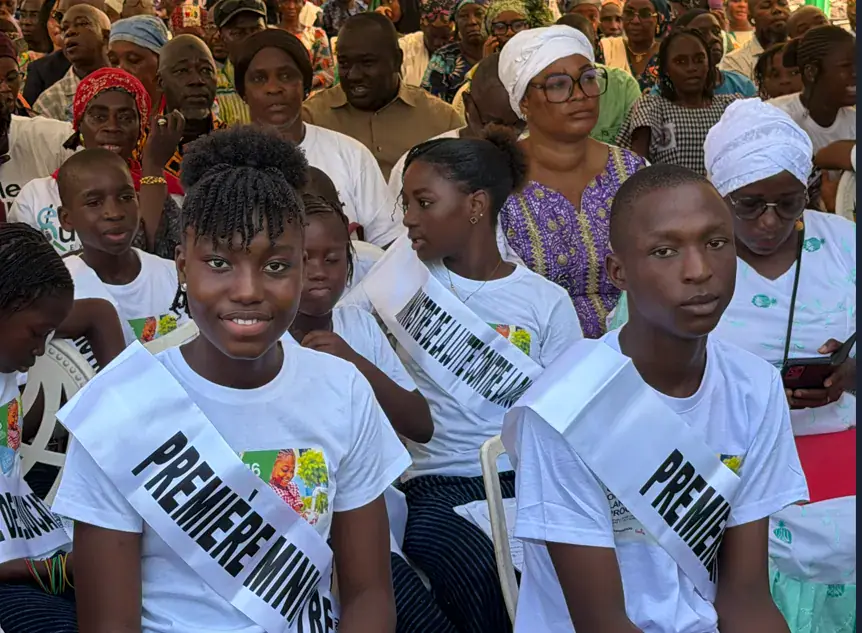
As part of the program, a children's government has been established to involve students directly in the implementation and monitoring of hygiene and sanitation practices in schools. Students have been assigned various responsibilities, including prime minister, sanitation minister, and health minister. This initiative aims to develop a sense of responsibility, leadership, and citizenship among students.
Sanitation Minister Aboubacar Camara highlighted the need for a collective approach to waste management, stating that the fight against poor sanitation cannot be the responsibility of a single department. He noted that Guinea has made mistakes in the past by relying on a single sector to manage waste and that education is crucial in developing a culture of cleanliness.
Minister Camara also pointed out the challenges facing the sanitation sector, including inadequate waste collection, transportation, and treatment systems. He mentioned the need to close the old Dar-es-Salam landfill, which has been receiving waste from various parts of the capital for decades. The minister emphasized that education is essential in developing good habits and that the program is a step in the right direction.
The launch of the program also highlighted other concerns, including the lack of a public college in the Hafia neighborhood. Mayor of Dixinn, Aïssata Soumah, noted that despite having a large population, the neighborhood lacks access to quality education. She emphasized the need for a public college to address the educational needs of the community.
Key points
- The program aims to improve hygiene and sanitation in 100 schools across Guinea.
- The initiative is supported by UNICEF and will run for six months.
- A children's government has been established to involve students in the implementation and monitoring of the program.