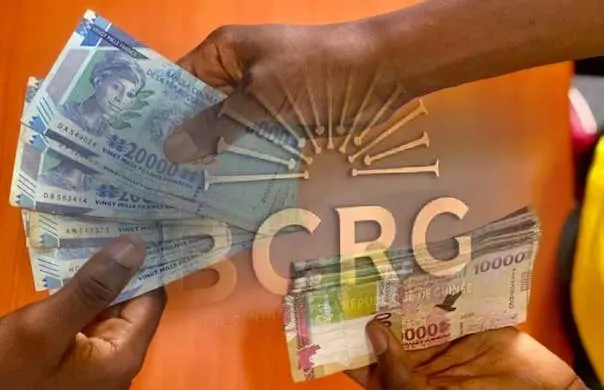
The Guinean government has officially launched a new sovereign bond, "Emprunt Obligataire par Appel Public à l’Épargne (APE 2026)", worth 2,500 billion GNF. The bond aims to finance strategic and priority investments for the country's development. The move has elicited varied reactions from economic observers. According to the authorities, this operation is part of a broader strategy to mobilize domestic savings for national development.
The Governor of the Central Bank of the Republic of Guinea (BCRG), Dr. Karamo Kaba, defended the bond issue, citing the need to transform national savings into structured investments while securing public finances. He emphasized that borrowing in GNF protects public finances against foreign exchange risks and offers a positive real yield, guaranteed by the state's sovereign signature. The bond's interest rate is set at 11%, which Dr. Kaba considers attractive.
However, not all economists share Dr. Kaba's enthusiasm. Mamadou Bah Baadiko, an expert accountant and economist, has expressed concerns about the bond issue. He draws a parallel with a previous bond issue launched in October 2023, which raised 5,000 billion GNF from banks. Baadiko notes that the main difference between the two operations is that the 2026 bond targets private savings rather than banks. He criticizes the vague destination of the funds collected in both cases.
Baadiko also warns that the current bond issue may exacerbate the country's liquidity crisis. He recalls that his previous analysis, published in October 2023, raised concerns about the risks of "siphoning" liquidity, which ultimately materialized in a banking crisis. The economist also points to the departure of the French bank Société Générale from Guinea as a consequence of the country's economic instability.
The Minister of Economy, Finance, and Budget, Mariama Ciré Sylla, justifies the bond issue as part of the Simandou 2040 program, which aims to invest in infrastructure, education, healthcare, agriculture, and other priority sectors. She emphasizes that the government intends to mobilize domestic savings and that the bond is open to participation from local banks, individuals, diaspora, and companies.
Baadiko also questions the transparency and accountability of public fund management in Guinea. He regrets the lack of detailed reports on the use of resources and the high interest costs for the Treasury. The economist also criticizes the country's monetary policy choices, including the refusal to adopt the ECO, the regional currency of the ECOWAS community, which he believes would promote transparency and rigor in public finance management.
The Guinean government seems determined to pursue its economic strategy, despite criticism. The Minister of Economy emphasizes that, in addition to increased fiscal and customs revenues, the government aims to mobilize domestic savings. The outcome of this bond issue and its impact on the country's economy remain to be seen.
Key points
- The Guinean government has launched a 2,500 billion GNF sovereign bond to finance strategic investments.
- Economists have expressed mixed reactions to the bond issue, citing concerns about liquidity and transparency.
- The bond issue is part of the Simandou 2040 program, which aims to invest in priority sectors.