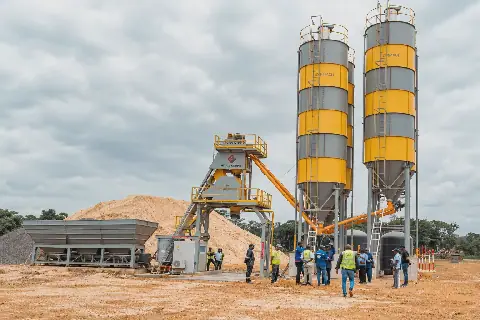
The government of Guinea has officially inaugurated the country's first gold refinery, Nimba Gold Refinery, located in Conakry. This development marks a significant milestone for Guinea, one of Africa's major gold producers. The refinery is expected to enable the country to retain more value from its gold production, as it previously exported raw gold from both industrial and artisanal mines. According to Radio France Internationale, this move aligns with Guinea's goal of maximizing benefits from its natural resources.
Guinea's decision to establish a gold refinery follows in the footsteps of other West African countries, including Mali, Burkina Faso, and Ghana, which have also set up similar facilities in recent years. Côte d'Ivoire is also expected to inaugurate its own refinery in 2027. The Guinean government has long expressed frustration over the export of raw gold, which was then refined and sold abroad, generating profits for foreign economies. The inauguration of the Nimba Gold Refinery signals a shift in the country's strategy to capture more value from its gold production.
The Minister of Mines, Bouna Sylla, expressed his satisfaction with the development, noting that Guinea has been exporting gold in its raw form for centuries. He emphasized that despite being a significant gold producer in West Africa, the country did not benefit from the value added by refining. "Today, that era is over," he stated, highlighting the government's efforts to transform the gold sector. The minister also mentioned that the government could purchase up to 30% of the gold produced by industrial and semi-industrial mines for local refining.
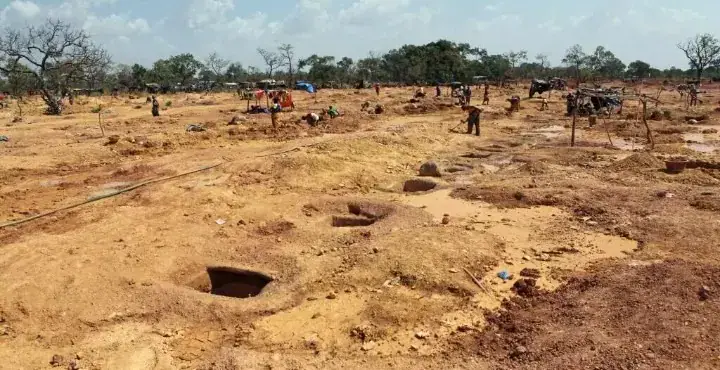
However, a significant challenge lies ahead, particularly in formalizing artisanal gold production. According to Oumar Totiya Barry, Director of the Guinean Observatory of Mines and Metals (OGMM), a substantial portion of artisanal gold production evades government control and often transits through neighboring countries, such as Mali, fraudulently. Out of the 70 tons of gold exported in 2025, approximately 50 tons came from artisanal mines. The government will need to address this issue to ensure the success of the new refinery.
In a related move, the Guinean authorities have suspended artisanal gold mining, citing environmental concerns. Observers suggest that this suspension may provide an opportunity for the government to reorganize the sector and implement measures to channel artisanal gold production into the formal economy. The government's ability to effectively regulate and monitor gold production will be crucial in maximizing the benefits of the new refinery.
The Nimba Gold Refinery is expected to play a critical role in Guinea's efforts to increase local value addition and job creation. The refinery's operations will likely have a positive impact on the country's economy, contributing to growth and development. As the country begins to refine its gold locally, it is expected to retain more revenue and create new opportunities for economic diversification.
The successful implementation of the Nimba Gold Refinery project will depend on effective collaboration between the government, mining companies, and other stakeholders. The government's commitment to addressing the challenges associated with artisanal gold production and formalizing the sector will be essential in ensuring the long-term success of the refinery. Key points: - Guinea has inaugurated its first gold refinery, Nimba Gold Refinery, in Conakry. - The refinery aims to capitalize on Guinea's gold production and add value locally. - A significant challenge lies in formalizing artisanal gold production, which often evades government control.