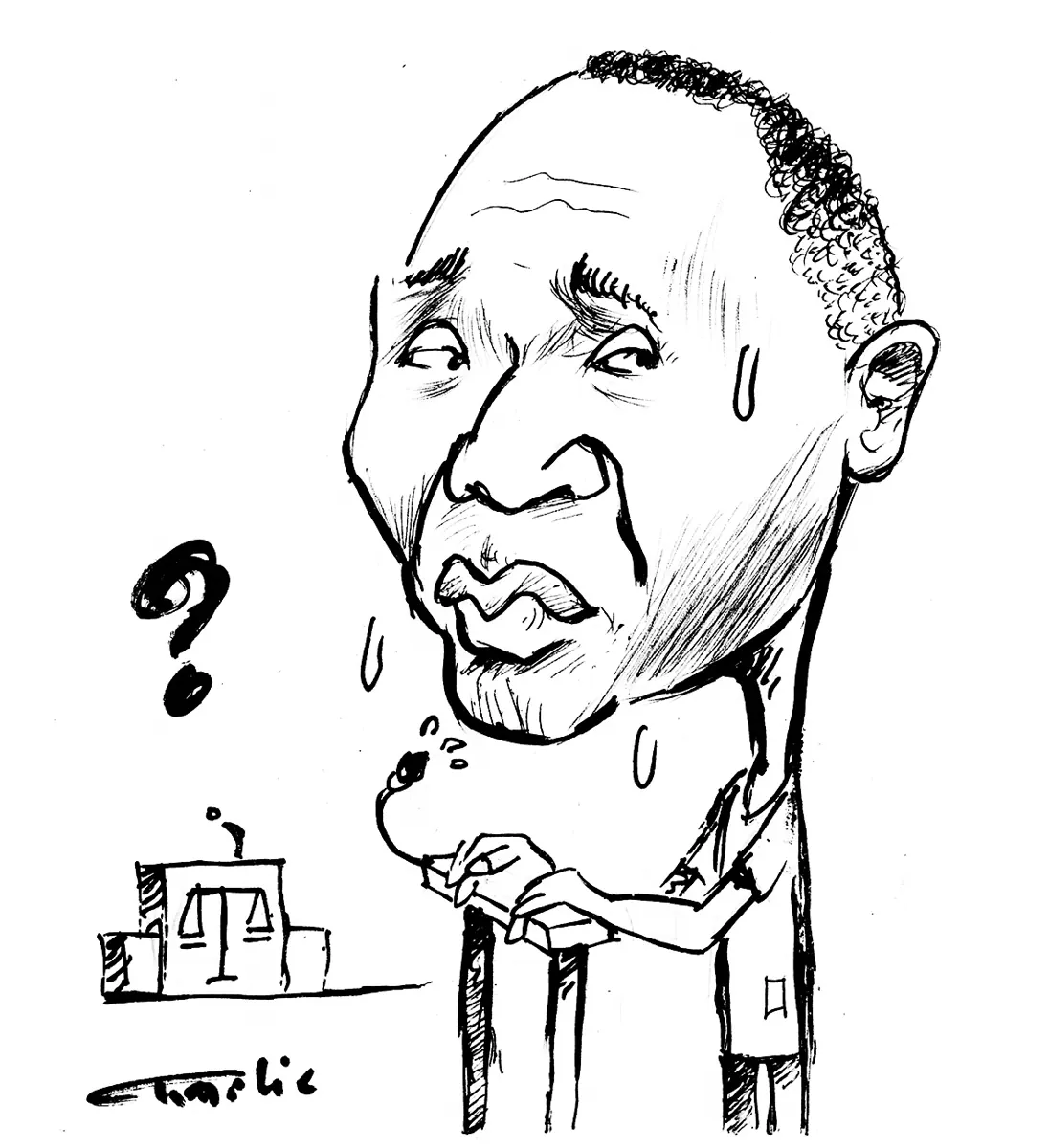
The trial of Sory Daouda Cas-marrant and Mandjou Sangaré opened on October 7 before Guinea's Economic and Financial Crimes Court (CRIEF). The two huissiers are accused of involvement in a long-standing dispute between Ecobank Guinea SA and a client. Their detention has prompted a strike by fellow huissiers, who claim they no longer feel safe in their profession.
According to the prosecution, Mandjou Sangaré, then an unsworn trainee in Cas-marrant's office, drew up a document in 2018 stating that Ecobank had refused to declare its assets. The document was then signed and stamped by Cas-marrant. Ecobank disputes the document's validity, citing irregularities in its creation. A 2018 judgment had previously ruled the document null and void.
The case has progressed through various courts, with the Common Court of Justice and Arbitration (CCJA) ruling in 2025 that Ecobank must pay over $4.6 million and 3 billion Guinean francs. Ecobank has since filed a complaint against Cas-marrant and Sangaré with the CRIEF, accusing them of judgment fraud, forgery, and complicity.
On September 29, Cas-marrant and Sangaré were charged and imprisoned at the new five-star hotel in Coyah. Their imprisonment sparked outrage among fellow huissiers, who have ceased work until the detainees are released and safety guarantees are provided for their profession. National Chamber of Justice Huissiers Secretary Jean-Pierre Pépé Béavogui stated that huissiers will take measures to protect themselves if their demands are not met.
During their October 7 trial, Cas-marrant denied all charges, stating that he had instructed Sangaré to serve the document on Ecobank and that Sangaré was acting under his supervision. Cas-marrant's lawyer, Soufiane Kouyaté, accused Ecobank of trying to outsmart its client, which ultimately backfired. The prosecution, however, maintains that Cas-marrant allowed an unsworn trainee to perform an official act, which is a serious breach of regulations.
The trial has significant implications for Guinea's judicial system, with the huissiers' strike potentially paralyzing several courts. The prosecution is seeking to hold Cas-marrant and Sangaré accountable for their actions, which allegedly caused substantial financial losses for Ecobank. The case is set to continue on October 12.
The Guinean justice system faces mounting pressure as the trial of Sory Daouda Cas-marrant and Mandjou Sangaré continues. The huissiers' strike highlights concerns about the safety and security of justice officials in the country. The outcome of the trial will likely have far-reaching consequences for the profession and the broader judicial landscape in Guinea.
Key points
- The trial of two Guinean huissiers accused of judgment fraud and forgery has sparked a nationwide strike by fellow huissiers.
- The case involves a long-standing dispute between Ecobank Guinea SA and a client, with the huissiers accused of creating an invalid document.
- The strike by huissiers may paralyze several courts in Guinea, adding to the country's judicial challenges.