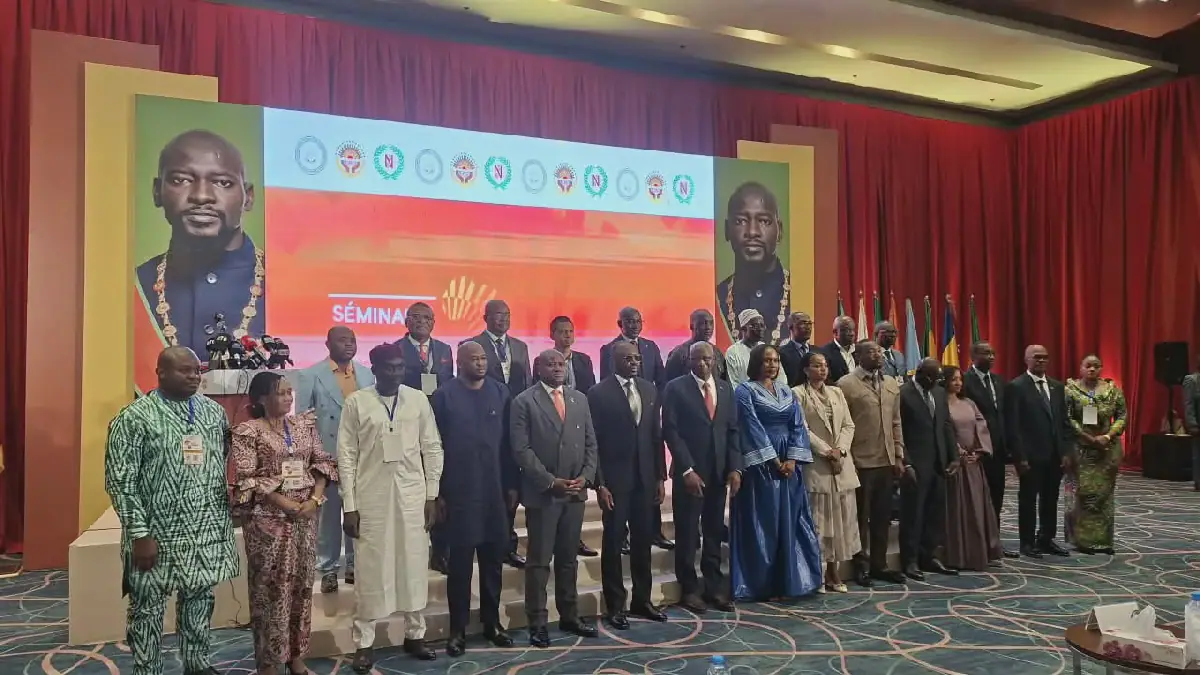
The Guinean government has taken a significant step towards addressing social protection for its citizens, particularly those in the informal sector, independents, and rural populations. On November 16, 2026, Prime Minister Amadou Oury Bah inaugurated a four-day regional seminar in Conakry, organized by the Inter-African Conference of Social Security (CIPRES). The seminar brings together policymakers, social security officials, and international experts to share experiences and discuss mechanisms for extending social protection coverage.
The current state of social protection in Guinea and the CIPRES region is concerning, with only 10% of the population benefiting from social protection, and a mere 3.14% having coverage for at least one social risk. The Guinean government aims to play a leading role in addressing this issue, with Prime Minister Bah emphasizing the importance of solidarity and social protection as a vital safeguard against poverty. He highlighted the need for a comprehensive approach, focusing on three pillars: social, economic, and political.
The Guinean government has outlined three key projects to transform the social protection landscape. The first project focuses on revising the social security code, developing a social security code, and creating a law on occupational pension schemes. The second project aims to extend coverage to informal workers and independents by establishing adapted regimes and simplifying contributions. The third project involves protecting and supporting workers on major projects, such as the Simandou program.
The international community has expressed support for Guinea's efforts to expand social protection coverage. Samira Daoud, Director of the International Labor Organization (ILO) Dakar-Senegal office, emphasized that social protection is a fundamental human right and a crucial investment for resilience and inequality reduction. She noted that 52% of the global population benefits from at least one social protection benefit, while 3.8 billion people lack any protection. In Africa, the situation is particularly concerning, with an estimated 20% of the population having some form of coverage.
The CIPRES conference aims to address the challenges of extending social protection coverage to informal workers, independents, and rural populations. Maman Brah Sani, President of the CIPRES Supervisory Commission, stressed that several states have made efforts to extend coverage to independents, who account for 80.15% of the employed population in the CIPRES region. However, the coverage rate remains low, and the conference seeks to find pragmatic solutions to accelerate reforms.
The Guinean Minister of Employment, Labor, and Social Protection highlighted that historically, social protection coverage has been concentrated on formal sector employees. The government aims to rectify this through the CIPRES membership, aligning with the Simandou 2040 vision and the 2025 Constitution. The minister emphasized the need for an integrated approach to address the realities of the informal sector and vulnerable populations.
The regional seminar in Conakry serves as a platform for knowledge sharing and collaboration to address the social protection gap in Guinea and the CIPRES region. The outcome of the conference is expected to provide concrete solutions for accelerating reforms and expanding social protection coverage to those who need it most. Key stakeholders, including policymakers, social security officials, and international experts, are working together to ensure that social protection becomes a reality for all, not a privilege.
Key points
- The Guinean government has outlined three key projects to transform the social protection landscape, focusing on revising the social security code, extending coverage to informal workers and independents, and protecting workers on major projects.