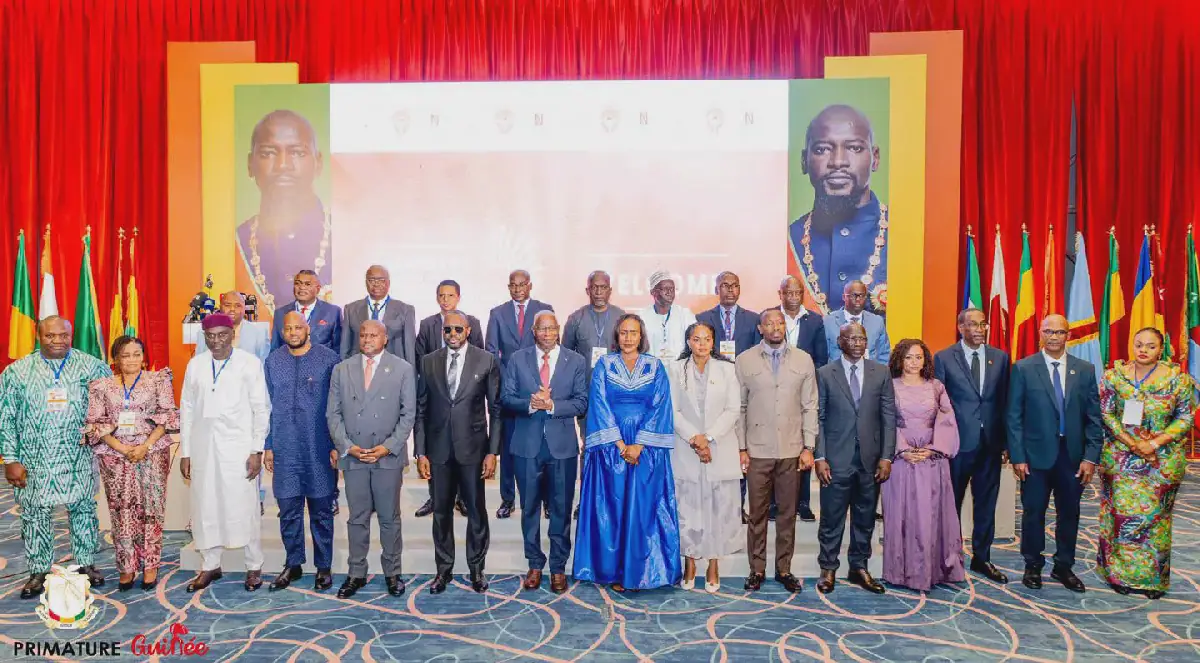
The Guinean capital, Conakry, is hosting a four-day seminar from November 16 to 19, 2026, to discuss expanding social protection coverage to informal economy workers and self-employed individuals. The seminar, organized by the Inter-African Conference of Social Security (CIPRES), brings together government officials, social security agency heads, and technical partners. The goal is to identify concrete solutions to extend social protection to populations excluded from traditional mechanisms.
The seminar aims to promote social protection as a right accessible to all African population categories. The Guinean Prime Minister, Amadou Oury Bah, presided over the opening ceremony. CIPRES and the Guinean National Social Security Fund (CNSS) are collaborating with partners to facilitate the sharing of national experiences and identify best practices to accelerate social protection extension in member states.
A major issue at the seminar is guaranteeing effective social protection for millions of workers outside the formal sector. These workers largely lack access to classical social security systems. CIPRES President of the Social Security Surveillance Commission, Maman Brah Sani, noted that despite political commitments and national initiatives, social protection coverage remains insufficient in member states.
According to Maman Brah Sani, only 3.14% of the CIPRES population is covered for at least one social risk. This low coverage is largely due to national legislation historically prioritizing salaried workers. Meanwhile, self-employed workers represent 80.15% of the employed population in the CIPRES area, with 93 out of 100 jobs in the informal economy.
The Guinean National Social Security Fund (CNSS) has been working to adapt its system to the realities of informal economy workers and self-employed individuals. CNSS Director-General Bakary Sylla mentioned an actuarial study launched in 2023 with the International Labor Office (ILO) to identify risks to cover and calibrate a contributory model adaptable to each worker's economic reality.
Bakary Sylla emphasized that the Guinean social security system was initially designed mainly for salaried workers, leaving out a significant portion of the population, including artisans, farmers, traders, and independent workers. He stressed that these workers participate fully in national wealth creation and deserve protection. The CNSS has proposed a social protection model with a principle of freedom, allowing each affiliate to choose which risks to cover.
The CIPRES seminar aims to provide a platform for dialogue and capitalization of regional and international experiences. The goal is to develop pragmatic responses to accelerate reforms in different countries. The International Labor Organization (ILO) representative for Senegal and Guinea, Samira Dao, also participated in the seminar, advocating for universal and sustainable social protection systems.
Key points
- The seminar aims to expand social protection coverage to informal economy workers and self-employed individuals in Guinea and other CIPRES member states.
- Current social protection coverage in CIPRES member states is low, with only 3.14% of the population covered for at least one social risk.
- The Guinean government has expressed commitment to extending social protection to all population categories, with a focus on informal economy workers and self-employed individuals.