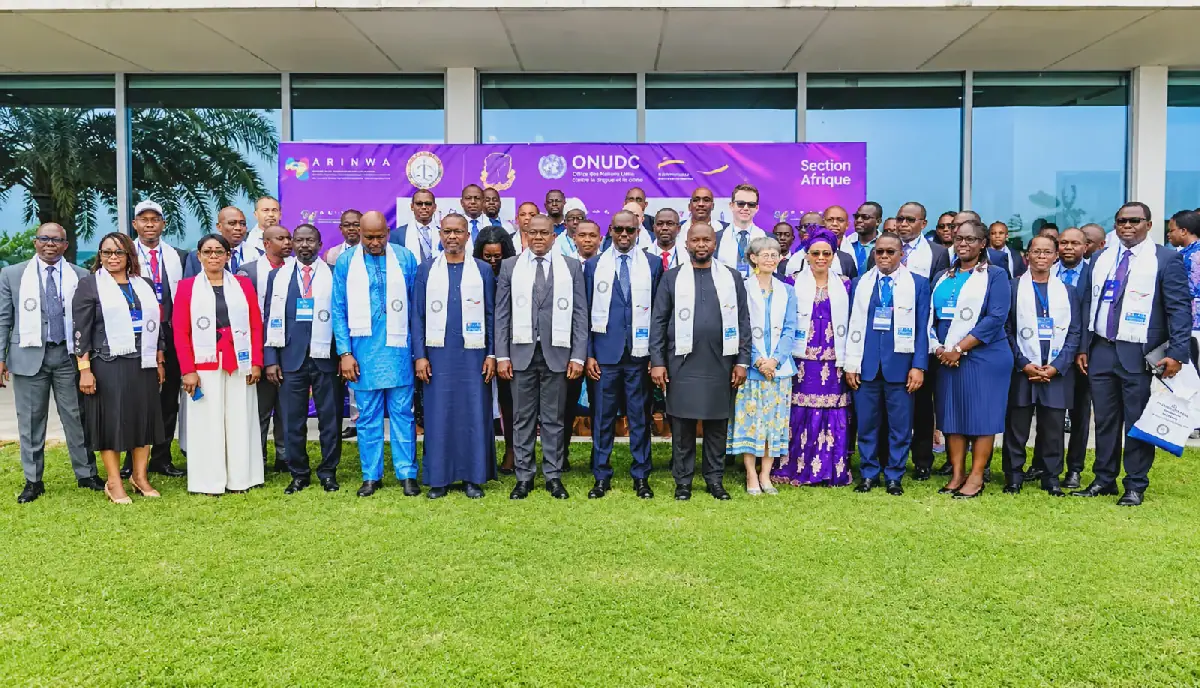
The 13th General Assembly of the Inter-Agency Asset Recovery Network for West Africa (ARINWA) kicked off in Conakry, Guinea, on November 18, 2026. The three-day event, chaired by Ibrahima Sory 2 Tounkara, Minister of Justice and Human Rights, brings together several delegations to discuss strengthening international cooperation and recovering assets from criminal activities. The assembly aims to enhance cooperation among member states and address challenges in identifying and confiscating criminal assets.
The fight against economic and financial crime is crucial, and asset recovery is a key aspect of this effort. Mohamed Diawara, Director-General of the Asset Management and Recovery Agency (AGRASC) and president of the organizing committee, emphasized the need for collective action against crimes that transcend national borders. He noted that organized crime, corruption, money laundering, and illicit financial flows pose significant threats to economies and development in West Africa.
Diawara highlighted the importance of ARINWA's mission, which includes facilitating information exchange, building trust among institutions, and promoting effective cooperation in asset recovery. He stressed that asset recovery should not only focus on punishing offenders but also on identifying, seizing, and confiscating illicit profits. The AGRASC head outlined the assembly's objectives, including reviewing the network's activities, sharing best practices, and examining international cooperation cases.
Minister of Justice Ibrahima Sory 2 Tounkara echoed Diawara's sentiments, emphasizing that corruption, embezzlement, money laundering, and illicit trafficking undermine development efforts in West Africa. He called for judicial systems to go beyond punishing offenders and focus on recovering assets from criminal activities. Tounkara highlighted the role of AGRASC in executing court decisions and managing confiscated assets transparently.
Safiétou Sy, regional representative of the United Nations Office on Drugs and Crime (UNODC), praised Guinea for hosting and co-financing the assembly. She described ARINWA as a vital component of regional cooperation, providing a rapid and informal channel for investigators, prosecutors, and judges to identify and confiscate criminal assets. Sy emphasized that asset recovery is a fundamental principle of the UN Convention against Corruption and the UN Convention against Transnational Organized Crime.
Cheick Mouhamad Bamba Niang, regional representative of the SecFin Africa project, highlighted the economic and social implications of asset recovery. He cited a report by the UNCTAD, which estimates that Africa loses approximately $88.6 billion annually in illicit financial flows, equivalent to 3.7% of the continent's GDP. Niang noted that the amounts recovered remain marginal and called for accelerated information exchange, capacity building for judicial actors, and strengthened regional devices.
The assembly will review ARINWA's activities, share best practices, and examine cases of international cooperation. The outcome is expected to contribute to the development of effective strategies for asset recovery and the fight against financial crime in West Africa. The event also aims to define priorities for ARINWA's activities in 2027 and enhance cooperation among member states to address the challenges posed by financial crime.
Key points
- The 13th ARINWA General Assembly aims to strengthen international cooperation and asset recovery efforts in West Africa.
- The assembly brings together delegations from several countries to discuss challenges and best practices in identifying and confiscating criminal assets.
- Asset recovery is seen as a crucial aspect of the fight against financial crime, with significant economic and social implications for West Africa.