The Guinean government recently held a retreat in Mafèrinyah, Forécariah prefecture, to assess the mid-term progress of its Simandou 2040 socio-economic development program and plan its 2027 budget execution. The program, led by President's vision, targets an average economic growth of 10.3% by 2040, driven by 53 strategic battles, 14 priority sectors, 122 mega-projects, and 36 structural reforms.
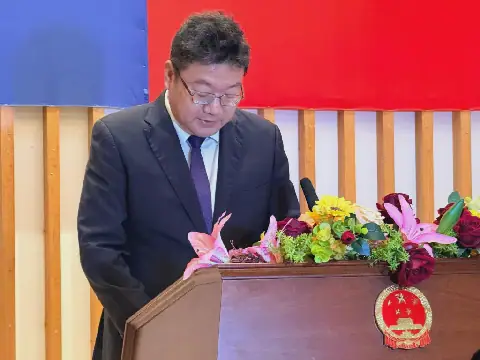
Minister of Government Spokesperson, Faya François Bourouno, addressed the closing ceremony alongside the Minister Secretary General of the government. He praised the strengthened cohesion and coordination among ministries for this presidential vision. According to the Delivery Unit, the evaluation of the first wave of projects confirmed effective appropriation by all ministerial departments and identified four major areas for improvement.
The first area of improvement concerns accelerating project maturity, with the Administration and Control of Major Projects (ACGP) supporting technical, geotechnical, and feasibility studies, as well as environmental and social impact assessments. The second area focuses on mobilizing financing, led by the Guinean Development Agency (GDI), which consolidates funding commitments and positions Guinea on international and sub-regional financial markets.
The government's spokesperson announced the successful transition to a program-based budget, which will take full effect with the 2027 initial finance law. This shift from traditional means-based budgeting to result-oriented management aims to measure the actual impact of public investments on citizens' living conditions. The new approach will enable the state to assess the effectiveness of its spending.
The retreat also integrated cross-cutting priorities into public action. Gender-sensitive budgeting was adopted to translate advances in education, health, economic empowerment, and women's representation into factual data. Furthermore, youth were made an absolute priority across all ministries, while urgent measures were taken to combat road insecurity, which has resulted in significant human and material losses.
On the organizational front, the executive evaluated the functioning of ministerial poles established to streamline government work and adopted new measures to accelerate administrative digitalization and deconcentration. This proximity dynamic was demonstrated by a decentralized inter-ministerial council held in Mafèrinyah, focusing on the operationalization of the decentralization policy letter and the review of the Land and Domain Code.
The government's efforts to enhance coordination and effectiveness in its development program reflect its commitment to achieving the targeted 10.3% economic growth by 2040. By addressing the identified areas for improvement and implementing the new measures, the government aims to make significant strides in socio-economic development and improve the lives of its citizens.
Key points
- The Guinean government aims to achieve 10.3% economic growth by 2040 through its Simandou 2040 development program.
- The program has identified four key areas for improvement, including accelerating project maturity and mobilizing financing.
- The government has successfully transitioned to a program-based budget, focusing on result-oriented management.