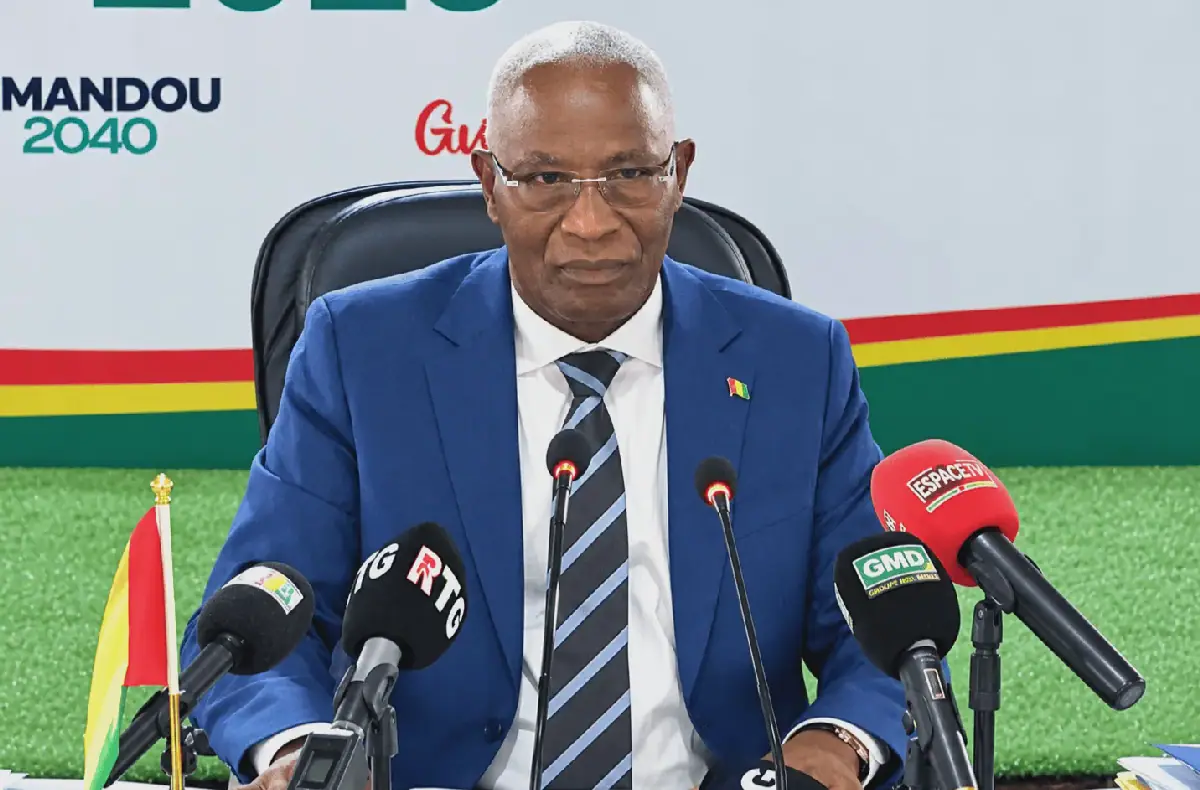
The 2026 government retreat concluded on November 24 in Maférinyah, Forécariah prefecture, with Prime Minister Amadou Oury Bah announcing the launch of the "Mamadi Doumbouya doctrine". This doctrine, titled "strategic neutrality for sustainable stability", aims to guide government decisions with a focus on national sovereignty, interest, and neutrality in global power rivalries. The retreat, which took place from November 22-24, brought together government members and regional prefects to enhance coordination and effectiveness.
Prime Minister Amadou Oury Bah expressed deep gratitude to President Mamadi Doumbouya for his vision and trust in the government. He emphasized that the government's success is crucial in honoring the President's trust. The Prime Minister also acknowledged the participation of ministers in an exercise where they reviewed and discussed each other's departmental dossiers. This process fostered frank and loyal exchanges, highlighting interdependencies between ministries.
The government retreat led to several measures to improve effectiveness. By the end of 2026, all project blockages will be reviewed ministry by ministry. In 2027, the budget program will link each credit to a responsible party and measurable results. The Prime Minister stressed the importance of monitoring instructions until they are fully executed. To achieve this, mission letters will be issued in early 2027, outlining common government priorities and specific commitments for each ministry.
On November 23, the International Monetary Fund (IMF) approved Guinea's economic and financial program for 2026-2029. Prime Minister Amadou Oury Bah viewed this decision as a recognition of the government's reforms and the work done by various teams. He emphasized that this approval is a result of the government's efforts and should lead to concrete progress in the daily lives of Guineans.
The "Mamadi Doumbouya doctrine" is based on Guinea's historical and cultural heritage. The Prime Minister highlighted the contributions of the four natural regions: Haute-Guinée, Fouta, Basse-Guinée, and Guinée forestière. These regions have shaped the nation's memory and identity. The doctrine aims to serve as a reference for public decisions, ensuring that government actions align with national sovereignty and interest.
The doctrine's core principles include national sovereignty, primacy of national interest, and strategic neutrality. This approach will enable Guinea to engage with all nations without depending on any one power. The Prime Minister emphasized that this doctrine will guide government decisions, ensuring sustainable stability and development.
The launch of the "Mamadi Doumbouya doctrine" marks a significant step in Guinea's governance. The Prime Minister's vision for strategic neutrality and sustainable stability is expected to shape the country's future. The government's efforts to enhance coordination, monitor projects, and ensure accountability are crucial in achieving this vision.
Key points
- The "Mamadi Doumbouya doctrine" prioritizes national sovereignty, interest, and strategic neutrality.
- The doctrine aims to guide government decisions for sustainable stability and development.
- The IMF's approval of Guinea's economic program is seen as a recognition of the government's reforms.