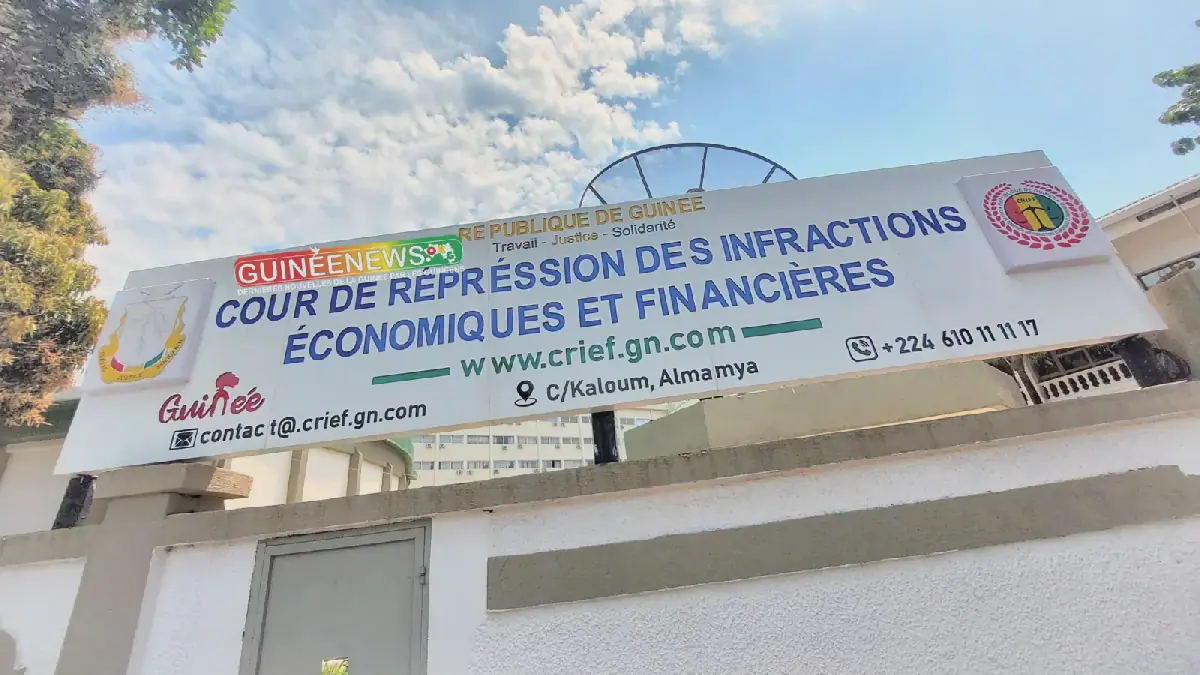
The trial of Ahmed Sékou Traoré, former president of the special delegation of Ratoma, continued on November 2, 2026, at the Guinea Court of Repression of Economic and Financial Infractions (CRIEF). Traoré was questioned about the commune's revenues and expenditures for 2024 and 2025, as well as the costs of several infrastructure projects. The prosecution presented evidence of significant discrepancies in the commune's financial records.
Traoré disclosed that Ratoma's tax revenues stood at 5 billion 187 million 994 thousand 101 Guinean francs in 2024, drastically down to 584 million 635 thousand francs in 2025. He attributed this sharp decline to a reduction in the number of neighborhoods in Ratoma, from 34 in 2024 to 11 in 2025. The prosecution pressed for detailed explanations on the utilization of funds and the execution of various projects.
The trial also examined the costs and execution of several infrastructure projects, including the Kaporo health center, Hamdallaye primary school, Taouyah youth center, and latrines in public schools. Traoré claimed that contractors were selected through open tenders and denied any personal connections to them. However, he was unable to recall specific details about the amounts allocated or the companies involved.
Regarding commune expenditures, Traoré stated that they totaled 3 billion 555 million 13 thousand 851 Guinean francs in 2024 and 7 billion 382 million 506 thousand francs in 2025. His lawyers requested a postponement, citing their client's need for more time to familiarize himself with the financial reports. The court granted this request, adjourning the case to November 16.
Traoré and Mohamed Camara, the commune's receiver, are accused of embezzlement, corruption, forgery, illicit enrichment, money laundering, and complicity. The prosecution aims to hold them accountable for alleged financial irregularities during Traoré's tenure as head of the Ratoma special delegation.
The case has significant implications for Guinea's efforts to combat corruption and ensure transparency in local governance. The CRIEF court's proceedings are closely watched, as they signal the government's commitment to holding public officials accountable for their actions.
The trial's continuation on November 16 is expected to shed more light on the financial management of Ratoma commune and potentially reveal further details about the alleged mismanagement of public funds. The court's decision will be crucial in determining the fate of Traoré and Camara.
Key points
- The trial of Ahmed Sékou Traoré and Mohamed Camara highlights Guinea's ongoing efforts to combat corruption and financial mismanagement in the country.