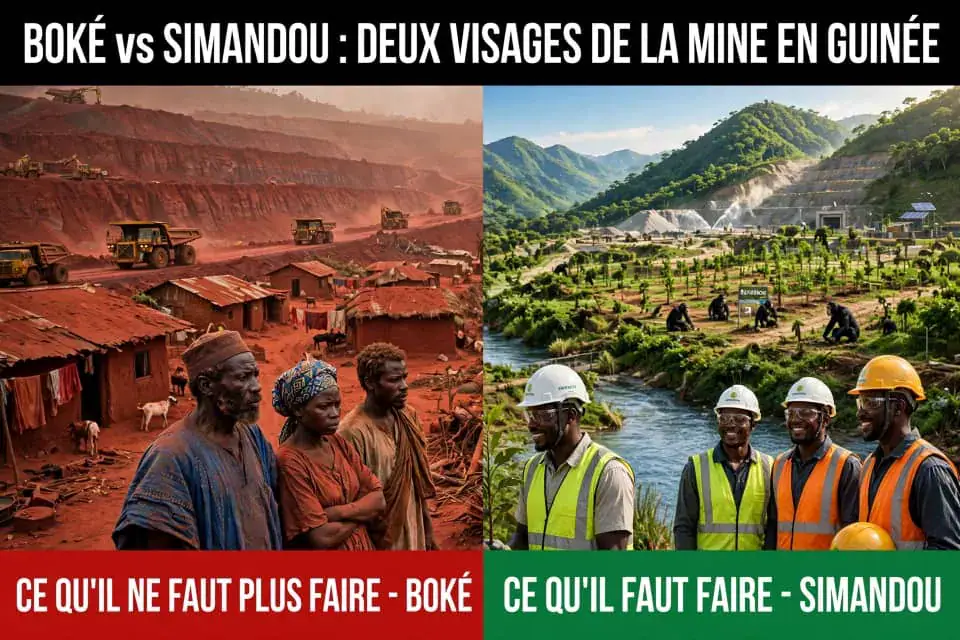
Guinea, a country in West Africa, is endowed with rich natural resources, including bauxite and iron ore deposits. The mining sector plays a crucial role in the country's economy, generating between 65% and 75% of export revenues and contributing around 20% to the Gross Domestic Product (GDP). However, the sector's environmental impact has raised concerns, with the country's fragile ecosystems and water resources facing threats from mining activities.
The country's environmental challenges in the mining sector date back to its independence in 1958. During the early years, the focus was on industrialization, with little consideration for environmental protection. The construction of the Fria alumina plant in 1960 and the Compagnie des Bauxites de Guinée (CBG) mine in Sangarédi in 1973 exemplified this approach. Environmental concerns were largely ignored, with no impact assessments conducted before mine openings.
In the late 1980s, Guinea introduced regulations to address environmental concerns. The 1987 Ordinance on environmental protection and the 1995 Mining Code established the principles of environmental impact assessments and site rehabilitation. However, the effectiveness of these regulations was limited by several factors, including the primacy of derogatory mining conventions, lack of technical instruments for implementation, and inadequate state control.
The mining conventions, ratified by the National Assembly, took precedence over common law, making it difficult to enforce new environmental regulations. Additionally, the absence of clear technical standards for environmental monitoring and enforcement hindered the government's ability to regulate the sector effectively. The administration's limited capacity to monitor and enforce environmental regulations further exacerbated the problem.
The environmental legacy of Guinea's mining sector is marked by significant ecological damage. The storage of highly alkaline "red mud" from bauxite processing in open pits or near waterways has contaminated soil and water resources. Deforestation and soil degradation have resulted from large-scale mining operations, creating long-lasting sterile areas. These environmental problems have had social implications, affecting communities dependent on agriculture and livestock.
The Simandou project, which involves investments of $14-20 billion, has raised hopes for improved environmental management. The project's development is critical to Guinea's economic future, but it also presents an opportunity to adopt more sustainable practices. Effective environmental management will require strengthened institutions, enhanced technical capabilities, and a commitment to enforcing regulations.
To ensure sustainable and responsible mining practices, Guinea must address the existing gaps in its regulatory framework and enforcement mechanisms. This includes developing and implementing effective technical standards, enhancing state control, and promoting transparency and accountability in the sector. The country's experience offers valuable lessons for other resource-rich nations seeking to balance economic development with environmental protection.
Key points
- Guinea's mining sector poses significant environmental challenges, including deforestation, soil degradation, and water pollution.
- The country's regulatory framework has improved, but effective implementation and enforcement remain limited.
- The Simandou project presents an opportunity for Guinea to adopt more sustainable mining practices and address environmental concerns.