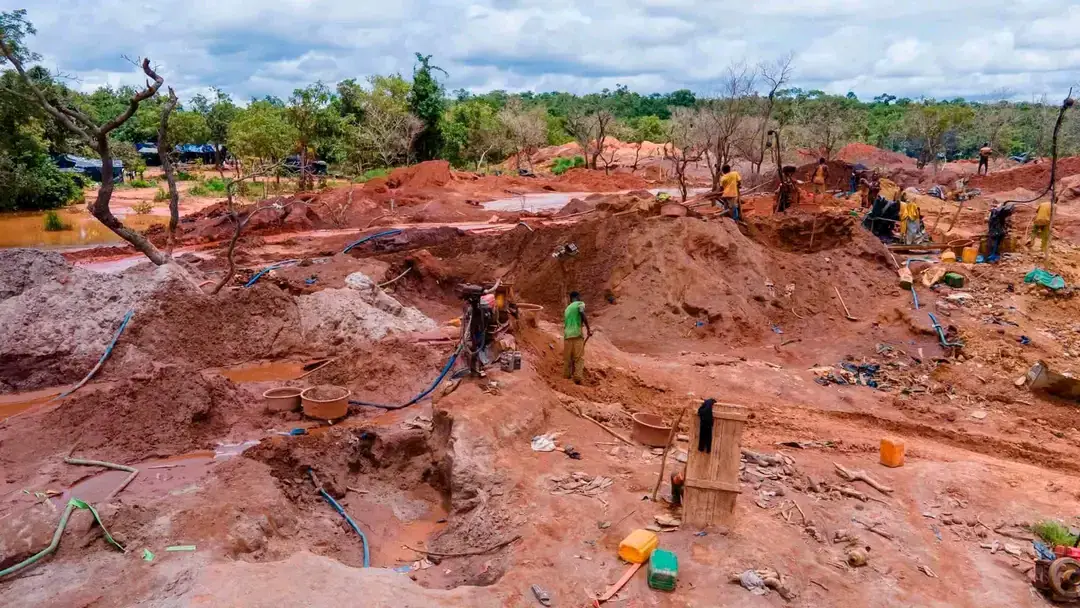
The Guinean government's move to curb illegal gold mining activities has resulted in a significant influx of foreign nationals, primarily from Burkina Faso, into neighboring Mali. This development has raised concerns about the humanitarian and diplomatic implications of the crackdown. According to reports, thousands of people have been forced to leave their mining sites and head to Mali before considering a return to their home country. The situation has sparked a heated debate about the balance between a state's authority to regulate its natural resources and the need to protect human rights.
The Guinean government has stated that its decision to shut down illegal mining sites is aimed at restoring order and protecting the country's natural resources. The move is also intended to prevent environmental degradation and social conflicts associated with uncontrolled mining activities. As a sovereign state, Guinea has the right to regulate its mining sector and enforce its laws. The government has emphasized that it will not tolerate illegal activities on its territory, and that it will take measures to ensure that mining operations are carried out in a responsible and sustainable manner.
The crackdown on illegal mining has significant implications for the local economy, particularly in regions where artisanal gold mining is a major source of livelihood. In Haute-Guinée, the mining sector plays a crucial role in the local economy, and the government's decision to shut down illegal sites may have far-reaching consequences for the region. The situation has also raised concerns about the impact on local communities, who may depend on mining activities for their livelihood. The government will need to consider these factors as it implements its plans to regulate the mining sector.
The mass exodus of foreign nationals from Guinea has sparked a diplomatic response from affected countries. The Malian government has announced that it will provide assistance to the displaced individuals, while the Burkinabè government has sent a delegation to Bamako to assess the situation and facilitate the return of its nationals. The Burkinabè Minister of Security, Mahamadou Sana, has reported that some of his compatriots have been injured, and that there was a lack of communication from the Guinean authorities.
The situation has raised concerns about human rights and the treatment of displaced individuals. The Guinean government has emphasized that it will ensure the dignity and safety of all individuals affected by the crackdown. However, there are concerns that the situation may be more complex than initially reported, and that independent verification of events is needed. The government will need to balance its efforts to regulate the mining sector with the need to protect human rights and prevent humanitarian crises.
The crisis has highlighted the need for regional cooperation and coordination. The Guinean, Malian, and Burkinabè governments will need to work together to address the humanitarian and diplomatic implications of the crackdown. This will require a coordinated approach to managing the flow of displaced individuals, as well as efforts to address the root causes of the crisis. Regional organizations and international partners may also play a role in supporting the affected countries.
The situation in Guinea highlights the challenges of balancing a state's authority with human rights and regional considerations. The government's decision to crack down on illegal mining activities is a legitimate exercise of its sovereignty, but it must be implemented in a way that respects human rights and prevents humanitarian crises. The international community will be watching closely to see how the situation unfolds, and how the Guinean government responds to the challenges posed by the crackdown.
Key points
- The Guinean government's decision to shut down illegal mining sites has sparked a diplomatic row with neighboring countries.
- The crackdown has resulted in a mass exodus of foreign nationals, primarily from Burkina Faso, into neighboring Mali.
- The situation highlights the need for regional cooperation and coordination to address the humanitarian and diplomatic implications of the crackdown.