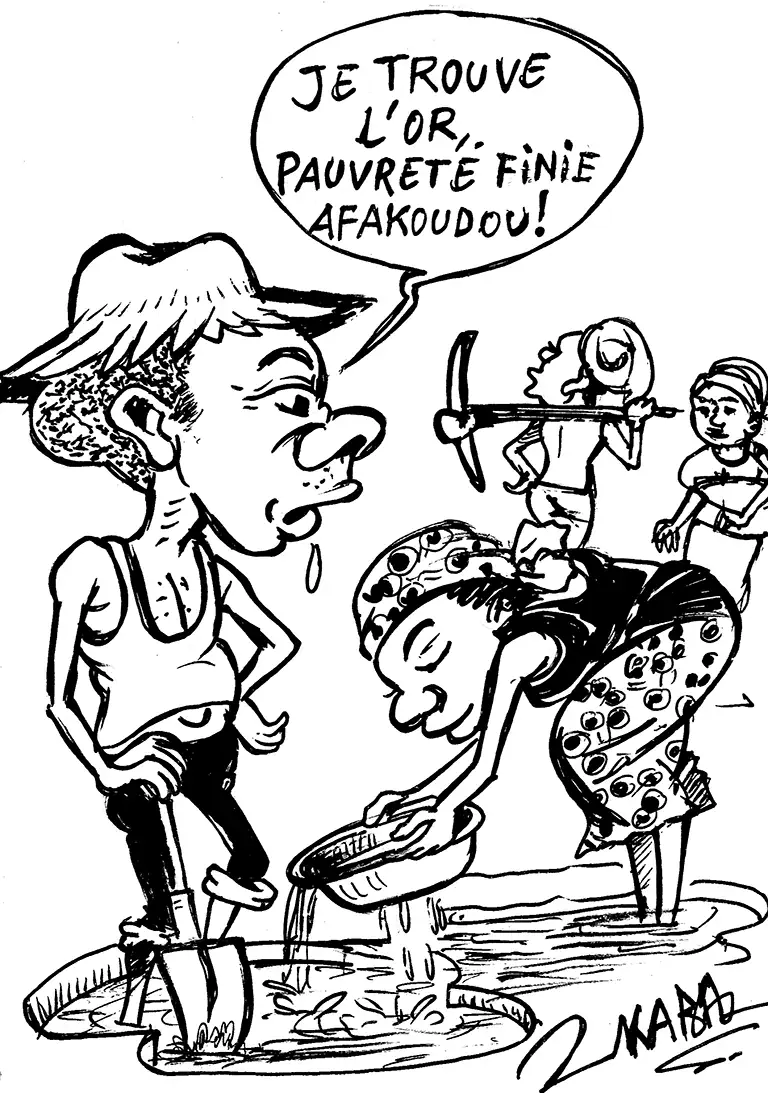
The Guinean government has taken a firm stance against illegal gold mining, with a recent decree aimed at curbing the practice. In November, the government issued a joint decree banning artisanal gold mining across the country, a move that has been widely reported in Guinea and the region. This decree has been enforced rigorously in Siguiri, with many Guinean and foreign miners being arrested and expelled from the country.
Guinea is renowned for its rich mineral deposits, including gold, diamonds, bauxite, iron, and uranium. However, the country's mining sector has long been plagued by corruption, environmental degradation, and social issues. Prior to the current government's efforts, the sector was characterized by four major problems: financial scandals, environmental degradation, the normalization of artisanal gold mining, and the depravation of youth.
The impact of artisanal gold mining on local communities has been significant. In 2017, a researcher spoke with artisanal gold miners in Dinguiraye, expressing concerns about the environmental degradation caused by their activities. The miners responded that gold was their primary source of livelihood and that they could not survive without it. This attitude highlights the deep-seated issues surrounding artisanal gold mining in Guinea.
The effects of the gold rush on local society have been far-reaching. In Siguiri, the influence of wealthy gold miners, known as "massas," has led to a culture of extravagance and recklessness. For example, a motorcyclist involved in an accident can simply purchase a new bike and pay cash, without needing to apologize or take responsibility. This kind of behavior has become commonplace in areas where gold mining is prevalent.
The "massas" have also had a significant impact on local businesses. In one instance, a restaurateur in Kankan used the "massas'" love of bidding to his advantage, selling a roasted chicken for 1,000,000 francs Guinean, far exceeding its original price of 50,000 francs. This kind of behavior has become common in areas where the "massas" congregate.
The influence of the "massas" has also led to concerns about the exploitation of local women. In one case, a young woman was persuaded to engage in prostitution in exchange for a large sum of money. This kind of exploitation has become a major concern in areas where gold mining is prevalent.
The Guinean government's efforts to crack down on illegal gold mining have been welcomed by many. The country's mining sector has the potential to be a major driver of economic growth, but it must be managed sustainably and responsibly. With the government's continued efforts to enforce regulations and curb corruption, there is hope that Guinea's mining sector can be transformed into a positive force for development.
Key points
- The Guinean government has launched a crackdown on illegal gold mining, arresting and expelling foreign miners and imposing harsh penalties on those caught.
Reporting sources
- Mines : Quand l’or rend fou à Siguiri · Le Lynx