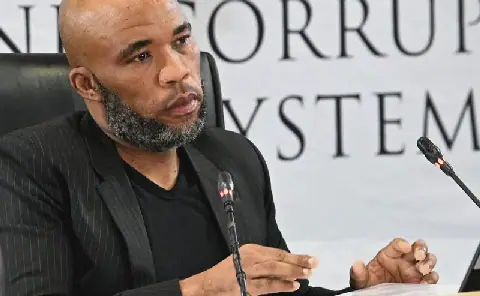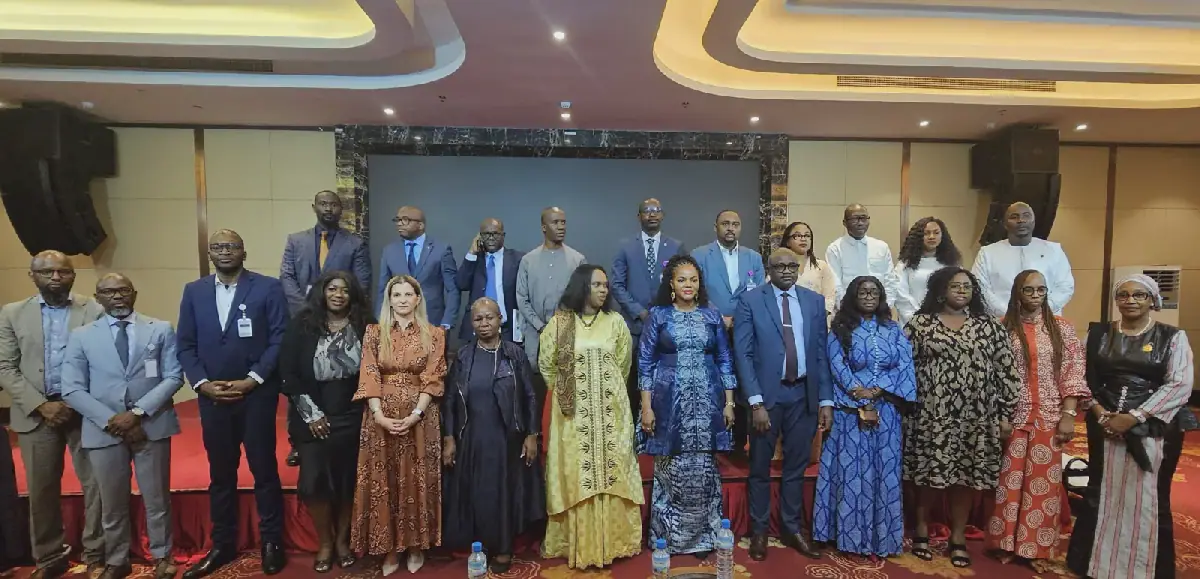
The Guinean Minister of Economy, Finance and Budget, Mariama Ciré Sylla, chaired the opening ceremony of a two-day validation workshop on two studies related to the efficiency of public markets in the health and education sectors. The workshop, organized by the Ministry of Economy, Finance and Budget, through the General Directorate of Public Market Control, with support from UNICEF, brings together government members, budget officials, financial controllers, technical and financial partners, and public administration officials.
The Director General of Public Market Control, Mamy Traoré, explained that the choice of health and education sectors is justified by their direct impact on populations. He emphasized that the challenge is not only to validate budgets and mobilize resources but also to ensure optimal use of public funds. For example, the 2026 public market plan for the Ministry of Health is estimated at approximately 448 billion Guinean francs, and a 5-30% improvement in expenditure efficiency could generate savings of 22-134 billion Guinean francs.
The Resident Representative of UNICEF in Guinea, Maddalena Bertolotti, recalled that optimizing public purchases goes beyond mere administrative procedures. She considers it an essential mechanism for transforming public resources into quality social services for populations. The Minister of National Education and Literacy, Bintou Keïta, stressed the crucial role of public markets in constructing schools and health centers, as well as acquiring school materials, supplies, and equipment.
The Minister of Health and Public Hygiene, Khaïté Sall, also highlighted the importance of these studies in improving the availability of medicines, vaccines, and medical equipment while controlling costs and ensuring continuity of care. She welcomed the inclusion of the health sector in the priorities of the Simandou 2040 socio-economic development program, led by President Mamadi Doumbouya.
Minister Mariama Ciré Sylla recalled that health and education are not ordinary expenses but investments that determine citizens' dignity, children's success, and the country's future prosperity. In 2026, 166 markets were awarded in the health sector for approximately 355 billion Guinean francs, compared to nearly 921 billion Guinean francs in the education sector.
The conclusions of this two-day workshop will contribute to improving public resource management and expenditure efficiency in the priority sectors of health and education. The minister invited participants to formulate operational recommendations around four priorities: improving purchasing planning and securing upstream credits, accelerating digitalization and strengthening traceability, finalizing the price list and enhancing competition, and developing group purchases when relevant.
Key points
- The Guinean government aims to improve public resource management and expenditure efficiency in the health and education sectors.
- Two studies focused on the efficiency of public markets in these sectors were presented during a validation workshop.
- The optimization of public purchases is expected to generate significant savings and improve the availability of essential services and goods.